Cushion vs Support in Shoes: What Creates Comfort?
It is surprising how often people have told me that I needed to add more ‘comfort-based’ rubber soles to my shoes. How leather soles just weren’t comfortable. And it always made me think about the idea of comfort — and what people think comfort means in shoes. Because most of us in America have been trained to believe that comfort equals cushion. But the reality is much different. I know, as I used to think the same until I was properly educated.
We’ve been trained this way by mass marketing, by the terrible shoes you find in department stores, and by salespeople who will say anything to make a commission. Then the brand reps come in, miseducate the staff, and suddenly those cheap shoes with polyurethane soles are presented as the end-all, be-all of comfort and support. Just think about the brand Ecco. Great cushion, zero support. Yet the sales rep will tell you they are the most comfortable shoes in the world. And the salesman will tell that same drivel to the client.
And the cycle continues.
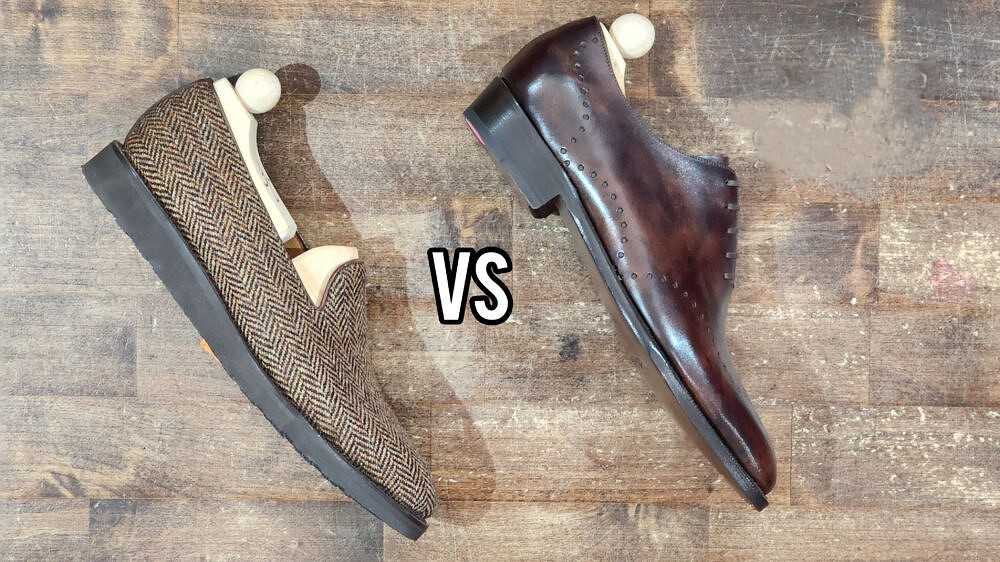
Now, I’m not going to lie and pretend that cushion isn’t comfortable. Of course it is. If it wasn’t, Nike wouldn’t be Nike. Cushion feels good. But here’s the thing: Cushion isn’t the comfort your body actually needs.
So I want to swap out the word “comfort,” because it’s almost become an idea more than a reality, and replace it with a better word: Support. That’s what you really want. That is what is actually important.
The American Obsession With Cushion
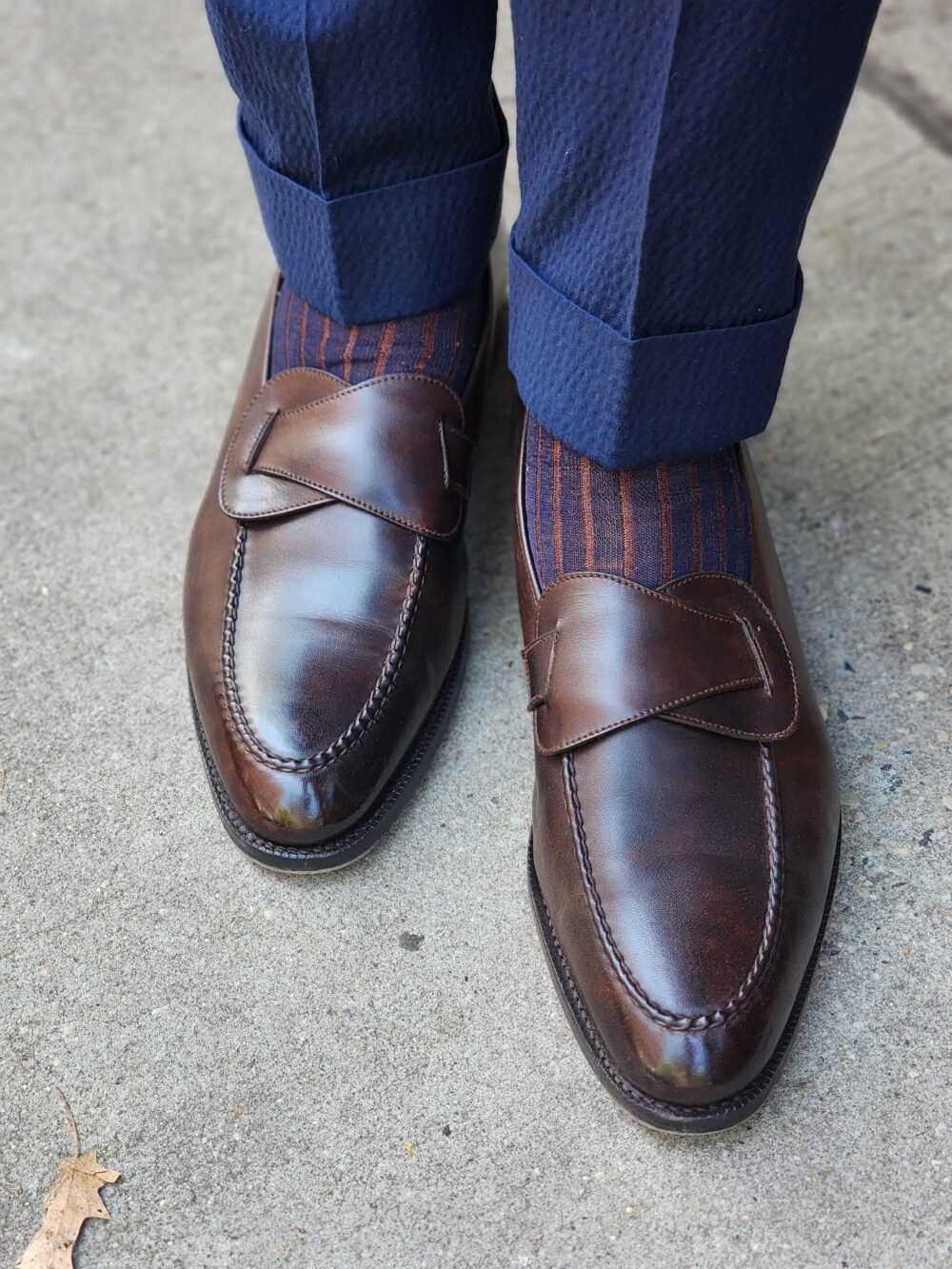
In the U.S., we’ve been conditioned to equate softness with comfort.
Department stores push polyurethane soles. Sales associates are trained to sell “shock absorption.” Big brands advertise “cloud-like feel.” Everything is built around the idea that separating you from the ground with softer material equals better comfort. And we fall for it every time.
That is how Nike managed to buy Cole Haan. A brand that used to make good shoes, and turned them into the biggest hybrid wastes of money there is. Don’t get me wrong. I don’t mind Cole Haan when they make casual shoes. But when they put dress uppers on Nike soles, it is an abomination. Plain and simple. And they provide ZERO support.
To be fair — cushion does feel good at first. It gives you an immediate sensation of relief. It feels forgiving. Gentle. Easy.
But that’s short-term comfort. The problem is what happens after eight or ten hours.
The Problem with Cushion
Cushion gives you a short-term gain… but often a long-term sacrifice. Support can feel like a short-term sacrifice (especially if you’re not used to it)… but it’s a long-term gain.
Because support is about how well a shoe actually holds your foot — how well it fits where it needs to fit to support the body you’ve got sitting on top of your feet all day. And a big part of that comes down to arch support — not in the gimmicky sense, but in the alignment sense.
When the curvature of an insole (or the shape of a last) aligns properly with your arch — when your foot naturally rests where it should — it aligns your body. It supports your frame under gravity. That’s real support.
Cushion can make you feel supported because it feels soft underfoot. But if there’s no real arch support and your foot is sliding around, you’re not properly aligned. And at the end of a long day, your feet are tired for a reason.
Why this matters when on the feet all day
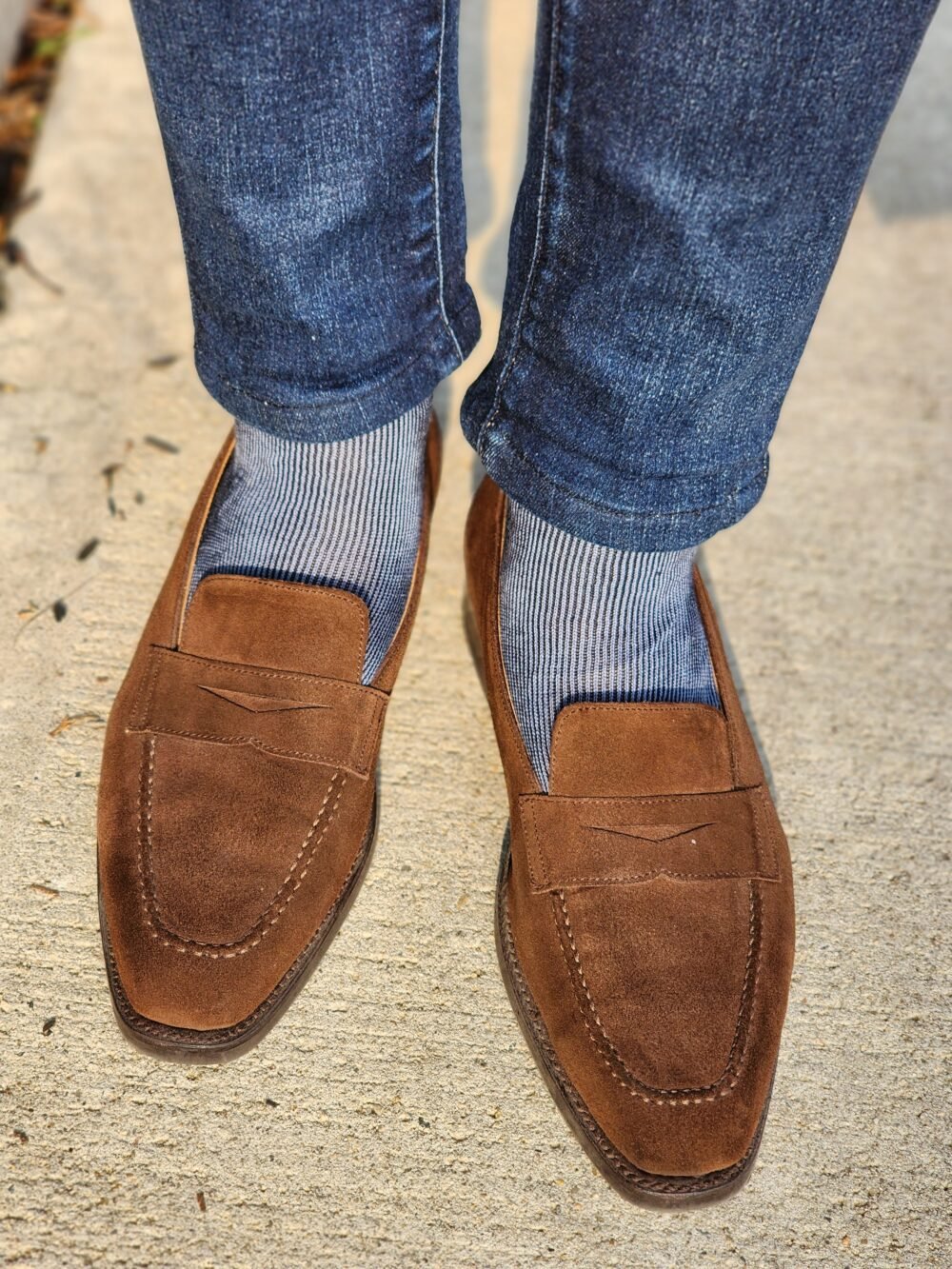
This whole topic came up because someone asked me: “Can you recommend a brand I can stand 12 hours a day in?”
A lot of people would instantly start listing brands with Nike-style cushioned soles. But I don’t agree with that logic. As mentioned above, I grew up selling “comfort brands.” Ecco. Mephisto. Asics. All of that.
And I wore them during 12-hour days on my feet. They felt cushy, sure — but my feet were screaming by the end of the day. Because most of those shoes are basically flat inside. Very little arch support. Your foot is just…there…surviving. And even worse, just slopping around as they have no real support. They don’t ‘grab’ your feet. They don’t support it.
And when your shoes are a little too loosey-goosey and don’t support the arch, your foot is constantly overcorrecting inside the shoe. You’re overworking your arch all day. And that is what creates plantar fasciitis.
So it doesn’t matter how much cushion you’ve got if your foot isn’t properly supported. If you’re only walking from A to B, fine, wear anything. But if you’re on your feet 10 to 12 hours a day, this stuff matters.
That’s a lot of hours of your entire body weight pressing down through your feet.
👉 Listen to my podcast about it below
Cushion isn’t “bad” — but it’s not the solution
I’m not saying cushion is bad. How can it be? It’s soft. It feels nice. But the best setup is usually a combination:
- a last that fits you properly
- plus a sole that offers some shock absorption (if you need it)
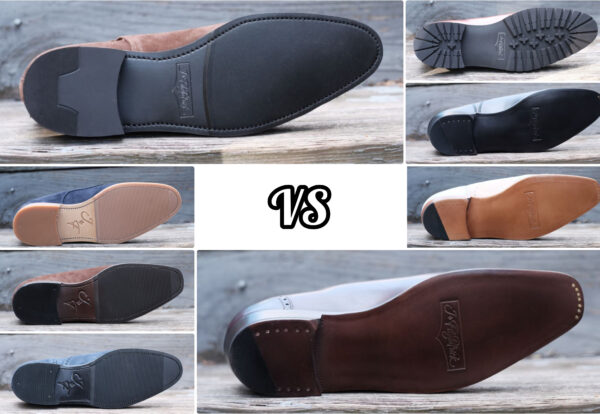
For example: commando soles.
Years ago, I didn’t like commando soles. Back then, a lot of them were incredibly stiff — usually Vibram — and I find that stuff horrifically rigid. Rubber doesn’t break in like leather. It isn’t natural. It stays what it is. That’s why it’s durable.
But that rigidity doesn’t help you if you’re on your feet all day. In fact, I’ll say something that surprises people: A hard rubber sole can be more uncomfortable than a double leather sole. Double leather can feel amazingly supportive — and once it’s broken in, it can feel great.
But when I found a more cushioned commando-style sole that was still trim and wearable, paired with a last that fits me properly, that combo gave me “ultimate comfort.” The rubber was ‘soft rubber.’ Not built to scale Mount Everest. But built for urban city concrete shock absorption. And the comfort didn’t derive from the sole being magical, but rather because the shoe fits and supports me, and the sole takes some shock off of the knees.
There’s no “most comfortable brand” — it’s about the last
This is why I couldn’t answer that guy’s question with one brand. It’s not “Carmina is comfortable” or “Carmina isn’t comfortable.”
It’s: which last fits you? For me, the Simpson last fits wonderfully. The Rain last doesn’t. So what am I supposed to say? “Carmina is great for 12-hour days.”? It depends.
You’ve got to find the last that supports your foot — and then choose the sole that makes sense for your life: leather, double leather, rubber, city sole, whatever. But the foundation is fit and support.

The plantar fasciitis lesson (and why sizing matters)
What really forced me to understand all of this was getting plantar fasciitis. In my case, it wasn’t even “lack of cushion.” It was fit. I was wearing an 8 or 8.5 instead of a 7.5.
Why? Because I’m an 8 ‘Narrow’ in length/width, but my arch measurement read bigger — and a lot of the “fit your arch” talk in shoe stores is based on devices and numbers, not reality. It drives me crazy when a guy writes me up and says, ‘My Brannock is US 9, but my arch is 11.’ I am like, ‘Okay, so you are a US 9 at best.’ It is crazy when they try to fit their arch. That is why I do not like the Brannock Device. It offers bad information for those who want to follow it for the ‘arch’ measurement.
Here’s the reality:
Try the shoe on and see what actually supports your arch. Nothing in this world is one-size-fits-all. A device can’t tell you everything. When I went down half a size, I stopped overworking my arch. And suddenly, I could wear a leather-soled shoe all day long without issues.
Why welted shoes scare people at first (but win long-term)
I remember selling Allen Edmonds when I was younger and thinking, “How can anyone wear that? It looks so rigid. No cushion. No sockliner. Just leather.” Because in my head, cushion was comfort.
But if you’re coming from sneakers and super flexible shoes, the first time you put on a welted shoe, it can feel frightening. Stiff leather, no plushness, break-in pains. Then you break them in. You start feeling the support.
And you realize: these are actually more comfortable than the things you used to think were comfortable — because your foot is supported, not just padded.
It is literally like being a teenager and listening to your parents. You never believe them until you experience everything they say. And then you realize how right they were. The issue: most people never actually try it as they stop to complain at the first blister they get. They expect cushioned mesh on dress shoes. Please.
The takeaway: stop chasing cushion, start chasing support
If you’ve never crossed over into supportive, properly fitted shoes — and you’re always looking for cushion to supply comfort — try flipping the logic.
Start looking for support to supply comfort. Because comfort is subjective… but support is what your body needs.
And when you find the last that truly supports your foot, you’ll feel better — not like you just woke up after 10 hours on your feet (no shoe does that), but with the least amount of discomfort possible.
That’s the goal.
If you enjoy our educational posts, make sure to read more here.
—Justin FitzPatrick, The Shoe Snob
Shop · Marketplace · Patreon




Great short way to put the subject of cushioning. Have three pairs of your dress shoes and use cushioned arch supports in all and can stand and walk all day without any issues. Your shoes construction is outstanding for adding arch supports, for those of us that ran too many miles in our youth. Any cushioning foam needs to be high density and not just the cheap EVA, moldable urethane or even cheaper memory foam. If the foam can be molded, it will fail in 30 days of use. Commando soles are a great addition to your line up. You make great shoes.
Thank you for the kind words and support Bruce, I do appreciate it!
Once again… good information and education is esential. Many thanks!
Btw…Those butterfly loafers!!!!
Thanks JM! 🙂
The search for supportive but not overly cushioned shoes is what made me get into dress shoes. Do you have any recommendations for white leather sneakers which look like sneakers but are built more like dress shoes? Minimal cushioning (cork footbed maybe), resoleable and no padding on the upper with the leather providing most of the support. I see many dress shoes which claim sneaker like comfort aka highly padded but very few that go the other way around.
Thank you for sharing. Here is the only one I can think of off the top of my head:
https://aubercy.com/product/sneaker-blanc/
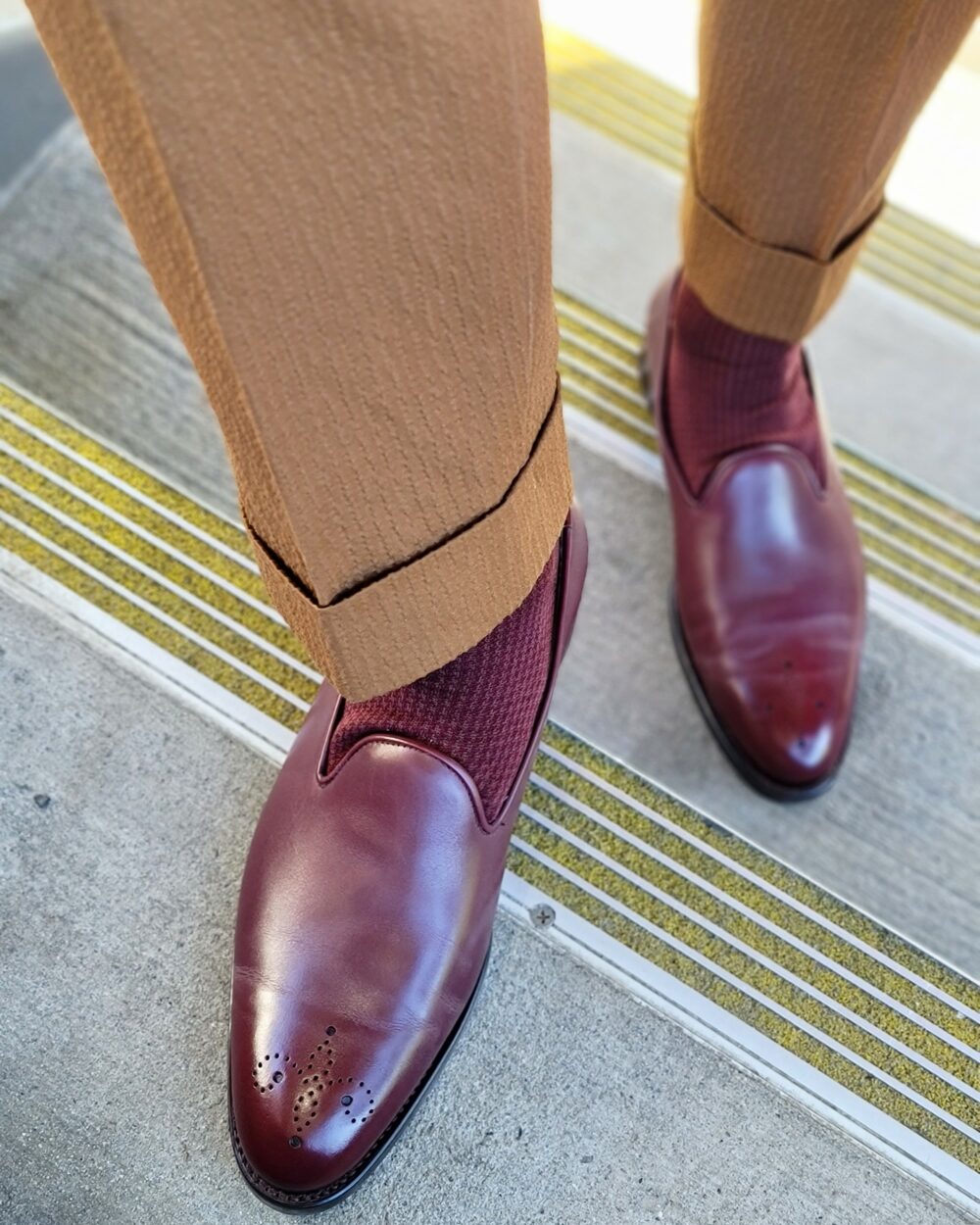
Who makes the cushioned loafer in the top image?
http://www.jfitzpatrickfootwear.com
Excellent article, so well said. Sketchers level cushion is not support, it is the opposite. Those types of shoes use cheap EVA foam that packs-out 80% in 6 months. No support is left. A shoe, with a proper last, with just 2mm of quality urethane will provide perfect cushion and support. The thicker the foam a shoe company sells you, the lower the quality, as they are making up for it flattening.
Thank you Bruce! I appreciate it. And yes, you nailed it!
Hello Justin
I prefer GYW shoes to trainers even after long distance running, my arch tends to colapse at the end of the day and then is when plantar facistis strikes.
Thank you very much for sharing.
Regards
Thanks for sharing JM. I do too!