When you are young, the thought of wearing dress shoes probably does not enter your mind too often. Not at least in the sense that you will actively do so of your own volition.
If you grew up religious, went to adult functions, or were simply dressed up by your parents for special occasions, chances are your early idea of dress shoes was not all that exciting. A dress shoe was probably some very basic black slip-on loafer, the kind of shoe you were forced into for weddings, funerals, holidays, or some event where everyone older than you kept telling you to “look smart.”
And when you are young, that is usually the last thing you want to do. You want to run around. You want to play sports. You want to look cool. You want to wear whatever everyone else is wearing. And for many young people, dress shoes simply do not fit into that picture. They are seen as stiff, uncomfortable, old-fashioned, or something reserved for people who are trying too hard.
The funny thing is that this mentality often stays with us far longer than it should. Many people grow into adulthood and still see dress shoes as something only required for work, weddings, court dates, or some other event where life forces you to put on “proper shoes.”
But that is where the misunderstanding begins. Good dress shoes are not simply formal shoes. They are not merely shoes for special occasions. A good pair of dress shoes can change how you look, how you feel, how you carry yourself, and how your entire outfit comes together.
So, why wear dress shoes?
Because when they are good and when they fit correctly, they offer far more than most people give them credit for.

Dress Shoes Change How You Are Perceived
Whether people care to admit it or not, appearance matters.
Some people find that offensive. Some people will immediately say, “I should be judged by who I am, not by what I wear.” And in a perfect world, yes, that would be lovely. But we do not live in that world. We live in a world where people make visual judgments constantly, often before a single word has been spoken.
That does not mean we should dress for the approval of strangers. That is not the point. But it does mean that our appearance sends a message, whether we intend it to or not. And for me, being The Shoe Snob and all, that message always starts at the feet.
I have been fortunate enough to travel extensively in my life, and with that comes the awful experience of spending far too much time in airports, which are probably my least favorite places on earth. Anyone who travels enough knows what I mean. Airports have a way of stripping patience from everyone involved, and the people working there are not always the friendliest bunch. They are also, by nature of the job, constantly making quick judgments about people.
I learned long ago that when I dress well while traveling, I tend to have fewer issues. Not because I am a different person. I am obviously the same person whether I am in a pair of loafers or a pair of sneakers. But the treatment is not always the same.
That may be silly. It may even be unfair. But it is real.
Dress shoes add intention to your appearance. They suggest that you care. They create polish. They give the rest of your clothing structure. You can wear a beautiful jacket, a nice pair of trousers, or a smart shirt, but if the shoes are wrong, the whole thing falls apart.
There is a reason the old saying exists that people notice your shoes. They may not always consciously register it, but they do. Shoes ground an outfit. They either lift it or drag it down.
And that is one of the biggest reasons to wear dress shoes: they make you look more considered.
Not necessarily more formal. Not necessarily more “dressed up” in the stiff sense. Just more complete.
Dress Shoes Affect How You Feel
The other side of this, and probably the more important side, is not how other people see you. It is how you feel when you are well dressed. Anyone who has ever put on a great outfit knows this feeling. You stand differently. You walk differently. You interact differently. A compliment may come from someone else, but the real benefit is internal. Dressing well can put you into a different frame of mind.
This is where dress shoes play a bigger role than many people realize.
You can throw on sneakers and feel relaxed. There is nothing wrong with that. I wear casual things too, and I am not suggesting that every day must be lived in oxfords and a suit. But dress shoes bring a different feeling. They give an outfit a sense of purpose.
A good pair of loafers, derbies, monkstraps, Chelsea boots, or oxfords can make you feel sharper. They can make you feel more prepared. They can make even a simple outfit feel intentional. That is not vanity. That is psychology.
When you dress better, you often behave better. You take yourself a little more seriously. You show up with a different energy. And in a world where casualness has become the default, that extra bit of effort stands out more than ever.
Good Dress Shoes Can Be Comfortable
This is the argument I will probably never stop fighting: comfort is not simply about how much cushion you have under your feet.
Most people have been trained to think that ‘soft’ equals comfortable. The more foam, the more bounce, the more padding, the better the shoe must be. That’s the great myth. But real comfort is not only cushion. Real comfort is support, fit, balance, and structure.
I did not fully understand this until my own feet started to hurt.
Growing up, I wore ill-fitting sneakers. Later, I wore ill-fitting Blake-stitched shoes. Eventually, once I started wearing properly made and properly fitting welted shoes, my plantar fasciitis improved. I did not need some magical orthotic solution. I needed shoes that fit correctly, supported my arch, and held my foot in the right way.
That experience changed how I viewed comfort entirely.
A well-made dress shoe should not feel like a torture device. If it does, something is wrong. Either the fit is wrong, the last does not suit your foot, the shoe is poorly made, or you have been sold the idea that all dress shoes are supposed to hurt until they “break in.” That is nonsense.
Yes, leather shoes often need a little time to soften and mold. But they should not be painful. But the idea of pain should not also be thrown around either. If you feel any new discomfort because you previously wore shoes that didn’t touch your feet as they were a size too big, well, that is natural. A good dress shoe should hold the foot properly. It should support the arch. It should secure the heel. It should flex where your foot flexes. It should feel structured, not punishing. But good leather is not mesh. You should and will feel it move with your feet.
The problem is that many people’s only experience with dress shoes comes from cheap, stiff, poorly fitting pairs bought for one occasion. They wear them once, suffer through the day, and then conclude that all dress shoes are uncomfortable.
But that is like eating one bad hamburger and deciding all food is terrible.
A good pair of dress shoes can be more comfortable than many casual shoes because it supports the foot instead of simply surrounding it with foam. Cushion can feel good for five minutes in a shop. Support is what matters after five hours of walking, standing, working, or traveling.


Dress Shoes Are More Versatile Than People Think
Another misconception is that dress shoes are only for formal clothing.
That might have been more understandable decades ago, when clothing categories were more rigid. But today, a good pair of dress shoes can fit into a wide range of wardrobes. In fact, many dress shoe styles are more versatile than sneakers because they can move upward and downward in formality.
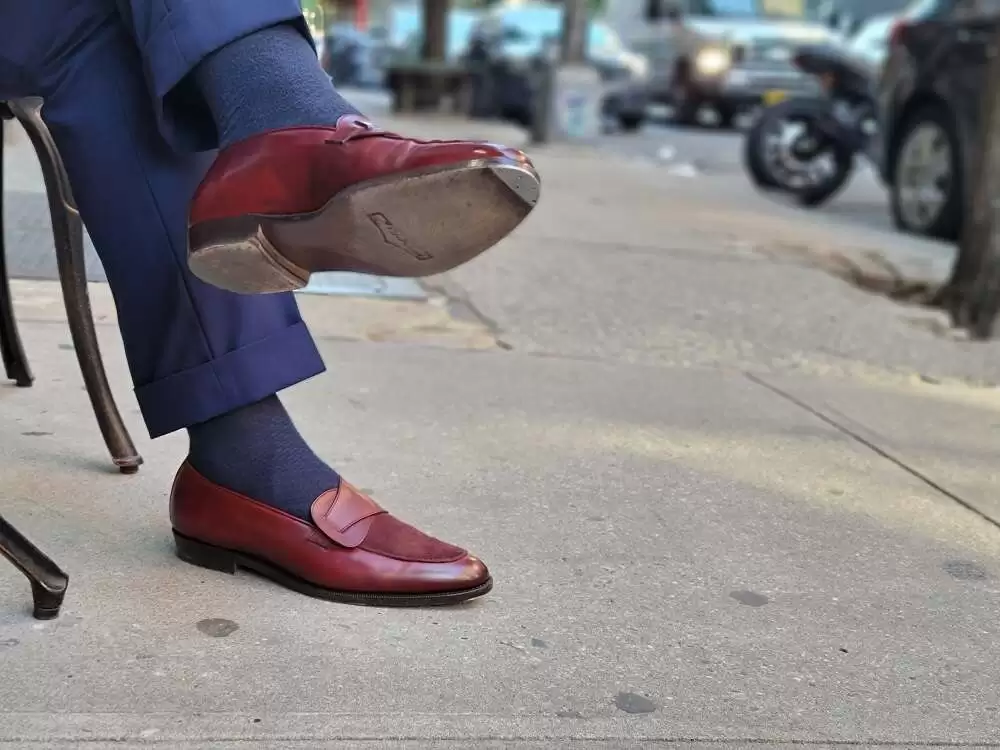
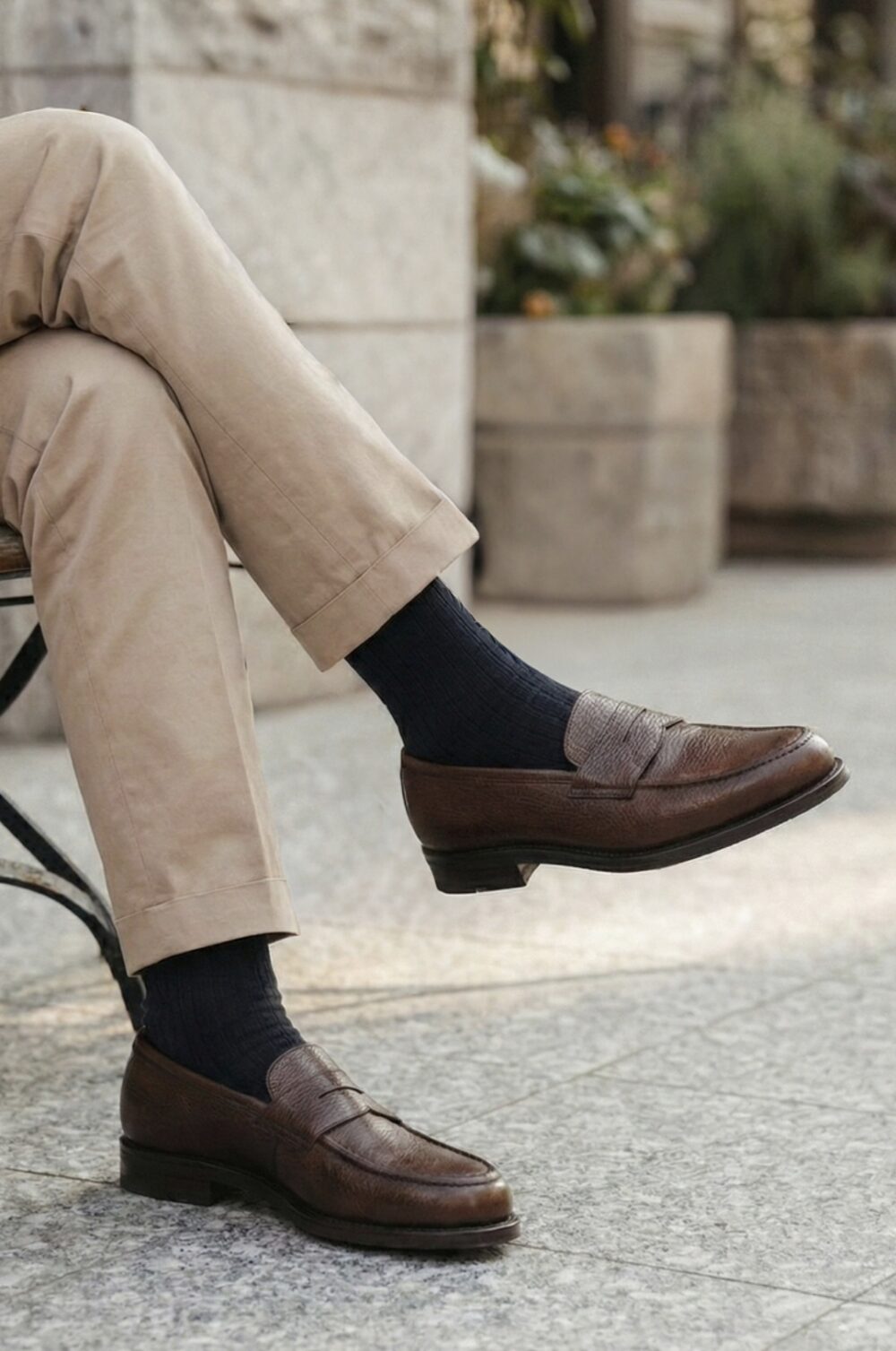
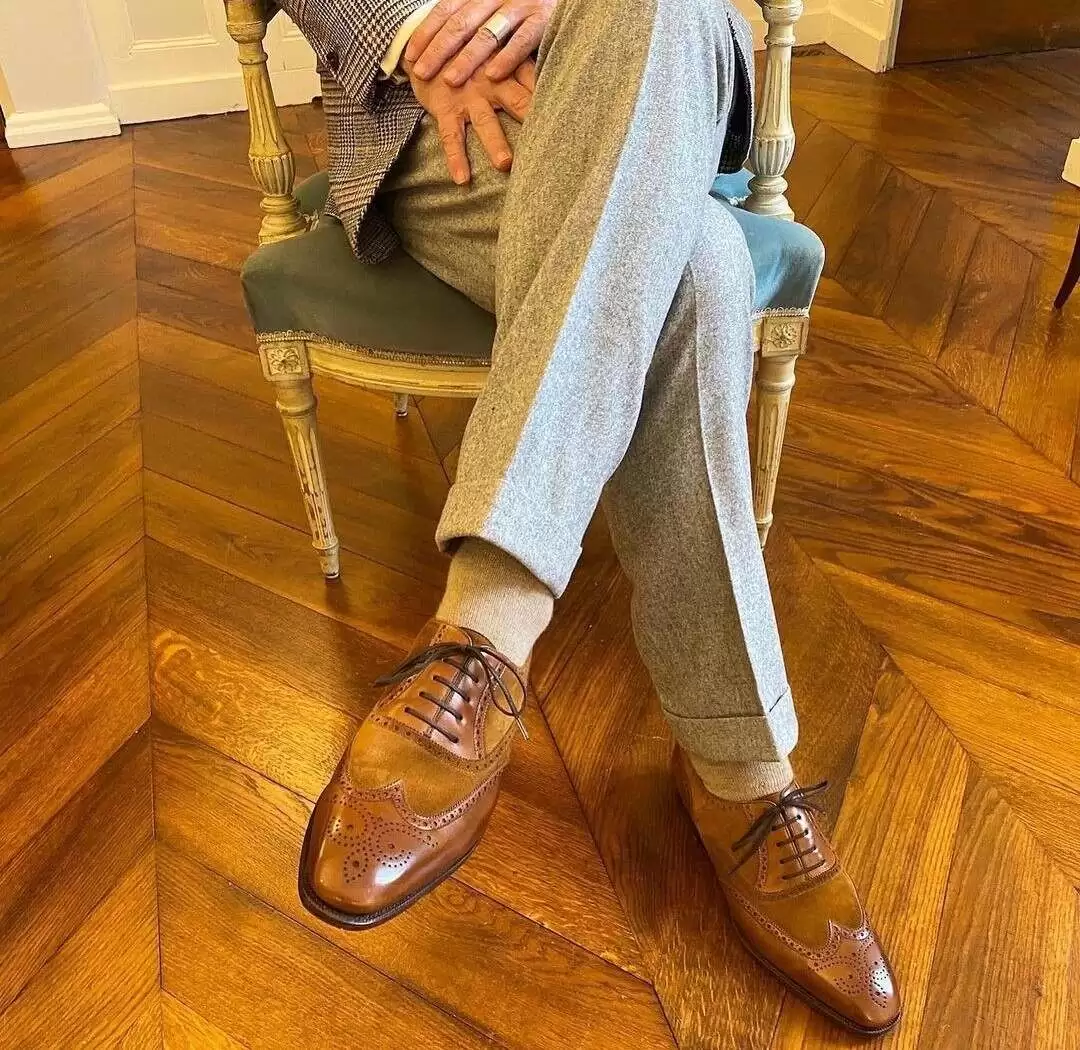
A smart loafer can be worn with jeans, chinos, flannels, cords, linen trousers, dress trousers, and even certain suits. A suede derby can look casual without looking sloppy. A Chelsea boot can sit under denim or more casual tailoring (this is a grey area tbh). A brown brogue can bring character to a simple outfit without making it feel overly formal (this is more natural and easy than you think).
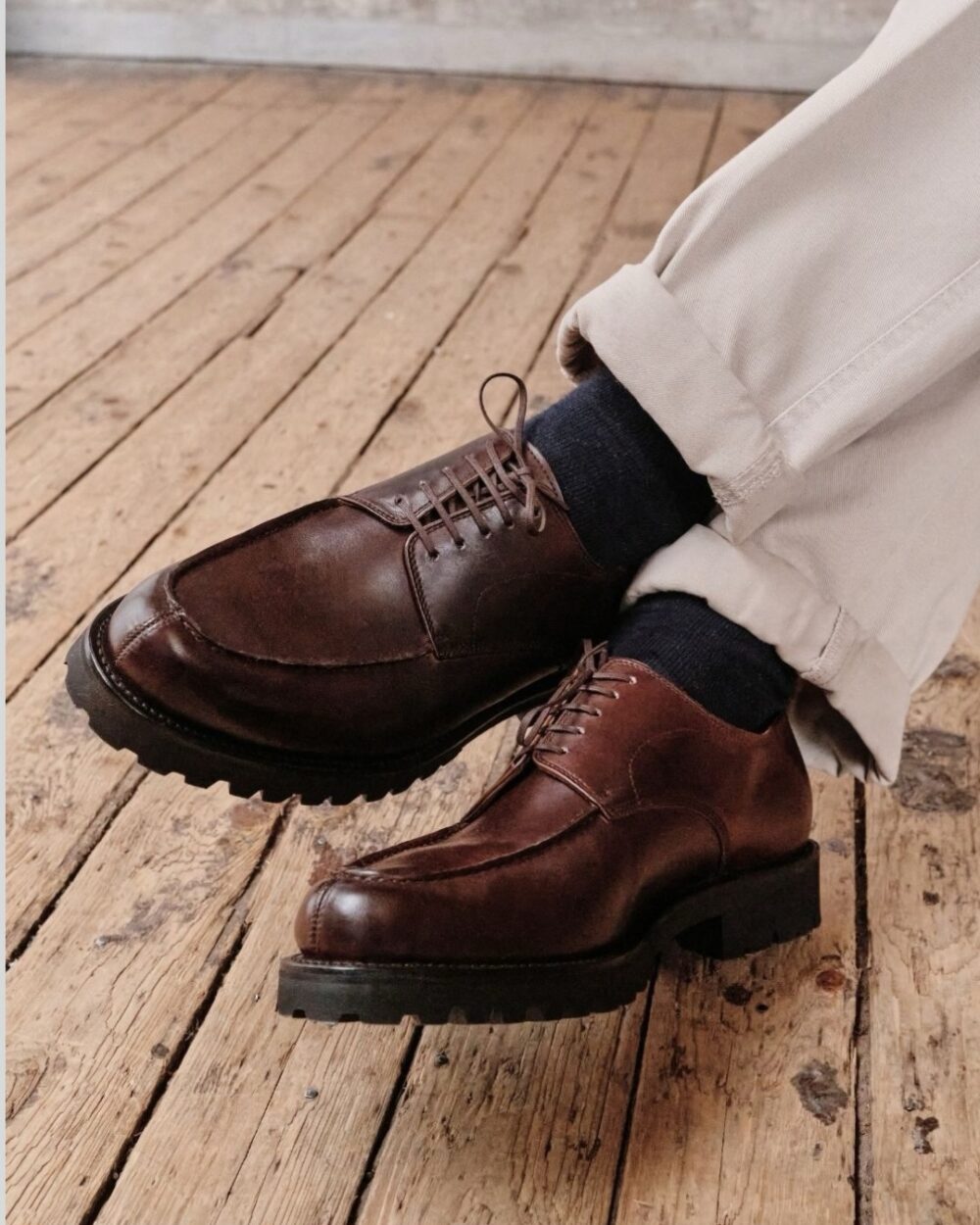
The key is choosing the right kind of dress shoe. Not every dress shoe belongs with every outfit. A black cap-toe oxford is not the shoe I would choose for a casual weekend in jeans. But a dark brown loafer, a suede chukka, a split-toe derby, or a soft-grained monkstrap can cover far more ground than people imagine.
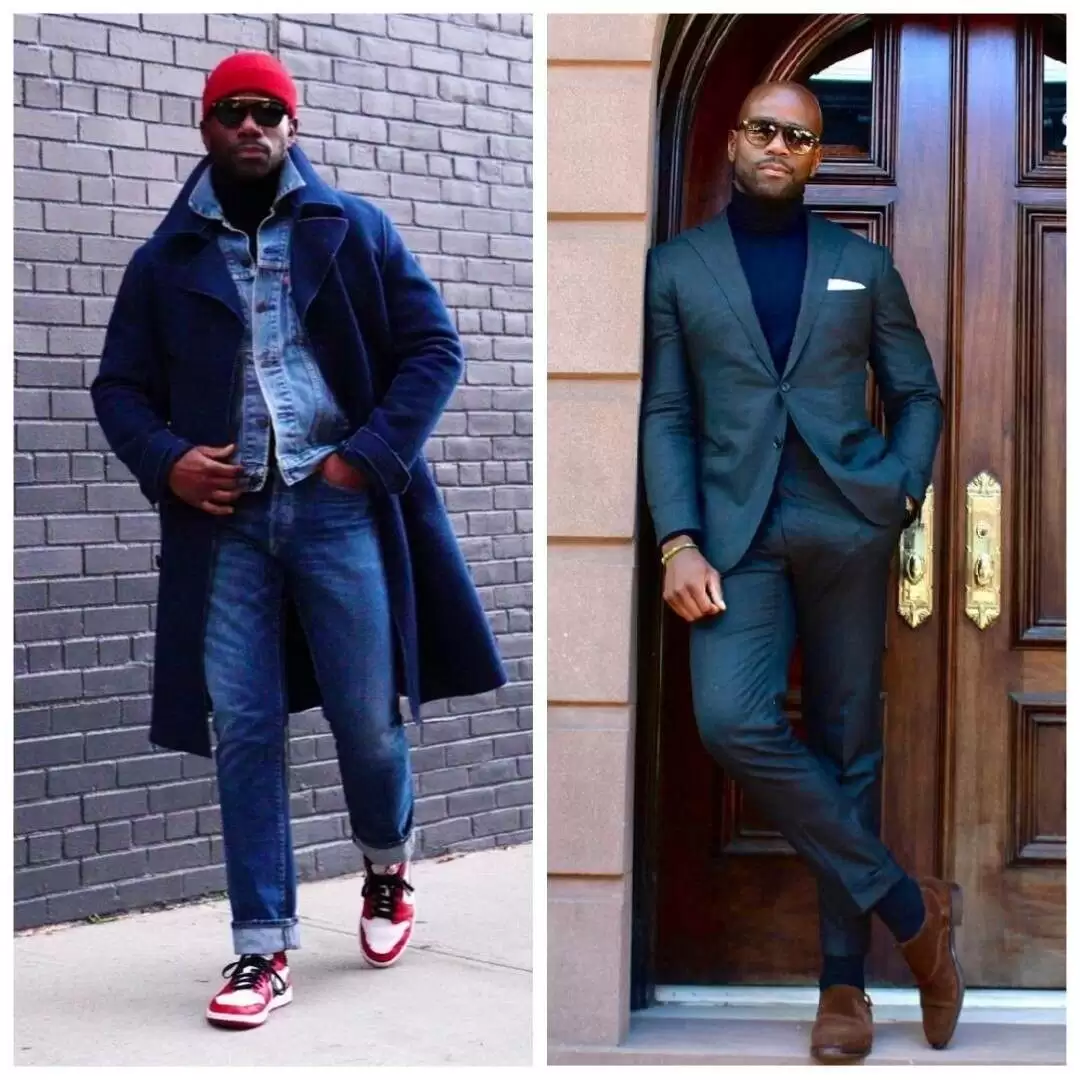
This is where dress shoes shine. They give you options. Sneakers are casual. They can be stylish, of course, but they generally pull an outfit down in formality. Dress shoes can do the opposite. They can elevate casual clothing without making it look forced. They can make a simple outfit look more mature, more intentional, and more refined. Adding a loafer to your jeans and polo is one of the easiest ‘upgrades’ and quickly elevates the look.
That is why a good pair of dress shoes is not merely something you keep in the closet for special events. It becomes one of the most useful parts of your wardrobe.

Dress Shoes Are Not Only for Suits
One of the biggest mistakes people make is thinking that dress shoes require a suit. They do not.
In fact, I would argue that the modern man who wants to wear dress shoes more often should not begin with the most formal pair. He should start with something adaptable. A loafer, derby, Chelsea boot, chukka boot, or suede oxford will usually be easier to wear than a high-shine black oxford.
The more formal the shoe, the narrower its use. The more relaxed the design, color, and material, the easier it becomes to wear in everyday life. Brown suede, for example, is one of the most useful materials in menswear. It softens the look of a dress shoe and makes it easier to pair with casual clothing. Grain leather does the same. So do rounder lasts, rubber soles, split toes, and loafers. Brown suede is my holy grail. I quite literally use it the majority of the year.
Yet this is where people often get dress shoes wrong. They buy the wrong pair first. They buy something black, shiny, stiff, and formal, then wonder why it looks odd with jeans. But that does not mean dress shoes are hard to wear. It means the wrong dress shoe was chosen for the wrong wardrobe.
Start with the way you actually dress, then choose the shoe that elevates that.
Dress Shoes Can Be a Better Long-Term Investment
There is also the question of value. Many people say dress shoes are expensive, and of course they can be. But we also live in a world where people spend plenty of money on sneakers, technical shoes, designer trainers, and casual footwear that often cannot be properly repaired. Not to mention clothing. If we only used a fraction of our allowance on clothing to invest in our shoes, a lot more people would have better shoes.
A good pair of dress shoes, especially one that is welted or otherwise built with repairability in mind, can last for years. Sometimes decades. They can be resoled, reheeled, conditioned, polished, restored, and kept alive in a way that most casual shoes simply cannot. This does not mean everyone needs to spend a fortune. Nor does it mean that a more expensive shoe is automatically better. But it does mean that the value equation is different.
A cheap shoe that lasts one year is not always cheaper than a better shoe that lasts ten. You can get great shoes under $300 and crappy ones above $1000. Knowing which one is half the battle. Reading blogs like mine, or doing good research will help.
And unlike many items in a wardrobe, your shoes do not care if you gain ten pounds, lose ten pounds, or change jacket size. Provided your feet stay relatively the same, a good pair of dress shoes can remain with you through different phases of life. That is part of what makes them special. Even moreso, if you have sons and they are your same size feet, you can sometimes even pass them down.
A Simple Way to Think About Dress Shoes
Here is the easy comparison:
| Shoe Type | What It Usually Does Well | Where It Often Falls Short |
|---|---|---|
| Sneakers | Casual comfort, sport, relaxed outfits | Limited formality, often less repairable |
| Casual boots | Rugged wear, denim, outdoor-inspired style | Can be too heavy or casual for smarter clothing |
| Comfort shoes | Soft underfoot feel, easy walking at first | Often lack elegance, structure, or long-term support |
| Dress shoes | Style, structure, support, versatility, repairability | Require better fit knowledge and some maintenance |
That is not to say dress shoes win every category. They do not. I would not hike in dress shoes. I would not go to the gym in dress shoes. And I do not believe anyone needs to wear them every single day of their life.
But for most men, dress shoes deserve a much bigger place in the wardrobe than they currently get.
Why Wear Dress Shoes Today?
The real answer is simple: because they make you better presented.
They can make you look better, feel better, stand better, and dress with more intention. They can be comfortable when fitted properly. They can work across far more outfits than people assume. And they can last far longer than most of the disposable footwear that dominates modern wardrobes.
The world has become increasingly casual, and I understand why. People want ease. They want comfort. They want clothing that does not feel like a costume. But somewhere along the way, many confused casualness with carelessness. Dress shoes are a simple way to bring that care back.
You do not need to be dressed like a banker from 1955. You do not need to wear a three-piece suit to the grocery store. You do not need to abandon sneakers forever. But owning and wearing good dress shoes gives you another gear. It gives you the ability to present yourself differently when the moment calls for it. And often, once you start wearing them more regularly, you realize that the “moment” comes around more often than you thought.
The question, then, is not really “why wear dress shoes?” The better question is: why not?
FAQ: Why Wear Dress Shoes?
Are dress shoes uncomfortable?
Dress shoes are not inherently uncomfortable. Poorly fitting dress shoes are uncomfortable. A well-made pair that suits your foot shape should provide support, structure, and comfort once properly fitted and broken in. But a dress shoe will never feel like a Nike on day one. Once you accept this, you will see and feel that dress shoes are comfortable.
Can dress shoes be worn casually?
Yes, many dress shoes can be worn casually. Loafers, suede derbies, Chelsea boots, chukka boots, split-toe derbies, and brogues can all work well with jeans, chinos, cords, and other casual trousers.
What is the best first pair of dress shoes?
For most men, the best first pair is not the most formal black oxford. A brown loafer, dark brown derby, suede chukka, or versatile Chelsea boot will usually be easier to wear across different outfits. This idea is considering that you are not required to wear a black oxford for work. If so, then you must get the black oxford to satisfy your requirements, but subsequent pairs should be ones that are more versatile for non-work enviroments.
Are dress shoes better than sneakers?
They are better for certain purposes. Sneakers are ideal for sport, very casual outfits, and relaxed wear. Dress shoes are better when you want structure, polish, long-term repairability, and a sharper overall appearance.
Do dress shoes need a lot of maintenance?
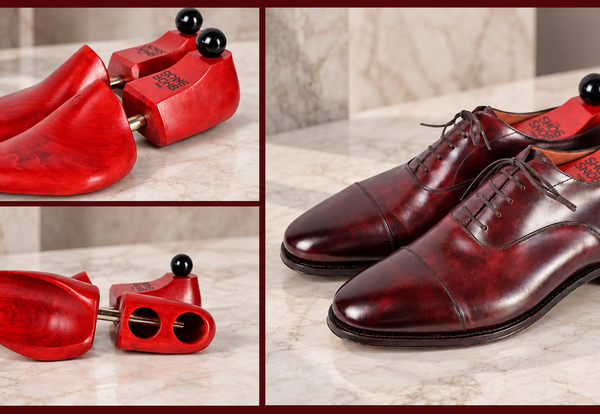
Not as much as people think. Use shoe trees, brush them after wear, rotate your pairs, condition the leather occasionally, and polish when needed. A small amount of care goes a long way.
If you enjoy posts like this, please make sure to check out the rest of my ‘Educational Posts’, found here.
—Justin FitzPatrick, The Shoe Snob
Shop · Marketplace · Patreon



I do agree! Not enough people don’t wear dressy shoes. Shoes that are versatile enough can be worn for both work and play (cap toe boots and loafers, depending on the office). Casual shoes are just that: casual. Some try to wear them with suits, but that’s just weird especially when its the flashy ones like Air Jordans.
I do agree with the point where people think more cushion = better comfort. I’ve only started enjoying true comfort when I started wearing GYW shoes. Even my Allen Edmonds are way more comfy than running shoes and sneakers if I have to move about. I only wear running shoes when I’m in the gym. Else they just throw the entire outfit off.
A point that I get from people is that “dress shoes are expensive”. But then, many don’t think that the value of a pair (or several) will be cheaper when taking into account the durability, longevity, reparability and comfort of a good pair of shoes. Why pay $250-300 for a pair with custom orthotics that have 2 inches of foam and look ugly as hell, when at that price one can get a decent, good looking pair of dress shoes?
Thanks for writing this article. Cheers!
Thank you for sharing Yap! And yes, I did not touch on the price part and the simple fact that some people want dress shoes but cannot afford them but this was more about those that can afford them but choose to wear other stuff
Great post Justin. I grew up with sneakers and boat shoes. Now I am fortunate to wear some of the best shoes that I bought at my time with Bergdorf Goodman. My collection goes from Magnanni to John Lobb. All with character and great support. I hope this post changes more men’s thoughts about dress shoes.
Very well-said, Justin. And I also agree with Yap and Pierre. I would add one thought. I spent my life being very particular about my dress clothes. I progressed from Brooks Brothers to Zegna, Canali to Brioni to bespoke. But I’d top of my wardrobe with a pair of JM (before they sold) or AE’s. And over the years my body changed. For about 30 years it was constant alterations and growing from a size 40 to my present 44. It happens to most of us. But guess what? The shoes still fit! So one added advantage of dress shoes is that they will fit you forever. Since I discovered high-end shoes I have been upgrading my collection without regard to price. Last week my first pair of Conblers Union and my second Paolo Scafora’s arrived. They will last me forever and my collection will be handed down to a grandson who is my size. I only wish I had known about good shoes when I was 30. I’d be miles ahead. So, when considering a pair of $500, $1,000, $1,500 shoes or more, remember that over time, if you are careful about fit, don’t hesitate to pull the trigger. They are the most sound sartorial investment you can make!
Thank you for sharing Peter, I do appreciate your constant support, not only in the blog but also in the brand.
Thank you for sharing Pierre and for all of your support! Hope to see you soon in the shop when you happen to be around Soho.
Thanks for sharing your thoughts on this, Justin.
Like your table of 5 and airports exemples, I’ve personally seen how people look at me differently since I wear dress shoes, and even dress up more. Even despite often being the youngest in the room…
Tempted to say… Footwear maketh man!
Thank you for sharing Steve, and yes indeed. footwear does maketh the man! 😉
Justin
thank you very much for writing this article. I hope I could read this kind of article 20 to 30 years ago.
Anyway, it is better to be late than never. I started few years to learn about dress shoes and start to build a small and compact collections with careful thoughts and planning of their applications on occasions.
thank you once again of your wonderful contributions to the large audience like us through the shoe snob.
My pleasure Kelvin and thank you for your long term support! It is much appreciated
Amazing blog
informative article
great work
Thank you Ritesh
Hey liked your blog!! very informative. i would like to mention a site which writes amazing blogs on vegan shoes and vegan bags, click on the link below to read https://lesac.in/blog/shoe-them-some-love-this-indie-label-makes-vegan-shoes-we-love/.
nice blog.. very useful
keep it up
Thank you. I will do
Absolutely loved this! You managed to touch on things people often overlook. Subscribed/followed for more!
https://www.tobys.com/
Justin, good article. I can attest that when I put on a good pair of dress shoes, it feels like a glove, especially after wearing no support shoes around the house during Covid. That cork in the sole really does mold to your foot, and some of my dress shoes are twenty years old, so the leather has adapted as well. Second, and this is amusing, at least to gentlemen of a Certain Age, but tassel loafers are a tribal identity marker. They were (and still are in some circles) de rigeur for executives, lawyers, bankers and other professionals in old line industries. It’s how we knew that the other party was a member of the tribe, as much as a Brook Brothers suit was. I don’t see them nearly as much on younger wearers, but they are still out there (Alden, Edward Green, Crockett and Jones, older Allen Edmonds).
Glad that you enjoyed the post Thomas. Thank you for sharing!
Hello Justin.
Great post. I use GYW shoes almost every day, specially the days I have to walk a lot or need to be standing up, i.e. trade fairs, teaching or of bussines travelling.
I am prone to plantar facistis and it comes back when using boat shoes or loafers, so using more structured shoes is the solution that works for me.
Thank you very much for sharing. Cheers.
100% – trekked all over Rome recently in my GY welted loafers
Excellent article Mr Fitzgerald. Succinct and making the case for dress shoes at every oppertunity. I have always worn them except with shorts. Incidently complimentary comments come thick and fast when worn, particularly gratifying when they stem from interested females! Keep up the good work.
Thank you Paul. It is FitzPatrick, though 😉 Appreciate the kind words and support!
Appologies Justin for confusing your surname. I do appreciate your reply. I do want to try a pair of your shoes (and I will). Your articles are very informative.
No worries at all Paul and thanks for reading and for sharing!
Although I’ve visited this site many times, this is the first time I’ve read this article and I 100% agree with everything you’ve said. It occurred to me some years ago that my natural inclination to dress more smartly as I’ve aged has had a subtle but notable effect on how I’m treated when I travel abroad and certainly on a couple of occasions my appearance has granted me favours based, I guess, in the implication of how I was dressed. I also fully agree with the value angle as I now am at a point where the bespoke shoes I’ve commissioned will be worn and enjoyed until the day I die; this to me is so much more satisfying than the “throwaway” fashion culture many people partake in! I fully endorse Yves Saint Laurent’s (or was it Coco Chanel?) saying that “Fashion fades, style is eternal”.
Thank you for sharing and glad that you enjoyed the post