
What was $300 is now $500: The Shifting Price of Quality Footwear
In this episode of The Shoe Snob Podcast, I dive into a topic that’s been on everyone’s mind lately—rising costs. The title says it all: What was $300 is now $500.
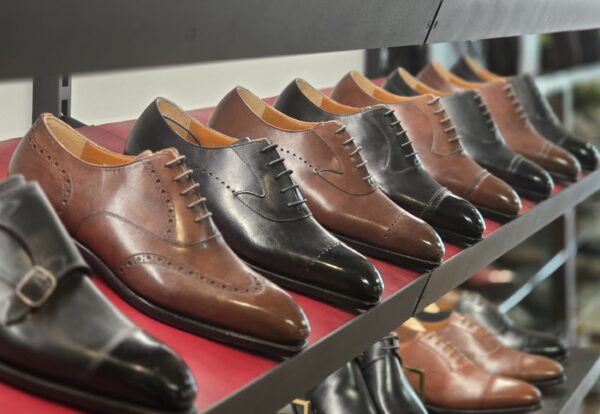
Years ago, $300 bought you a solid Goodyear-welted shoe—an entry point into quality. Today, that same level of craftsmanship –produced in Europe or the US– costs $500 or more. It’s not just inflation—it’s the changing reality of global production, materials, and the economics of keeping a small brand alive while maintaining quality.
👉Watch/listen to the video here:
A Decade Ago: When $300 Bought You Craftsmanship from EU/US
Over ten years ago, I wrote that $300 was the entry price for a good welted shoe. Back then, brands like Allen Edmonds, Septième Largeur, and Carlos Santos hovered in that range. The outlier was Meermin, who stunned the market by offering welted shoes for around $200—a price that seemed almost impossible at the time.
But globalization hadn’t yet exploded. There were no Chinese or Indian brands entering the Goodyear-welted space. If you wanted quality, you were buying Western-made shoes, and $300 got you something that would last.
Allen Edmonds: A Case Study in the Shift
When I sold shoes at Nordstrom years ago, Allen Edmonds was the cornerstone of accessible quality. Their models sold for $295—a great deal for a shoe that was made in America and well built.
But times changed. The company was sold, and like so many heritage brands, new owners sought higher profits by cutting costs. Whether they care to admit it or not, it was insanely obvious from one shipment of shoes to the next. It’s the same story across most industries—move production, reduce material costs, raise retail prices. That’s business, not betrayal. But it’s also why we no longer see $300 shoes that compare to those from a decade ago.
The reality is: when finance-driven management takes over, quality almost always loses to margin. That’s business.
The Economics Behind the Shift
Let’s get real. Many factories are charging 30–50% more than they were just a few years ago. Shipping, tariffs, and the cost of leather—all have surged. And not just shoes. Leather has gone bonkers in price. To maintain the standard industry margin of 2.7 to 2.8x, a brand must raise prices or go under.
When I first launched my own entry line at $275–$295, it felt fair. But with today’s costs, I have needed to price them at $395 just to stay viable. It’s not greed—it’s survival. On that line, specifically, my factory raised the price by nearly 50% in two years.
So, yes, what used to be $300 is now $500. What used to be a benchmark for solid craftsmanship is now just the starting point. And an expensive starting point at that!
It’s not just in dress shoes. Look around:
- Sperry boat shoes that once cost $64.95 are now $140–$195.
- Nike sneakers average $200+, with “collectible” models reaching $300.
- Even once-affordable brands like Suit Supply have shifted toward luxury pricing.
And yet, wages haven’t doubled. That’s the real issue. We’re all paying more, but earning around the same. Don’t get me wrong, this is not a complaint against politics or the like, just a reality of our present situation that both brands and consumers find ourselves in.
As I like to say, everything’s more expensive—except our salaries.
Why It Matters for Shoemakers and Consumers
For independent brands like mine, the challenge is keeping shoes accessible while staying true to quality. The temptation to cut corners is everywhere—cheaper leathers, lower-grade soles, faster production—but once you go down that road, you lose what made you different in the first place.
The same principle applies to consumers: when you see a $200 “Goodyear-welted shoe” today, ask yourself how it’s possible. Somewhere, someone is absorbing that cost—often in materials, wages, or transparency.
A Glimpse at What’s Next
With new U.S. tariffs affecting imports from Asia and Europe, prices are only heading one direction—up. Expect to see the $300–$400 range become the new “entry-level,” while $500–$700 becomes the norm for mid-tier quality.
Even Meermin, the industry’s longest price disruptor, will eventually have to adjust. Volume may delay the inevitable, but not forever.
Final Thoughts: Reality Check for the Modern Market
We can’t change the economics, but we can be aware of them. If you care about craftsmanship, support the brands that still value it. The world of footwear is evolving fast, and what used to be “affordable luxury” is now just luxury.
So, next time you see a $500 price tag on a well-made shoe, remember—it’s not the brand gouging you. It’s the new reality of production costs, materials, and sustainability in 2025.
Like I said: What was $300 is now $500.
—Justin FitzPatrick, The Shoe Snob
Shop · Marketplace · Patreon








No more “inexpensive” shoes any more. Between inflation and tariffs, great shoes now come with a “great” price. Some brands seem to have been able to maintain pricing, but most have made adjustments. I appreciate the brands that have adopted all in pricing so you don’t have any suprises (delays and of course the unknown tariff upcharge). We were living in a great time with the $800 de minimus exemption. The paying field is more level and more expensive. I don’t see how this doesn’t nagativly impact sales across the board.
Yup and it will never go back
Thanks for another nice article with useful insights.
I wonder if perhaps the video title needs swapping around..;
Probably it should be “$500 is the new $300”, meaning, $500 is the new trend.
Compare to “Beige is the new black”… meaning, beige is the new thing – replacing black.
My pleasure Sven, glad that you enjoy it. And yes, sometimes i am somewhat dsylexic 😉 I have updated the wording in text but cannot change what I said in the vidoe without remaking it completely