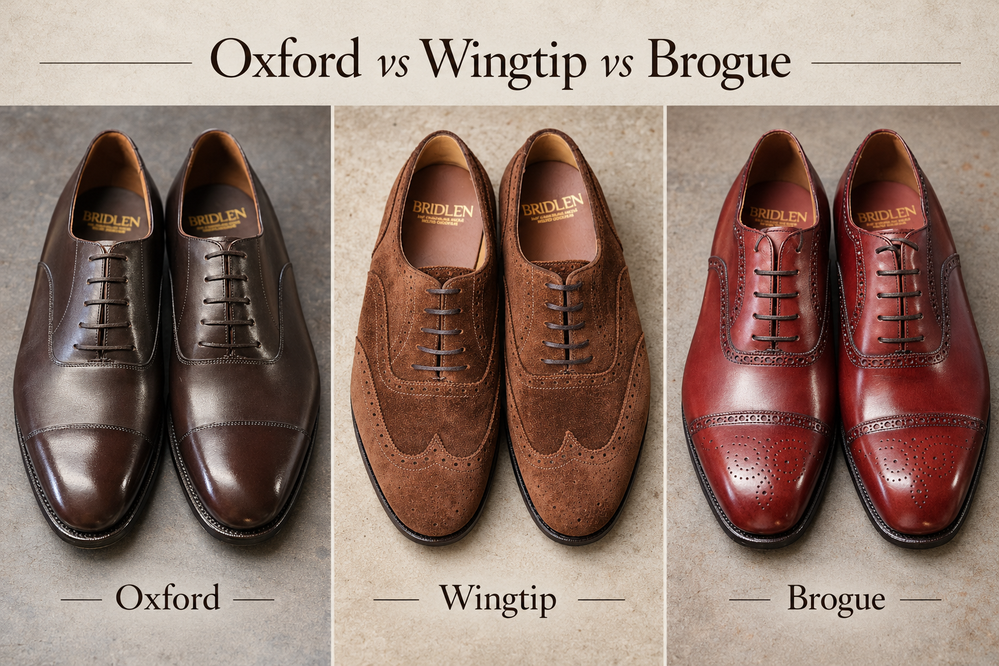
There are a lot of terms in the shoe world that get thrown around rather loosely. Oxford, wingtip, brogue, cap toe, balmoral, spectator—the list goes on.
And one that has always driven me slightly crazy is hearing people refer to virtually every dress shoe as a wingtip or every oxford as a balmoral.
I originally wrote about this piece back in 2018 as part of my Pet Peeves series. At the time, it was more of a rant than anything else. But considering how often these terms are still confused, it is probably more useful to actually explain what they mean and greatly expand on the knowledge side and less on the ranting.
Because an Oxford is not necessarily a wingtip. A wingtip is not necessarily an Oxford. And a brogue is something else entirely.
The confusing part is that one shoe can legitimately be all three.
So, let’s break it down.
What Is an Oxford Shoe?
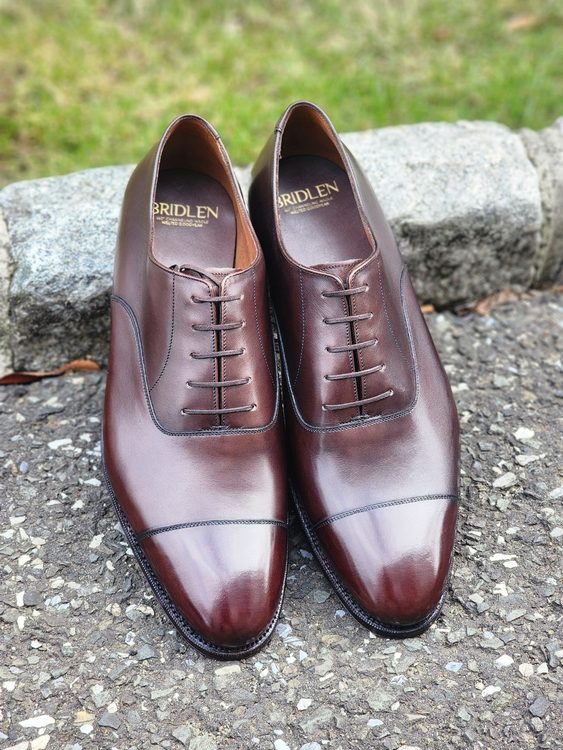
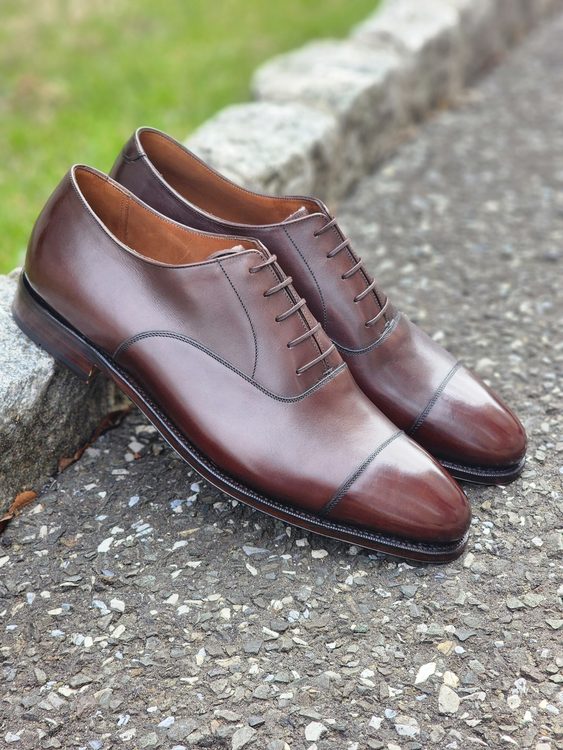
The easiest place to start is with the Oxford. An Oxford is defined primarily by its closed lacing system.
That means the quarters/facing—the pieces of leather containing the eyelets—are stitched underneath the vamp rather than sitting freely on top of it. This creates the cleaner, more streamlined appearance traditionally associated with an Oxford shoe.
And that is really the important point: Oxford describes the construction of the lacing/vamp area and how they intersect.
It does not tell you whether the shoe has a plain toe, cap toe, wingtip, broguing, two-tone leather, or any other decorative feature.
You can therefore have:
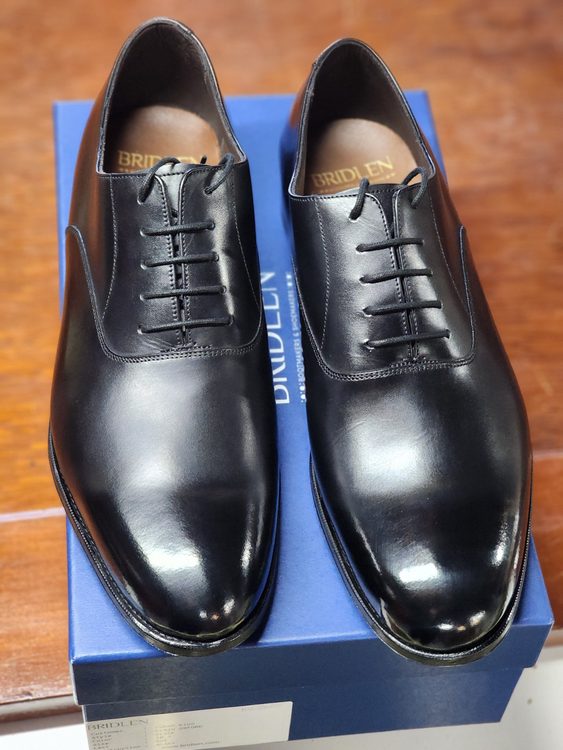
- A plain-toe Oxford
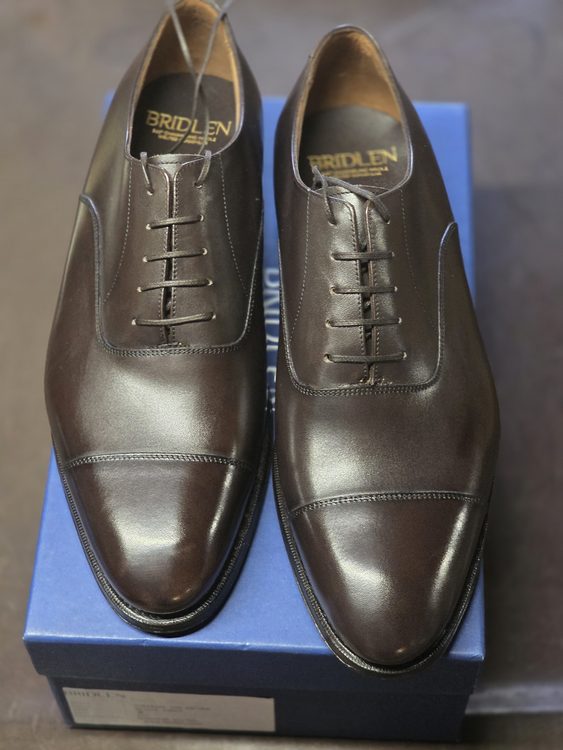
- A cap-toe Oxford
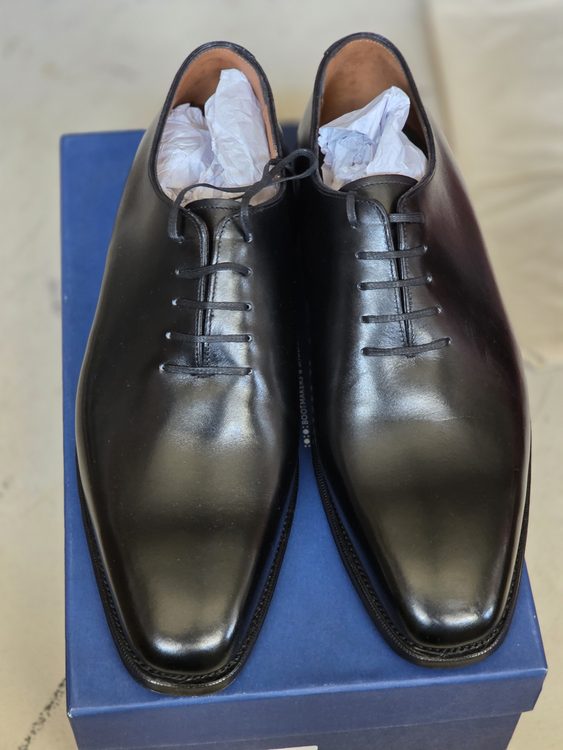
- A wholecut Oxford
- A wingtip Oxford
- An adelaide Oxford
- A spectator Oxford
- A saddle Oxford
- A semi-brogue Oxford
- A quarter-brogue Oxford
- A balmoral Oxford
- and the list can go on and on!
They are all Oxfords because they all use a closed lacing system.
What Is a Wingtip?
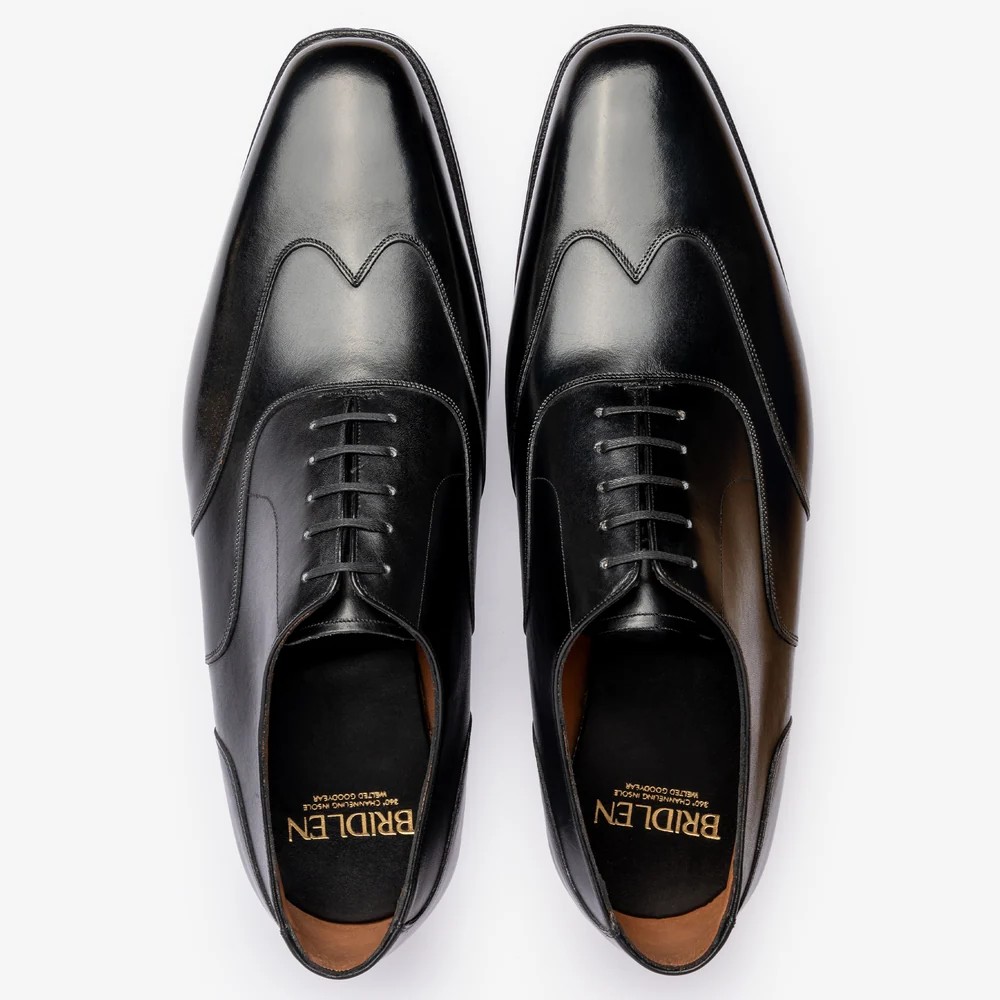
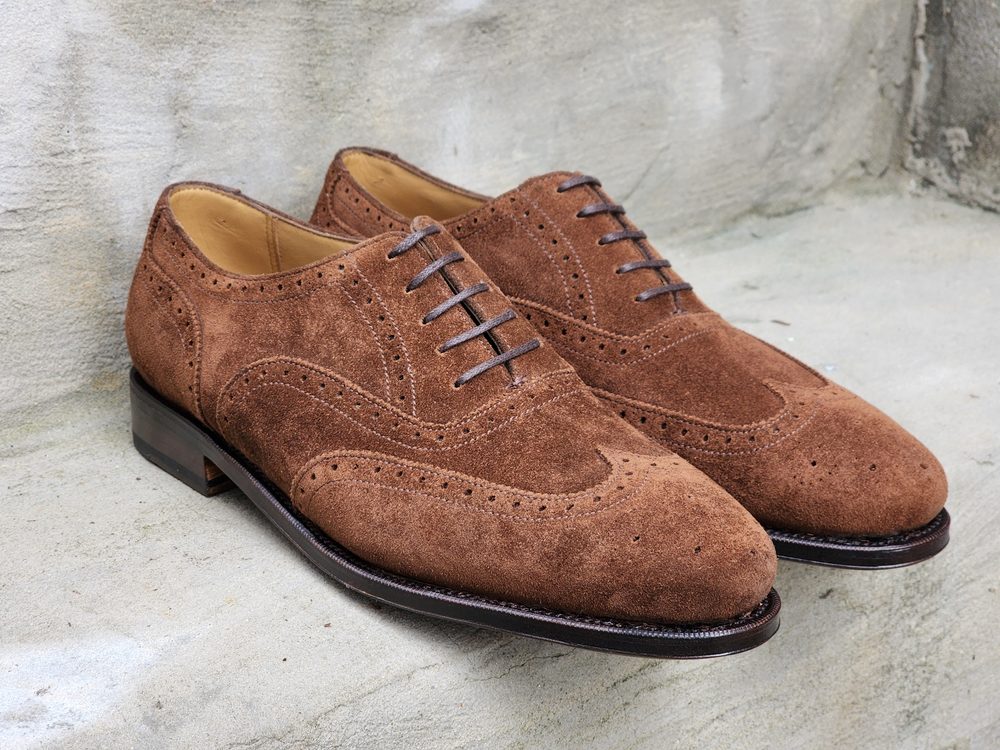
A wingtip refers to the shape of the decorative toe cap. Specifically, it is the familiar W-shaped piece of leather across the toe, with the sides extending backward along the shoe like wings.
That is where the term comes from. Nothing more complicated than that. If the shoe does not have that wing-shaped toe treatment, it is not a wingtip. Plain and simple.
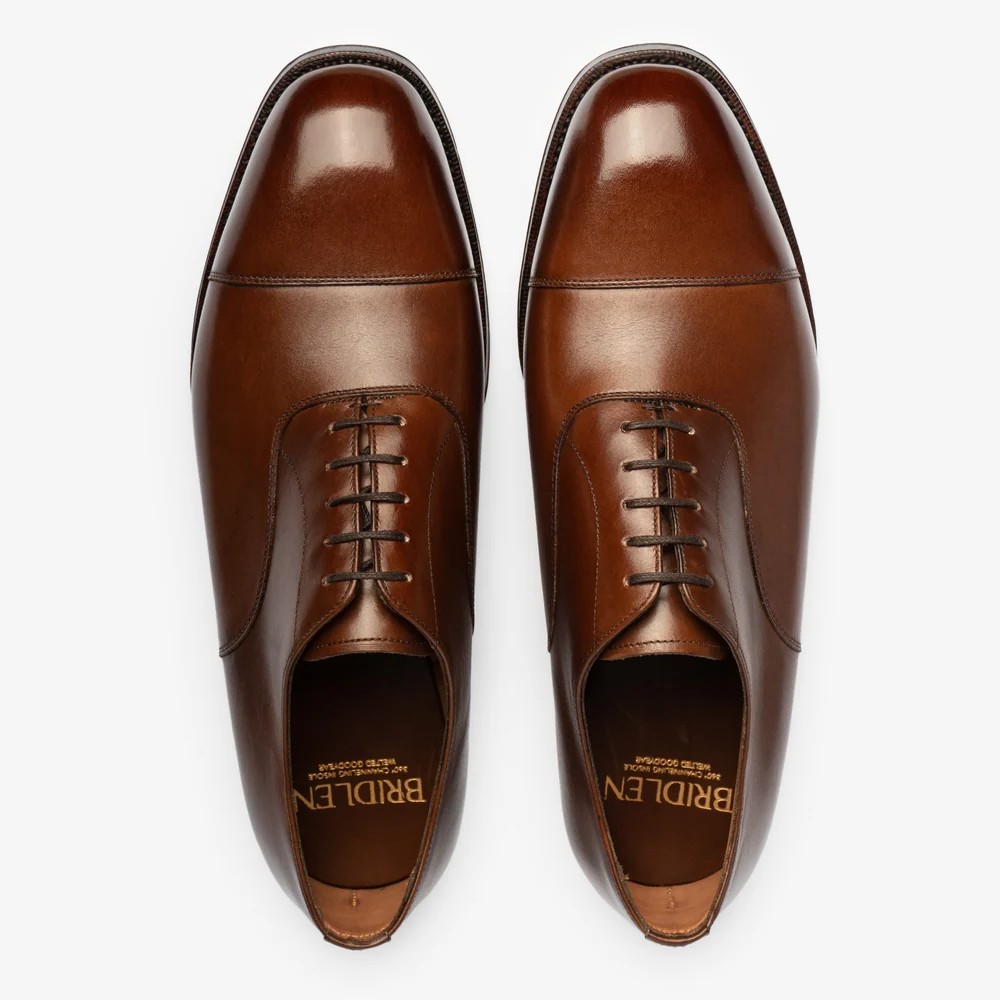
A straight cap-toe Oxford, for example, is not a wingtip. A plain-toe Oxford is not a wingtip. An Adelaide with a straight cap is not automatically a wingtip simply because it has broguing.
The actual shape of the toe decoration is what determines whether it is a wingtip.
This is where the terminology often gets confused, particularly in the United States, where at some point “wingtip” seems to have become a generic term for a traditional men’s dress shoe.
I still do not know exactly where that came from. But I have met plenty of people who will look at virtually any Oxford and call it a wingtip. You can show them a plain black cap-toe Oxford and say, “That is actually a cap-toe Oxford,” and somehow five minutes later it becomes a wingtip again.
It reminds me of people who call Allen Edmonds “Allen Edwards.” You correct them, and somehow the next sentence is still, “Yes, Allen Edwards—that’s the one.” Or people who call me Jason despite knowing it’s Justin. Some people just prefer to not be accurate in their speech.
What Is a Brogue?
Then we have the term brogue, which causes another layer of confusion. Broguing refers to the decorative perforations punched into the leather. Those little holes and decorative patterns are what make something brogued. They do not determine whether the shoe is an Oxford or Derby.
So you can have:
- A brogued Oxford
- A brogued Derby
- A brogued boot
- A brogued wingtip
- A brogued cap toe
- A full brogue
- A semi brogue
- A quarter brogue
- A brogued loafer
- And again the list goes on
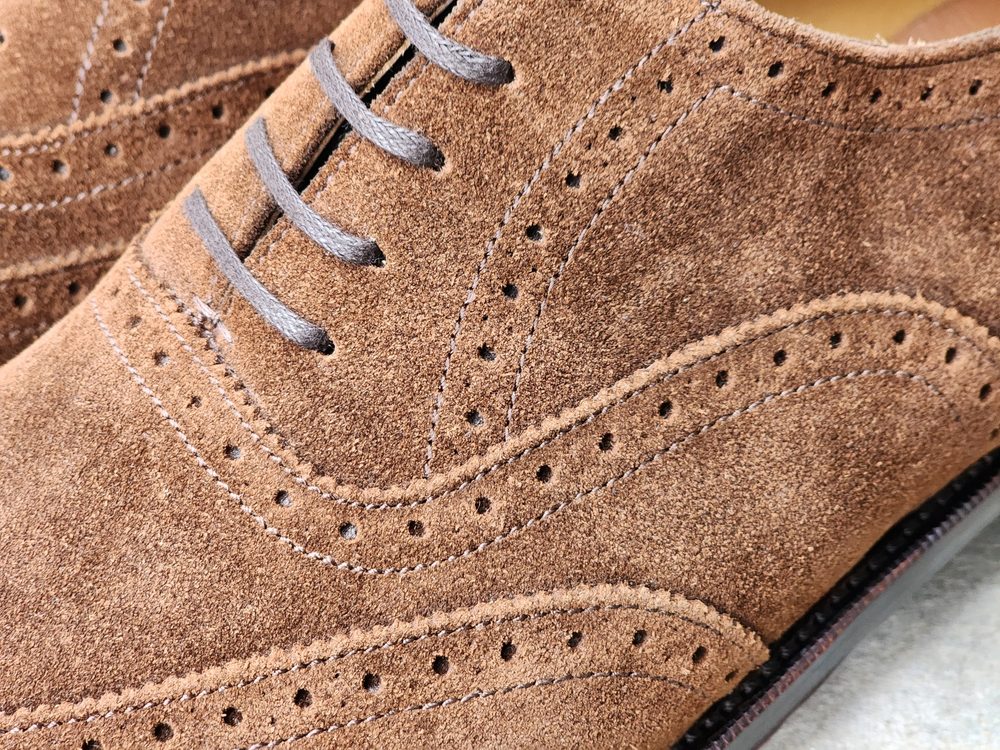
This is why simply referring to something as “a brogue” does not completely describe the shoe. Any shoe can be brogued.
It tells you something about the decoration, but not necessarily its construction.
And this is also why wingtip and brogue are not interchangeable terms. Yet a brogued wingtip is quite common 😉
Most traditional wingtips are, in fact, brogued, which is probably why the terms became associated with each other. But the two words describe different things.
Wingtip = the shape of the toe decoration.
Brogue = the perforated decoration itself.
One Shoe Can Have Several Correct Names
This is where shoe terminology becomes interesting.
A single shoe can have numerous names, all of which are technically correct because each term describes a different characteristic.
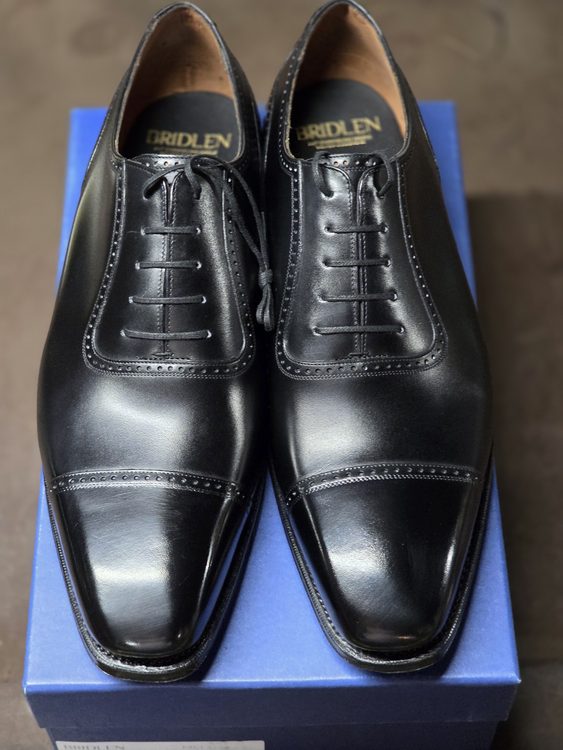
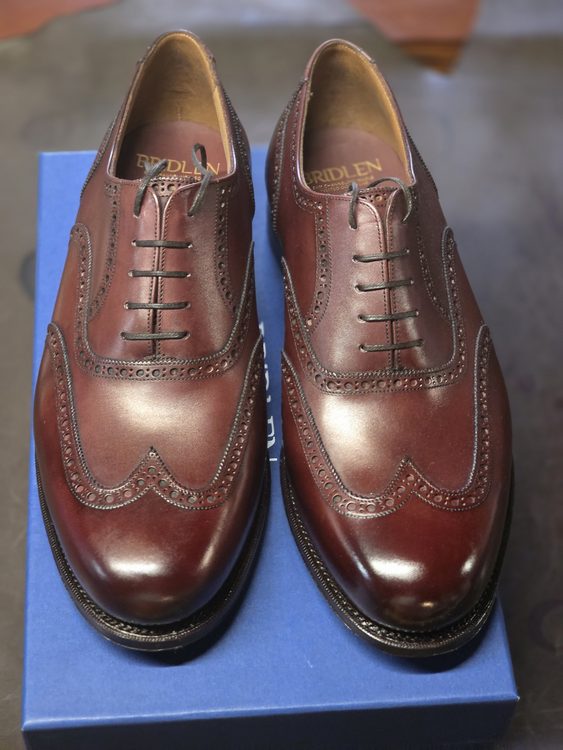
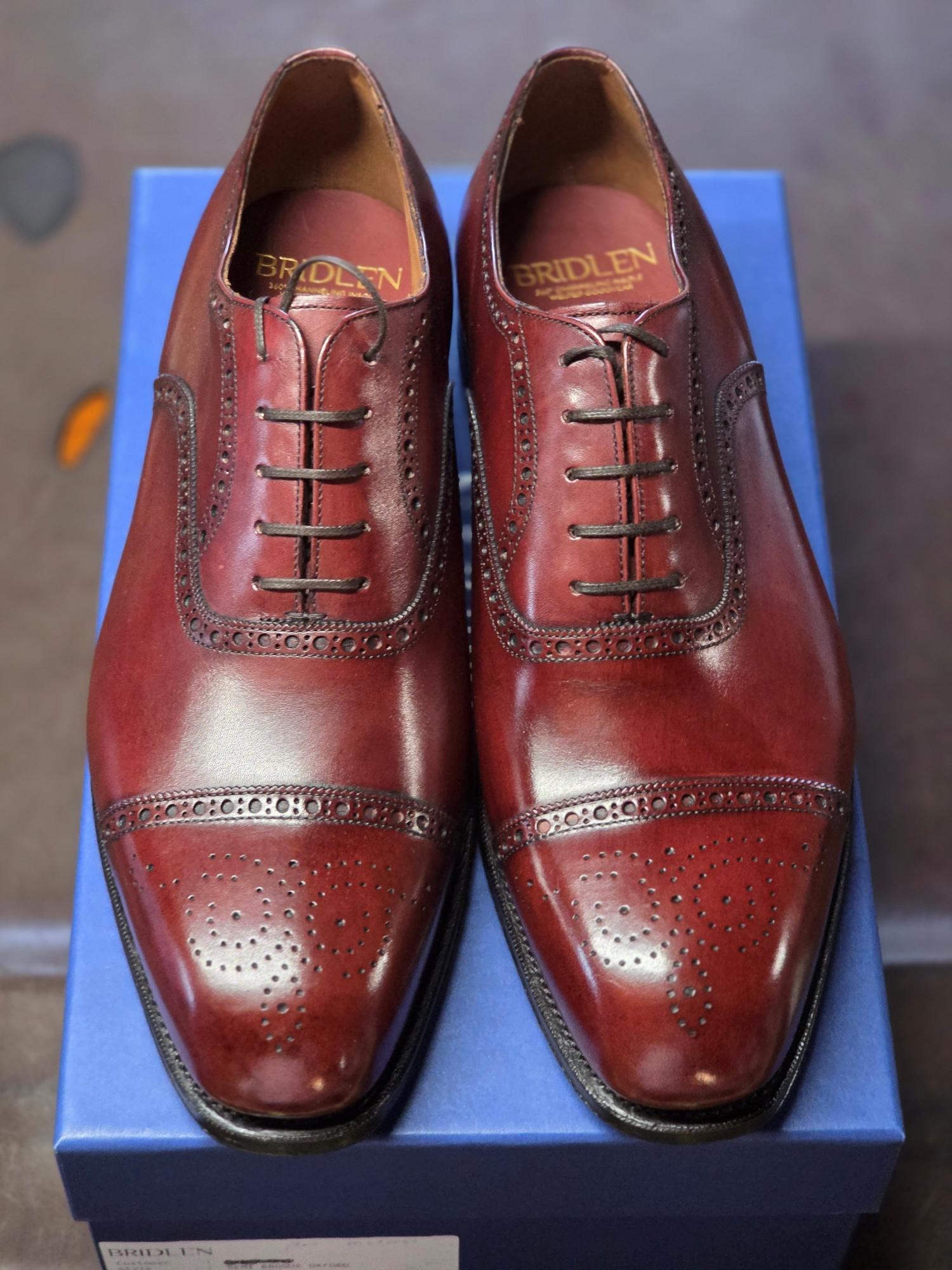
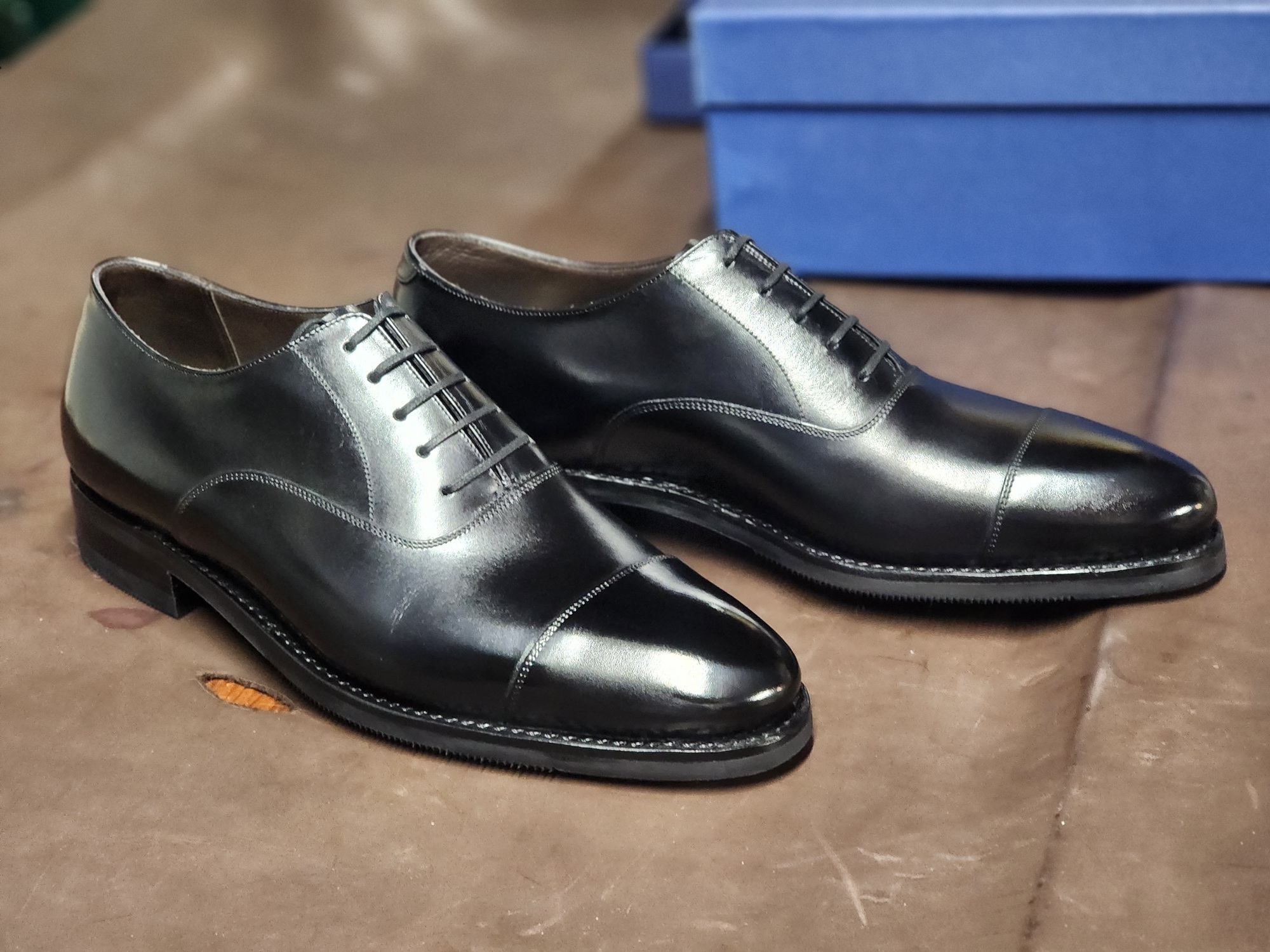
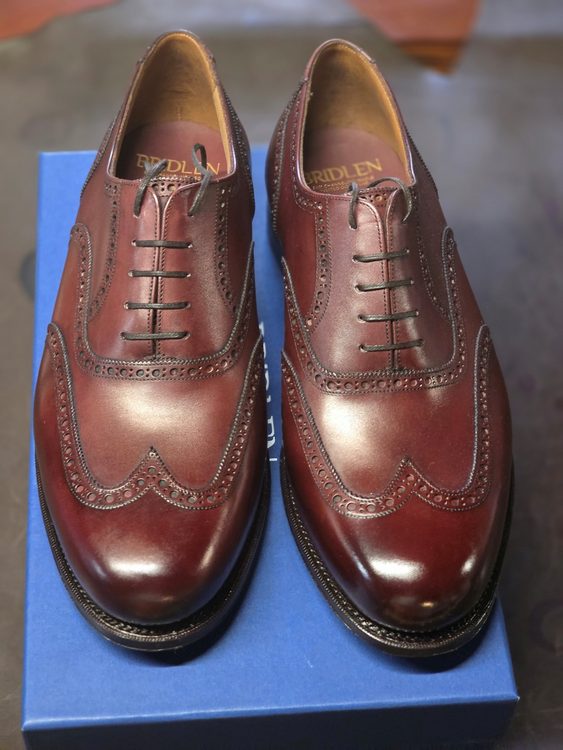
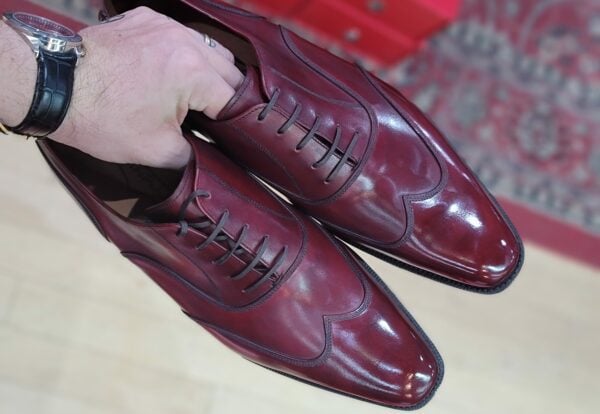
Take the Bridlen shoe above, for example. That shoe could be described as:
- An Oxford, because it has closed lacing.
- A wingtip, because it has the W-shaped toe treatment.
- A brogue, because it has decorative perforations.
- And a spectator, or co-respondent, if it had a contrasting two-tone appearance. (This one does not, so it is not a spectator, but if it had a white vamp/quarter, it would be)
None of those names necessarily contradict one another. They are simply describing different aspects of the same shoe.
This is one reason learning proper shoe terminology can seem confusing at first. People often assume there must be one single name for every style. In reality, shoe names tend to stack on top of each other.
Oxford is like ‘car’, while wingtip is like ‘4-door sedan’.
What Is a Cap-Toe Oxford?
A cap-toe Oxford is probably the easiest example to demonstrate the distinction.
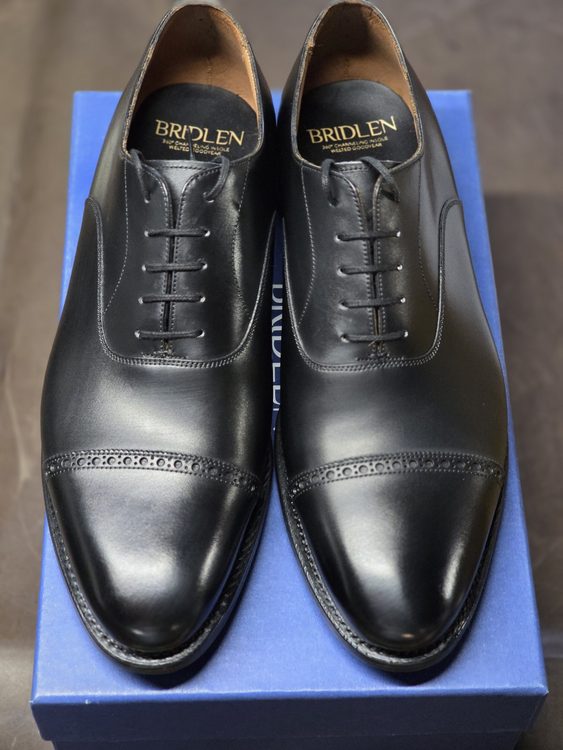
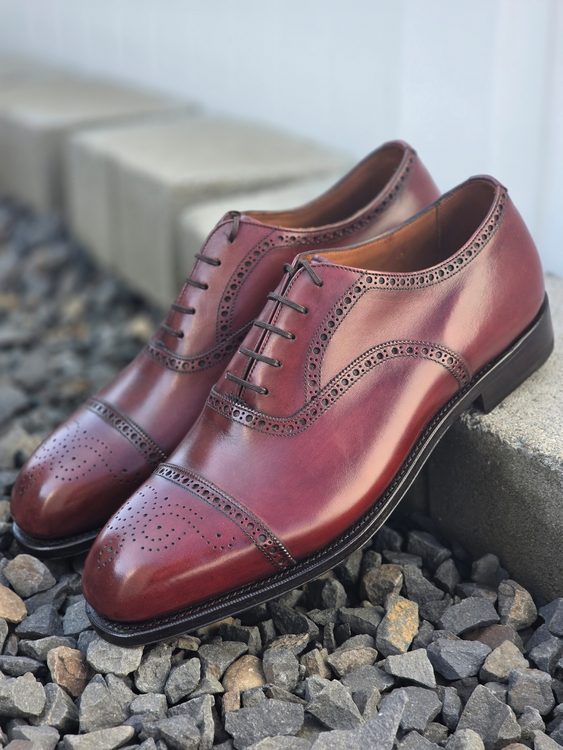
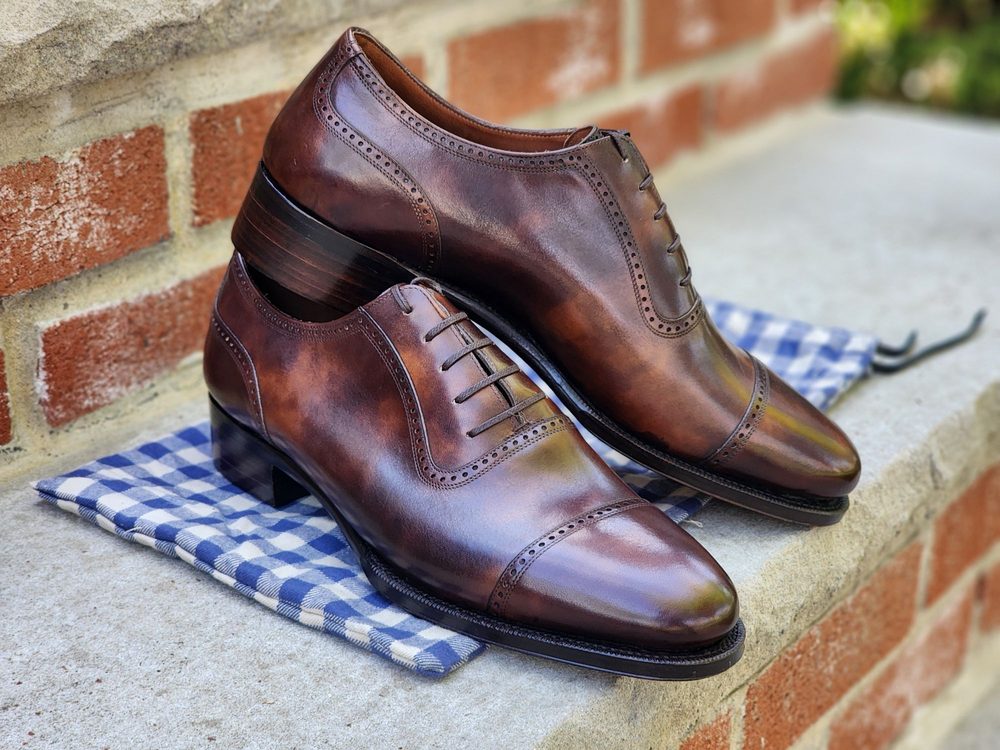
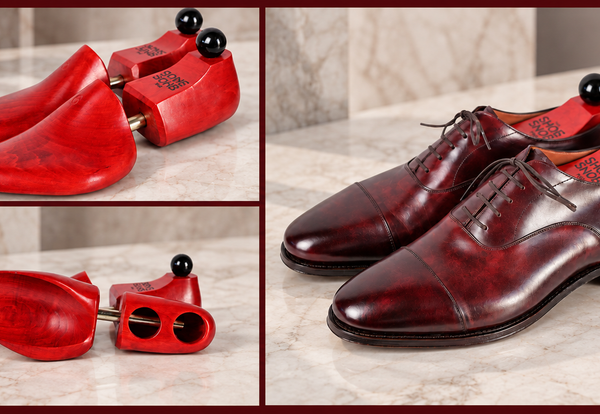
The classic black business shoe—particularly the traditional English version—is often a cap-toe Oxford. You can see that above. It has closed lacing, which makes it an Oxford. And it has a straight piece of leather running across the front of the shoe, which creates the cap toe and ultimately defines its name.
It may or may not have broguing along that cap. If it does, however, it then becomes a quarter brogue, but it is still essentially a ‘cap-toe’.
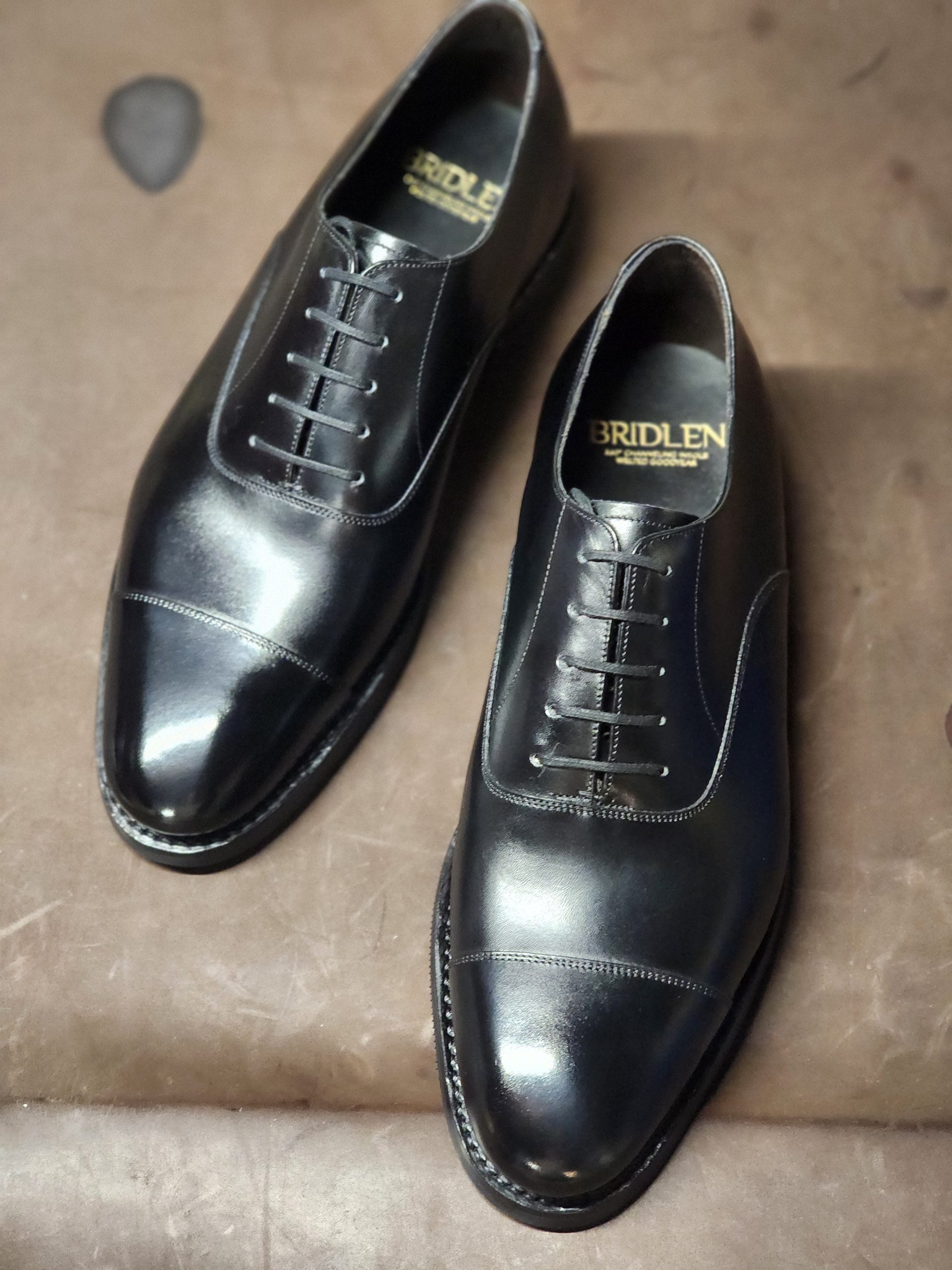
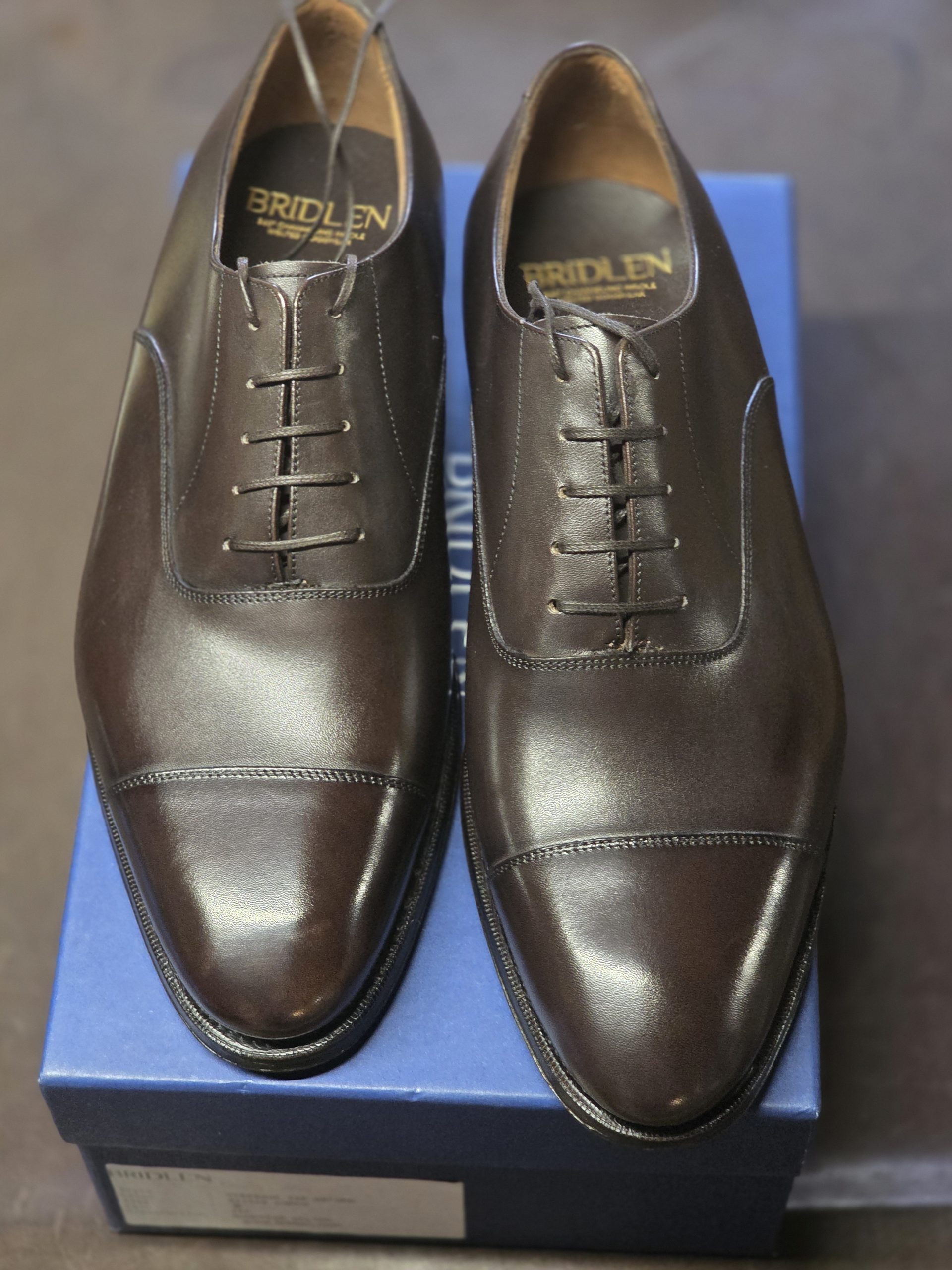
But unless that cap forms the distinctive W shape that extends backward along the sides of the shoe, it isn’t a wingtip. It is simply some type of oxford.
That was essentially the entire point of my original rant. Calling every Oxford a wingtip is a little like calling every car a convertible. A convertible can certainly be a car. But being a car does not automatically make something a convertible.
Oxford vs Derby Is Another Important Distinction
While we are clearing up terminology, there is another distinction worth mentioning.
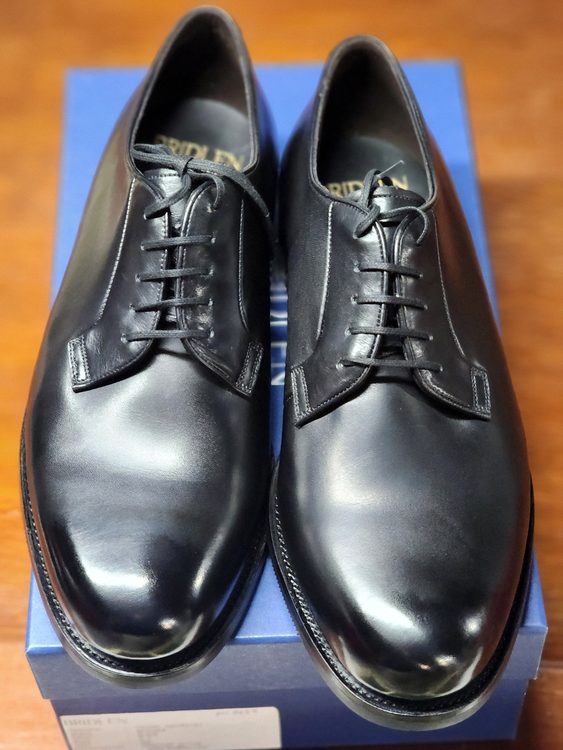
Not every lace-up dress shoe is an Oxford. The other major shoe design is the Derby, sometimes called a blucher depending on the pattern pieces and terminology being used. Americans often use the blucher, whereas the British often use Derby.
The key difference is the lacing. On an Oxford, the quarters are closed underneath the vamp. On a Derby, the quarters sit on top of the vamp and can open more freely.
This may seem like a small technical difference, but once you know what you are looking at, it becomes very easy to spot. And again, either shoe can have a wingtip.
You can have a wingtip Oxford. You can also have a wingtip Derby. This demonstrates why “wingtip” cannot be another word for Oxford. Even a loafer can be/have a wingtip.
The Simplest Way to Remember It
If all of this terminology starts becoming confusing, remember three simple ideas:
- Oxford = the lacing construction.
- Wingtip = the W-shaped toe design.
- Brogue = the decorative perforations.
Once you separate those three concepts, most of the confusion disappears. A shoe may contain one, two, or all three characteristics to make up one design. The full brogue is the perfect example of that, as explained above.
And then, of course, we can start adding terms such as Adelaide, balmoral, longwing, spectator, semi-brogue, quarter brogue, and countless others. But those can be lessons for another day.
The important thing is that the next time you see a perfectly innocent cap-toe Oxford, please resist the urge to call it a wingtip or a balmoral.
Some of us are trying to keep shoe terminology alive.
All of the shoes in this post are by Bridlen. Found here: https://bridlen.com/
I also sell Bridlen on The Shoe Snob Shop: https://www.theshoesnob.com/collections/bridlen
—Justin FitzPatrick, The Shoe Snob
Shop · Marketplace · Patreon






The same people – and a lot more, in my experience – call a blucher (or basically anything that’s not a boot, a sneaker, or a loafer) an Oxford, so there you go.
It’s even worse than that – I’ve been noticing that a lot of people (even supposed menswear professionals) call a wing collar on a shirt a “wingtip”… Drives me mental.
Also, I was incredibly disappointed when Colin Firth’s character in “Kingsman: The Secret Service” got the definition of an Oxford wrong. Ruined my suspension of disbelief.
Yup. We’ll never know why nonsense always spreads like there is no tomorrow but wisdom doesn’t… Sign of the times….
Could you do an article on saddle shoes to include solid color, suedes, and two tones?
Many thanks!
You should take advantage of my search function 😉
https://theshoesnobblog.com/saddle-shoes-return-of-a-classic-2/
Good morning and excellent historical response to the saddle shoe with fashionable illustrations.
Many thanks,
Roderick