

Is Gemming in Shoes Bad? The Truth About Goodyear Welting
There’s a long-running argument in the shoe world that refuses to die: Is gemming in shoes bad?
You’ll hear people say that it’s cheap, that it fails, that it’s inferior to hand-welted construction, and that you should avoid it at all costs. And like many things in this industry, that argument is built on a mix of partial truth, misunderstanding, and a bit of snobbery thrown in for good measure.
So let’s clear it up properly.
What Is Gemming in Shoes?
Before we even ask, ‘is gemming in shoes bad?’, we need to understand what it actually is.
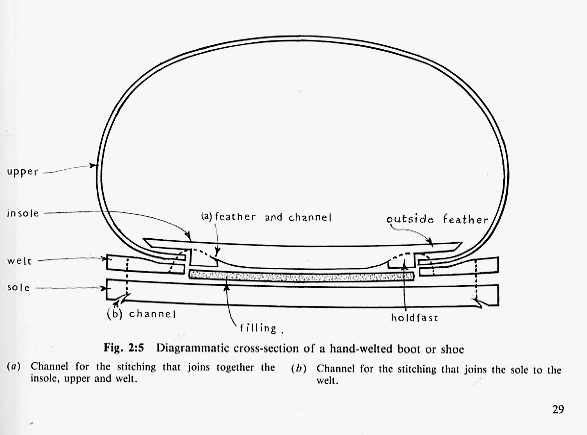
Gemming is the canvas rib that’s glued to the insole in most Goodyear welted shoes. That rib is what the welt stitch goes into, replacing what would otherwise be a carved holdfast in the leather insole.
In simple terms, it’s a construction shortcut—but not necessarily a bad one.
And here’s the reality that a lot of people conveniently ignore:
The vast majority of Goodyear welted shoes on the market use gemming. Even very good ones.
Why People Say Gemming Is Bad
The main argument goes like this: Gemming is glued, and glue can fail. Therefore, gemming is a weak point in the shoe and makes it inferior.
On paper, that sounds logical. In practice, it’s exaggerated.
Yes, gemming can fail. But so can a lot of things in a shoe. Welts fail. Soles separate. Heels come loose. That doesn’t mean the entire method of construction is flawed. This is where the conversation often gets skewed—people take a possibility and present it as an inevitability.
It’s the same argument we often face in reality, where certain people want to make the exception for the few at the sacrifice of the many. The exception becomes the rule instead of what it simply is: The Rare Exception.
Is Gemming in Shoes Bad? Not Really
Let’s answer the question directly: No, gemming in shoes is not bad—at least not in the way people make it out to be.
If gemming were truly a major flaw, the entire Goodyear welted shoe industry would have collapsed a long time ago. It hasn’t. In fact, it thrives on this exact method of construction.
A well-made shoe with gemming can last years, take multiple resoles, and perform exactly as it should. That is exactly why this idea of Gemming = Bad, cannot become the rule. Its premise is weak as it contradicts years of people wearing great shoes that lasted +20 years, which had gemming.
The idea that gemming automatically makes a shoe “cheap” is simply not true.
Where the Argument Falls Apart
The problem isn’t gemming itself—it’s how people interpret it.
There’s a tendency, especially online, to chase absolutes.
Hand welted = good | Gemming = bad.
But shoemaking isn’t that binary. A poorly made hand-welted shoe can be worse than a well-made Goodyear welted shoe with gemming. Construction method alone doesn’t determine quality—execution does.
And that’s the part that often gets lost and often forgotten when slogans and ideas get abused, especially online by ‘know-it-alls’ that really know little to nothing.
When Gemming Can Actually Be an Issue
Now, to be fair—and this is important—there are situations where gemming becomes a problem.
- Very low-quality adhesives
- Poor factory application
- Excessive resoling over many years
In those cases, yes, the rib can detach. But this typically happens far down the line or in shoes that weren’t well-made to begin with. So again, the issue isn’t gemming as a concept. It’s bad manufacturing to start.
Gemming vs Cut Holdfast: What’s Actually Different?
If you look at the structure of a welted shoe, the holdfast is the critical point. It’s the part that connects the upper to the insole, and then the welt to that same insole. Everything depends on it.
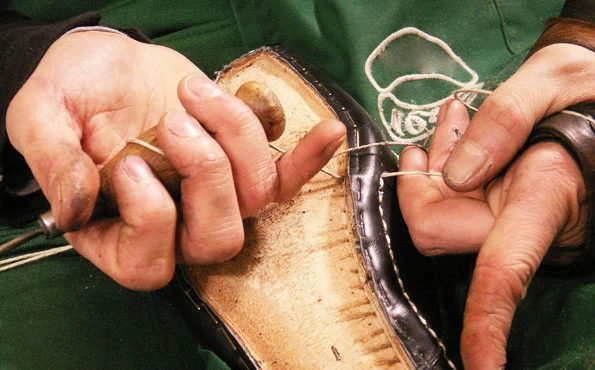
When done by hand, a shoemaker cuts the holdfast (or rib) directly into the leather insole. Typically, you’re looking at something around 2mm in height and anywhere from 4–8mm in width, depending on where it’s made—Italy tends to be slimmer, England a bit wider. It’s controlled entirely by hand, and yes, it’s a beautiful thing when done well.
Now compare that to gemming.
With gemming, that rib is no longer carved—it’s a canvas strip glued onto the insole. Because a machine is doing the stitching, the dimensions change. The rib becomes taller and much thinner—usually around 3–4mm high and about 1mm wide. That’s not because it’s worse, but because it has to accommodate a different method of construction.
Here’s where things get interesting.
There’s also a machine method that cuts the holdfast directly into the leather insole—so no canvas rib, no gemming. But even then, the machine has to create the same kind of shape: tall and narrow, just like the gemmed version. And despite what people like to claim, there’s no real evidence that this leather holdfast is any stronger than the canvas one used in gemming.
The only real argument people fall back on is that gemming is glued, whereas the cut holdfast is part of the leather itself.
Fair enough—but let’s be realistic.
We see glued soles last years, even though they’re exposed to constant stress, moisture, and wear. The gemming rib, on the other hand, sits inside the shoe, protected by cork, away from water and friction. So the idea that it’s just going to fall apart quickly doesn’t really hold up in practice.
And if it did?
Then brands like Gaziano & Girling, John Lobb, and Edward Green—who all use gemming in their RTW—would be in serious trouble.
They’re not. Their shoes aren’t falling apart. They last years. They get resoled. They perform exactly as they should.
So no—there isn’t a convincing argument that a machine-cut leather holdfast is inherently better than a gemmed one.
Now, to be clear:
A fully hand-cut holdfast, welted by hand, is superior. No question. But it’s also far more labor-intensive, and far less practical if you’re trying to produce shoes at a price point that most people can actually afford—especially in countries where workers are paid livable wages for the ‘Western World.’
The Reality: Hand Work vs Modern Production
Now, as a counterpoint to everything I’ve said, let’s be clear about one thing:
Doing everything by hand, using all genuine leather components, is always going to be better. There’s no debate there.
But that doesn’t suddenly make modern methods like gemming a “rip-off.” That’s where people lose the plot.
If you look at vintage shoes from the early 1900s, yes—they were often better made in an all-around sense. There was more handwork involved, and materials were, quite frankly, easier to source at a higher quality.
But the world was completely different then.
Leather was more abundant. Labor was cheaper. Expectations were different. Today, good leather is harder to come by, wages are significantly higher, and production has to move faster just to survive. That’s not a shoemaker problem—that’s a global reality.
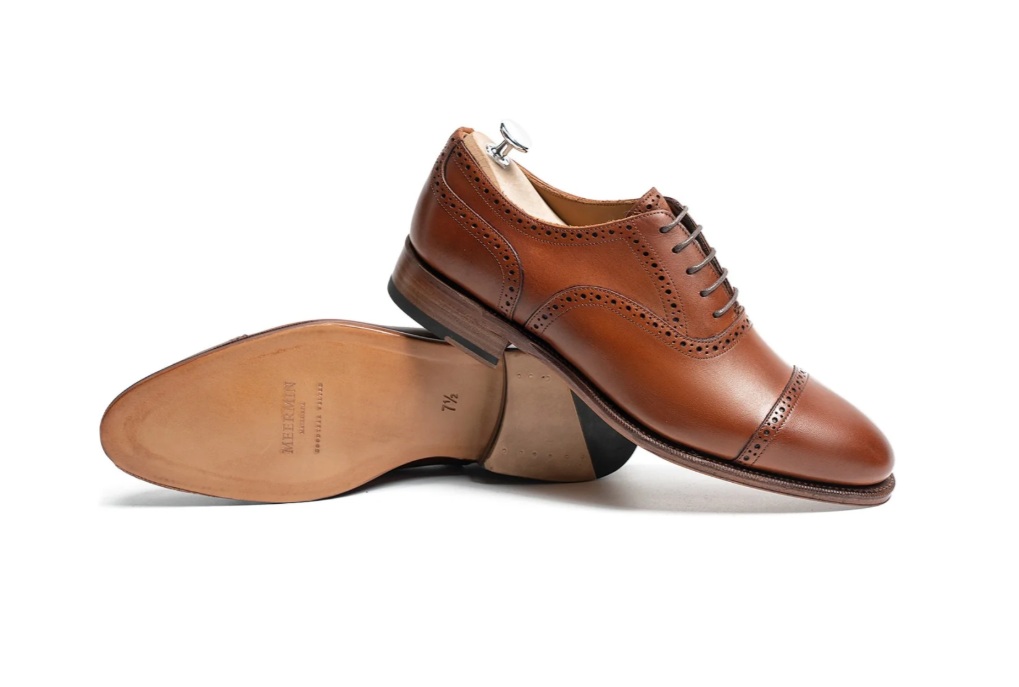
And yet, people still expect the impossible. They want Gaziano & Girling quality at Meermin prices. It doesn’t work like that. It never has.
Something has to give.
Why Gemming Exists (And Why That Matters)
Gemming exists because it saves time and cost. That’s the truth.
Whether that saving is passed on to you, the consumer, or kept as margin by the company is another discussion entirely. But the method itself doesn’t suddenly make the shoe inferior.
A shoe from Gaziano & Girling that uses gemming is not going to fall apart any faster than a shoe from a maker using a machine-cut holdfast like JM Weston or Bridlen. There’s simply no real-world evidence to support that claim.
And that’s what this entire debate comes down to—people arguing theory over reality.


So… Is Gemming Bad?
Is doing things by hand better? Yes, of course.
Is gemming bad? No, it isn’t.
For the vast majority of people, it’s not going to impact the lifespan of your shoes in any meaningful way. Unless you’re the type to wear the same pair every single day for years on end, you’re simply not going to notice a difference.
And if gemming were truly such a fatal flaw, do you really think so many respected shoemakers would be using it?
They wouldn’t.
Why This Debate Even Exists
This debate exists because people like to talk. More specifically, people like to argue online—often without real manufacturing experience, and often without applying basic logic.
If every brand abandoned gemming and only made fully hand-welted shoes, then shoes from England, Western Europe, or the U.S. would become unaffordable for nearly everyone.
It’s simple math. But that reality doesn’t get clicks the same way bold claims do.
Final Word
To those who criticize gemming, take a step back and think about this: Many—if not most—of the shoes you’ve worn, loved, and praised for years were made using this exact method.
They’ve been comfortable. Supportive. Durable. So clearly, it works.
And if you’re in a position to only buy and wear fully hand-welted shoes, then consider yourself lucky.
But don’t confuse “better” with “necessary.”
If you really want to understand where gemming fits into the bigger picture, you need to look at the full comparison between construction methods—especially hand welted vs Goodyear welted. I break that down in detail here.
—Justin FitzPatrick, The Shoe Snob
Shop · Marketplace · Patreon
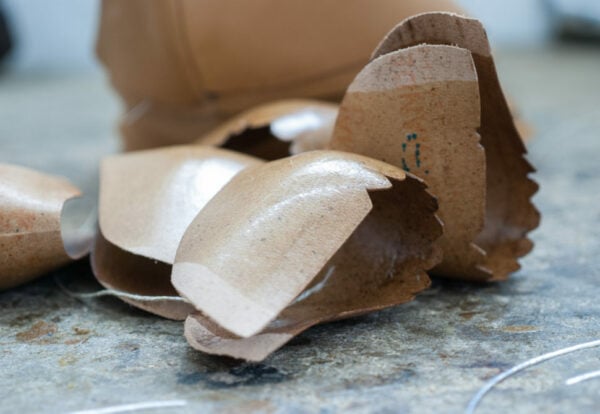
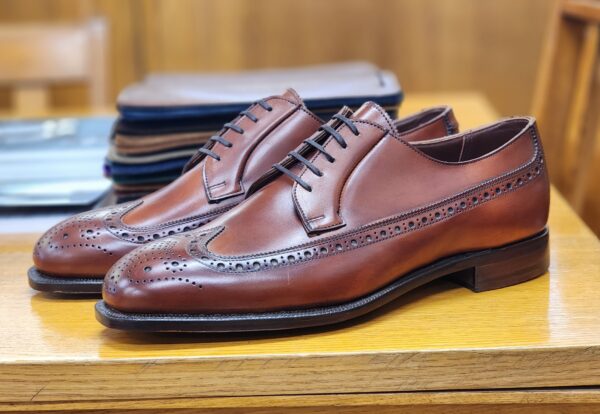
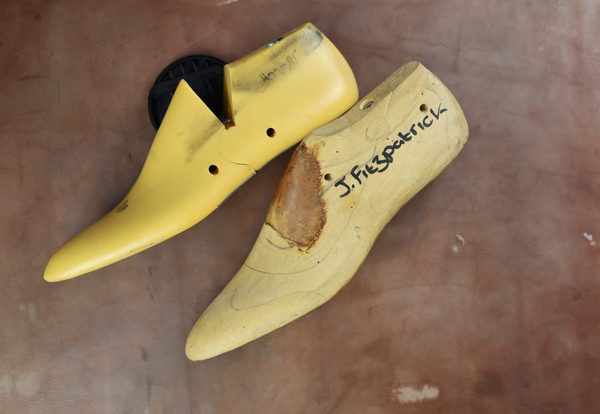
***Please note: The technical pictures do not belong to me. If you are the owner, please email me for credit, as I forgot where I got them from***







Nice post, Justin.
I agree with you on both points – I like the idea of hand-welting, and believe it to have more integrity (both artisanal and structural!). But also I think your point is dead right: for all my or anyone else’s pontificating on StyleForum about G&G etc being gemmed, we all wear gemmed shoes anyway. And it’s been a long time since I wore out a pair of shoes.
Goodyear welting, which as you said is 99% gemmed, even from the top makers, is held up as a standard of quality all over the world for a reason: for most people, it works very well and can last a lifetime. Certainly I’ve had (and have) pairs for a decade or more that show no sign of gemming failure, despite gross ill-treatment in some cases. And those are much cheaper, lower quality shoes than John Lobb or Edward Green produce.
I think it’s a fair question to ask, if you’re selling shoes for �800, maybe whether it’s worth going the extra mile for hand welting. But if we want our J Fitzpatricks for �300, there’s no excuse for moaning. There is always a better shoe, a more “hand-made” shoe, a more “artisanal” shoe, or just a shoe you or I like more than the next one. But I share your conclusion: writing off goodyear welting and gemming is simply hysterical. It accounts for 99% of the world’s good shoes.
Excellent Justin! Very well said.
Only a minority people can afford a pure bespoke shoe collection. The discussion exists because lots of people knows the price of everything, but the value of none.
The Reading Guy
I was under the impression that Vass sells his cheapest handsewn RTW shoes for 390� (http://www.vass-cipo.hu/Arlista/VassCipoArlistaEng.pdf). S
o, with all due respect, maybe there is a way to produce decent shoes and sell them with decent prices.
As manufacturer of footwear, I want to give my opinion about the topic.
He is not bad Gemming, in fact it is very good.
But he is a stupid to want to compare it with the handmade, an Audi is not bad but certainly it is not a Roll Royce, and what is mas important it does not try to be. A market exists for every thing, which is important is that the manufacturer is honored and says that it is what selling this one, Inside the Gemming there exist many ways of producing it and qualities and % of workforce, not they all are equal. This also happens in the shoes handmade.
Enrile
UK minimum wage is Euros 7.30, compared to Hungarian minimum wage of Euros 1.70.
So yeah, it is possible to make hand-welted shoes cheaply. But only if everyone making them is sufficiently underpaid.
Really like this article (as I do EVERY one of Shoe Snob’s articles). Agree that a gemmed shoe is really fine, and that it will be VERY rare to see that gemming fail. I only have an issue when high-end makers sell shoes at $1000+ prices and make the “handmade” claim. Goodyear is not “handmade”. It utilizes a machine and ultimately is held together by glued on textile. I believe that there is an “ego aspect” to the $1000+ shoe purchase, and that at this price point, many buyers really DO want a “handmade” shoe. For honesty’s sake, the “handmade” part should be dropped from the marketing, IMO.
I’ve seen comments from shoe factory repair staff which say that gemming failure is extremely common. These pretty much corroborate what the artisan makers say – that gemming failure is a matter of when, not if. The wearer probably does not notice it as such because the welt stitching and pasting keep the shoe together. But this failure will shorten the life of the shoes and lead to distorted shape. If I pay �400+ for a pair of shoes, then yes, I will want them to last longer and look good for longer than a pair costing �150 or less. (And I hate the waste of having to buy new shoes when the same materials could have been used better to make more durable product.) But they probably won’t if they are made by the same construction process. If you pay �400+ for a pair of gemmed shoes I think you are paying for the name, that is, being played. Just my 2p worth. Sites like this one also have a vested interest in the matter as they are marketing gemmed footwear.
Economic conditions being what they are you can;t make handmade shoes e.g. in the UK for �400 prices. But this doesn’t justify spending “high end” prices on shoes which are mass produced. If more people were well informed and refused to pay above the odds for standard construction then manufacturers would have to respond somehow and up their game. Maybe wages of artisans would then also improve. It also saddens me that it is in fact *not possible* to learn artisan shoemaking in college in the UK any more. Where is the next generation of artisans going to come from?
First off, whether or not I have my own shoe line that has goodyear welted shoes makes no difference, as if you have read this blog for longer than a week/month/year you will know and see that I have always promoted goodyear welting from all brands, even though I have learned bespoke (hand welted) shoemaking too. And my shoes anyway are not +�400. Secondly, tell me what shoemakers (outside of rubbish designer brands) charge +�400 and mass produce shoes, most likely in the way that you are meaning? Edward Green, G&G, John Lobb etc all make shoes on a very small scale compared to those like Church’s, C&J and the likes, and even they are still small when you start thinking about other brands like Grenson, Paul Smith or any other high street brand. Thirdly, saying that gemming failure is a matter of ‘when’ is probably the most naive thing I have heard as it is the same as saying that the upper cracking is a matter of ‘when,’ or that the blake stitch is going to come undone is a matter of ‘when’ or that the glue from a glued shoe is going to separate, again being a matter of ‘when’….the shoe lifespan is simply a matter of ‘when.’ This argument is so stupid and frankly hypocritical by all those involved as I guarantee that everyone that has commented wears and loves their goodyear welted shoes….There is a reason that people swear by EG, G&G and the likes and that other lower end makers are not as good. If you really knew anything about shoemaking you would understand that at this level you are not paying for a name, but rather leather quality/attention to detail i.e. skilled artisanal work (time), and simply higher wages due to the country the shoe is made in…..Sure, when you buy Berluti’s, you are definitely paying for a name, and partially when getting Lobb’s but not for EG and G&G, whom still maintain honest prices when taking into account the cost of the product and the ability to make a business run smoothly through a healthy profit margin, the same that all shoemakers need to in order to grow their business….
At the end of the day, this is a silly argument made by those that really know nothing about shoemaking and just want a reason to try and cut someone or something down as they really have nothing better to do. If this argument was valid then all the successful shoemakers that produce these shoes would not be where they are today, or it would simply be the greatest scheme in history: making shit shoes and charging �400 for them, yet people swearing by their quality (even though the shoemakers are just ripping them off)…..give me a break man….
>whether or not I have my own shoe line that has goodyear welted shoes makes no difference, as if you have read this blog for longer than a week/month/year you will know and see that I have always promoted goodyear welting from all brands, even though I have learned bespoke (hand welted) shoemaking too.
I fail to see how that contradicts your having a vested interest, sorry.
All the brands you listed use gemming and some of them charge the earth. Does it really make a difference to this argument if they do so on a smaller scale than other, cheaper brands?
your argument was to try and strengthen your statement through saying that I had a vested interest, yet I was pointing out that even if I did not, I would still be arguing the same thing, as I have always promoted goodyear welting, and thus gemming…even before I had a “vested interest.” As per your last statement, whether they charge the earth or not, does not have anything to do with the argument that simply because they use gemming that means that they are ripping people off as according to some “the gemming will inevitably fall apart”….look now I am getting bored, basically this is about people who know nothing about shoe manufacturing making statements online that they really don’t know anything about, but are just saying it to cut people down….
“when not if” is obviously shorthand for a more precise statement. If you deployed charity in interpretation you would see that. But your intention here is simply to defend gemming.
my intention was to put to rest statements made by people who have never set foot in a factory, never made a pair of shoes and therefore don’t really know what they are talking about when they make naive statements about gemming falling apart before the shoes lifespan would otherwise be up nor the idea of why a shoe costs what it does…..not to defend gemming, rather to hush people who simply love to talk about what they really don’t know….. no need to respond, as I am so over this argument, believe what you like it makes no real difference to me….
Self appointed ‘Shoe Snob’ (demonstrably distinct from ‘aficionado’) defends gemming!
“there really is not any conclusive evidence that the leather holdfast is any stronger than it’s gemmed counterpart.”
An assertion, your assertion, but not a fact.
You are quite amusing. Enjoy reading the blog and have a great time thinking of the next pointless comment to write. Oh, and thanks for boosting my stats!
your argument was to try and strengthen your statement through saying that I had a vested interest, yet I was pointing out that even if I did not, I would still be arguing the same thing, as I have always promoted goodyear welting, and thus gemming…even before I had a “vested interest.” As per your last statement, whether they charge the earth or not, does not have anything to do with the argument that simply because they use gemming that means that they are ripping people off as according to some “the gemming will inevitably fall apart”….look now I am getting bored, basically this is about people who know nothing about shoe manufacturing making statements online that they really don’t know anything about, but are just saying it to cut people down….
I have a question as a shoe and custom last maker… When I was only a repairman getting trained for the first time I had the opportunity to resole my dad’s old Church’s of 35 yrs. as the last person to sew a new sole hadn’t removed the old stitches from the welt or used a machine with the same stitch count. The welt was so perforated I felt it could only be sewn well by hand. When I re-cork it, it looked to me as if the holdfast was leather and not gemmed but admittedly I didn’t have as good an appreciation of what I was looking at back then. So assuming it was leather, was it possible with older machine models to hand cut a holdfast and use a goodyear welter to sew the welt or does one have to use a machine like the one you described to cut a specialized holdfast? From what I could understand in John Bedford Leno’s The Art of Boot and Shoemaking ca.1885, (pg. 188 fig.87) that seemed to be the case as no holdfast cutting machine was described elsewhere in the book? As a shoemaker whose only ever made shoes by hand, (mainly to test my last making skills), I would like to one day offer quality shoes built around a better last design and I’ve been trying to think of ways to combine hand lasting with goodyear welting so as to offer shoes at an economical price tag. Information about what modern machines are needed is hard to come by let alone the older machinery and I would like to know the name of that holdfast making machine to see if there are any old ones that can be found? Also if you have any information on the type of older goodyear welters capable of sewing through a normal holdfast that would be equally helpful. I wonder, is it possible to make a kind of hybrid holdfast by making an angled incision in the insole and using a bone folder to fold up the flap the way some eastern european shoemakers hide the outsoling seam?
1- Where does the holding of the shape come from?
The pressure from the foot pushes the leather outwards. There is a rapid stitch between the sole, midsole, and the welt. This docked welt is what acts as a stop point to that pressure and what holds the outer shape of the last used for the shoe. When closing the shoe the gemming will define the position/shape that the welt follows when the welt-upper-gem are stitched together. Then the welt, midsole and sole are rapid stitched, at this point the role of the gem is no longer holding anything together, from then on the shape of the shoe will be held in place by the welt-sole rapid stitch, the “docked welt” I mentioned earlier. Trying to make people believe the gem holds the shape and the shoe together is f***ing ludicrous and it denotes that people saying so don’t comprehend basic engineering concepts, they can’t be taken seriously. If the gemming fails the only thing that maybe happens is that the insole gets to be a little loose (it’s not going to fail 270 or 360 degrees), that is if the cork filling doesn’t hold it in place.
2- The economics. Justin made very clear.
My grandfather adviced me not to argue with idiots, they will bring you down to their level and beat you with experience.
This anti gemming view comes from a bespoke boot maker who posts on Style Forum. A few years ago I spoke to Dean Girling about this issue given the furore on Style Forum. Dean was a true gent and spoke with me at length. He said that he’d never seen gemming break away and that Goodyear welted gemmed shoes will take just as many resolves as bespoke handwelted shoes. As far as I am concerned Dean is the Master and I fully trust him and what he says.
I’m still not exactly clear what “gemming” is. Is it a process or a component of the shoe?
it is a process of stitching the welt to a canvas rib (like a wall that sticks out and is cemented/onto the bottom of the insole)
Hi! I saw a photo of gemming. It is several centimeters thick.
What is the material inside the canvas and what role does it play?
I don’t understand, what you do mean ‘inside the canvas’?
Some material is wrapped in canvas.
If you cut it in half, it will be visible on some rib models. I can’t upload a photo to the comments.
More great content and education with your direct talk. Absolutley LOVE IT.
Totally agree! I remember having this discussion with Paul Sargent, he answered “yes, making it traditionally is better. But as we also do repairs for our custumers, I have never seen a pair come back because of a gemming issue”.
Darn good read and explanation, I think I understand. If you (Justin) have a YouTube video that dumbs-it-down further for people like me, please send a link.
Thanks Tim, glad that you enjoyed. I will see about making a video if I can. It would be hard to get three shoes half done to show it though. But maybe with sliding images over the video I can figure out a way 😉
I have watched hundreds of shoe resoling videos on Youtube and maybe once or twice have the videos shown gemming failure. If I recall, the shoes where gemming failed were older fashion shoes and never any of the English or American brands. I appreciate the fact that I can purchase quality shoes that use time-tested manufacturing methods that give me reliable & attractive shoes at a reasonable price.
Thanks for sharing Eric, the truth is often inconvenient for many. Thanks for helping share it.