The longer I work in footwear, the more I’ve realized that many of the things people obsess over simply don’t matter as much as the internet would have you believe. One of those things is heel stiffeners in shoes. When you spend 15+ years surrounded by shoes — everything from inexpensive entry-level pairs to elevated RTW and even bespoke — you eventually learn to separate the myths from the meaningful details.
One topic that receives far more attention than it deserves is the heel stiffener. Online discussions will often make it sound as though this single component determines whether a shoe is “quality” or not, yet that simply hasn’t aligned with what I’ve seen in real-world wear. I’ve handled, owned, worn, made, and compared shoes built with every type of heel stiffener you can imagine, and the truth is far more straightforward than the hype suggests.
So let’s start by understanding what we’re actually talking about.
The Three Types of Heel Stiffeners You’ll Find in Shoes
1. Full Leather
This is the traditional choice in handmade and bespoke shoemaking. It’s shaped by hand, skived by hand, and requires skill and time. You won’t find it often in factory-made shoes because it doesn’t suit mass production. It’s excellent, no question — but rare in the RTW world.
2. Leather Board
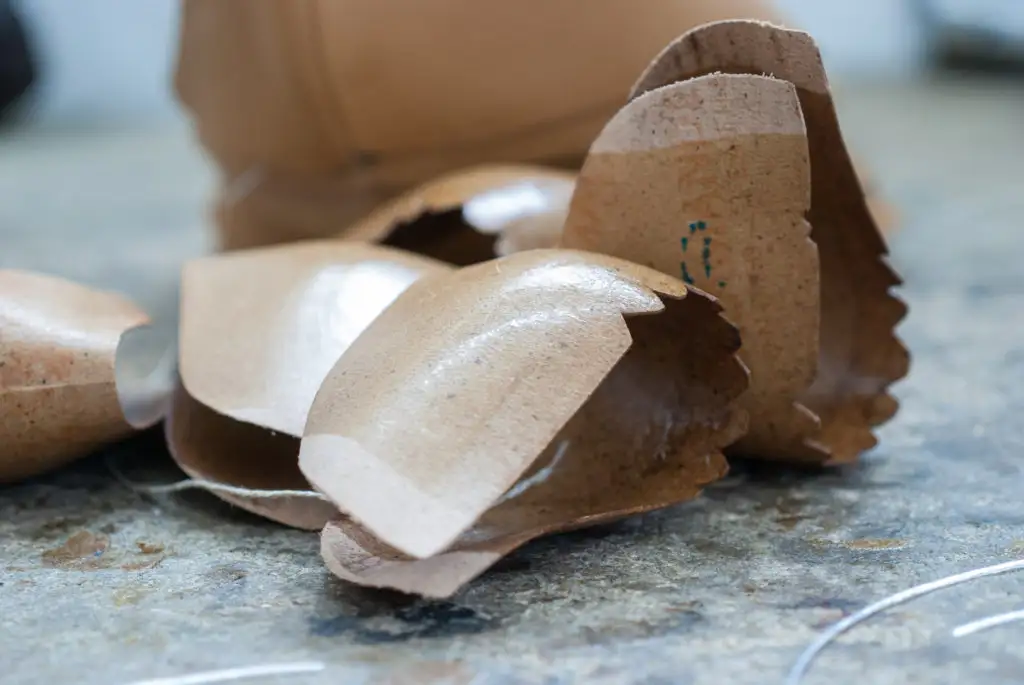
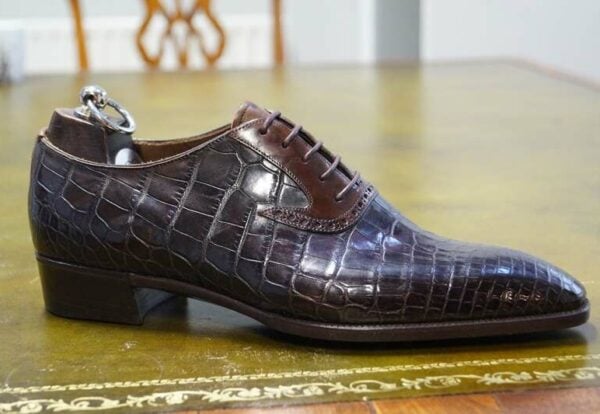
A leather composite that comes pre-shaped and ready for factory use (as the highlight picture shows). It’s designed to mimic the behavior of real leather. This is the material many higher-end RTW makers use, and it’s what many online “experts” point to as the “correct” heel stiffener for a quality shoe when leather is not an option.
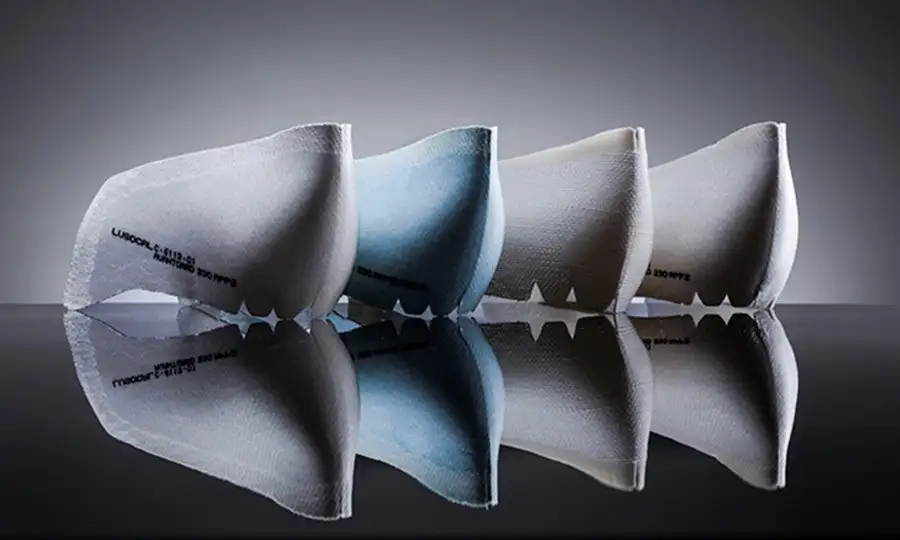
3. Celastic (Thermoplastic)
This is the most common stiffener in global production. It’s consistent, reliable, easy to use in a streamlined factory process, and inexpensive to produce. It molds reasonably well once broken in, and for the vast majority of wearers, it functions perfectly fine. Would I prefer this if given a choice? No. But does it make a shoe significantly inferior? No, as well.
Do These Materials Create a Meaningful Difference?
In my experience, not nearly as much as people think.
-All heel stiffeners — whether full leather, leather board, or celastic — start out stiff.
-All of them soften over time.
-All of them mold to your heel to some degree.
If you have particularly sensitive heels or existing foot issues, you may notice differences between materials, especially early on. That’s perfectly fair. But for most people, what determines comfort has far more to do with:
- the last shape
- the heel cup design
- the fit of the shoe
- the lining
- your break-in habits
- the socks you wear
- the pattern/line placements
A rigid celastic stiffener in a well-balanced last will often feel more comfortable than an “ideal” leather board stiffener in a poorly shaped one. This is one of the great truths that gets lost in online debates: materials matter, but not in isolation. Craftsmanship, fit, and balance matter more.
A Story That Perfectly Illustrates the Point
Years ago, when I was hosting trunk shows, my production initially used celastic heel counters. Later, I upgraded to leather board. One regular attendee always insisted he couldn’t wear anything with celastic because it “hurt his heels.”
By the time he came to the next show, we had stock made with leather board. He tried a pair (with the leather board stiffener) and said they felt “good, but a bit stiff” — exactly what a new heel counter should feel like.
Then he tried a sample pair that happened to be from the previous celastic batch. Same size. Same last. Same design. He put it on and immediately said it felt “so comfortable” and “perfect on the heel.” He had no idea it was the celastic version.
It was an excellent reminder of something I’ve seen many times over: our expectations often shape our perceptions more than the materials themselves.
Even so, despite liking the shoes, he still didn’t buy them — which is its own lesson!
So What Actually Matters When Choosing a Shoe?
This is where I want to be very clear.
I’m not saying all stiffeners are identical.
I’m not saying leather isn’t the superior material.
I’m not saying one should ignore construction entirely.
But I am saying this:
Heel stiffener material should not be the deciding factor when buying a ready-made shoe.
For 90% of people, the differences in day-to-day wear are minimal. All stiffeners start firm, all soften, and most will break in just fine. A shoe with celastic is not automatically “low quality,” nor should it be dismissed simply because its heel counter isn’t leather board. And believe me, I am not a seller of celastic heel counters. I gain nothing from this and do not intend to use them in my own production, if I can help it. In fact, I haven’t for about 9 years now. But I don’t like personal biases clouding and affecting the judgments of others when purchasing shoes.
What deserves your attention is:
- How the shoe fits your foot – read more on that here
- Whether the heel grips comfortably
- Whether the last shape suits you
- How balanced the shoe feels under you – read more on that here
- How the lining interacts with your heel
- Overall comfort after a few wears
If the shoe fits beautifully and feels good, the stiffener material becomes a secondary detail — not a determining one.
A Clarification for Anyone Reading Too Quickly
Is full leather the best stiffener?
Yes.
Is leather board better than celastic?
Generally, yes.
Would I personally choose leather or leather board if given the option?
Absolutely. My own shoes use leather board for a reason.
But this post isn’t about comparing entry-level RTW to handmade bespoke.
It’s about challenging the idea that “celastic = poor quality.”
That leap in logic simply doesn’t hold up in practice.
For the majority of wearers, celastic performs perfectly fine once broken in. For the minority who have super sensitive heels, yes — they may benefit from seeking out shoes with leather board or learning specific break-in techniques. But that minority shouldn’t dictate what the majority needs.
The Real Takeaway
When evaluating a shoe, don’t get lost in the weeds. Don’t let online arguments convince you that one internal component outweighs the fundamentals. A great shoe is defined by the harmony of many elements — the last, the fit, the construction, the balance, and the finishing.
Heel stiffeners are just one small part of that equation.
Buy the shoe because:
- it looks good
- it fits well
- it feels comfortable
- and it aligns with your needs
Everything else — especially the heel stiffener debate — is secondary.
If you enjoy these educational posts, make sure to see more below:
https://theshoesnobblog.com/educational/
—Justin FitzPatrick, The Shoe Snob
Shop · Marketplace · Patreon



With all due respect Justin, I totally disagree on your conclusions here. First of all, there’s lots of variations in between the various groups of stiffeners, there’s really (I mean REALLY) stiff celastic/plastic heel stiffeners, and there’s some celastic that are bettter and more close to leather board, then there’s various quality leather board stiffeners and various quality leather stiffeners.
But, if you are to generalise, the general view that celastic is in general harder, shape less to your feet and if it breaks it’s broken is IMO true. Leather board in general shapes easier, is less rigid but if that brakes it’s also broken. Real leather can be quite hard depending on thickness and which paste that has been used when making, but it always shapes and if it breaks, it can be fixed, and it is the only living material of the three so it can also be re-shaped.
I believe you have quite insensitive feet and for you the difference in stiffener material might not matter that much, but for a person like me with very sensitive feet I am yet to find a celastic/plastic stiffener that I can wear without experiencing more or less pain. AND, it’s not because of any placebo effect. For example, a famous brand used to make shoes with leather board stiffeners and I had pairs that worked fine, then my two latest pairs from the brand started to hurt my heels, even if the lasts was the same as previous pairs. I didn’t understand why, until I found out they had switched to celastic stiffeners. In the same way I have tried shoes without knowing the material, and with no exception the celastic stiffener shoes was the ones that didn’t work for me, while leather board ones did.
If you have good celastic stiffeners and not too sensitive feet it’s no problem with that, especially if you find lasts that have a shape that works for your feet, but for people like me (and similar views I know many others experience as well) with sensitive feet celastic stiffeners can often be problematic (they can work as well, if shape of the heel is very good for you etc).
So to be honest, with this post, stating a conclusion like that so black and white, I think you are the one spreading disinformation.
I have edited the post to make my point more clear and say that of course, for people that truly are hurt then I get that, but most people truly don’t even realize or notice or will ever know or realize and that overthinking the stiffeners to then make decisions on purchasing for me is wrong, as I do believe other factors play more important roles into buying a shoe. That was the general point that maybe i didn’t convey well enough the first time around.
Interesting article, love the finishing lines. Keep it up.
Thank you!
Buenos días,
Voy a expresarme en español pues sin duda lo hago mejor.
Mi opinión es absolutamente contraria a lo que dices Justín. Yo comencé a la inversa, al principio hacía zapatos goodyear, con contadores y topes sintéticos , sin embargo he terminado haciendo zapatos handwelt con contadores y topes de cuero. Incluso compré una máquina de moldear contadores, para hacerlo con cuero autentico (pero el secado rápido) hacía quebradizo el cuero, como el cartón.
Para mi ha sido una obsesión, por esto me parece interesante este asunto.
El contador sintético se adapta a un molde de aluminio similar a la horma (pero no igual a todos sus numeros) , es resistente y se deforma como todos los materiales, pero le ocurre algo más importante para mí, se quiebra y como dice Jesper no puede recuperarse.
El contador de cuero, como bién sabes se moldea sobre la horma, por tanto se adapta perfectamente a la horma, puedes moldearlo asimetrico, de tal forma que el enfranque interior llega más adelante para dar apoyo al arco (en el sintetico no ocurre esto)
https://www.instagram.com/p/BLlqzNzDSgU/
El contador de cuero es moldeado como sabes con humedad y golpes , por tanto se reactiva con humedad (el pié produce humedad) , sin embargo el contador sintético o cuero prensado , es moldeado con calor rápido y en algunos casos solo se reactiva con disolvente….esto hace mucho más agradable el cuero.
Para mí no es importante que el contador se ablande y pierda su forma original, para mi es importante ¿como? se ablanda y hacia donde pierde su forma. Igual que un zapato o una persona deben envejecer, lo importante es ¿como lo hacen? .
Espero continuar el debate.
Un saludo
Enrile
Gracias Enrile, yo creo que no me explique bien la primera vez. Yo no trate de decir que el celastic es como el piel. Y en realmente no estaba hablando de zapatos hechos a mano. Estaba diciendo que 90% de la gente no entiende de este cosas y que no deberian pensarlo demasiado cuando quieren compara un zapato RTW porque realmente para mi, hay cosas mas importantes de los contadores que se affectan el bueno de un zapato. Espero que entiendes. -Justin
Querido Justin,
Gracias por responder. Creo que ahora te entiendo bien.
Yo creo que quizás yo soy demasiado sensible y siempre veo mi pequeño mundo de artesano.
Best regards
Enrile
Dear Justin,
I love your blog. It’s by reading your writings that, first and foremost, I have become more knowledgeable of the world of shoes. And probably, one of the most important lessons that you have taught me is precisely that of getting informed and not to fall prey to prejudices. Unfortunately, I confess that this time it is your article that I find a bit prejudicial and, more importantly, based upon mere personal considerations rather than strong objective evidence. The comments above point in that direction, IMHO.
Furthermore, although in passing, you associate the “myth” of heel stiffeners to that of ‘gemming’. Yet you know better than me that things are not as simple as you allude to here. Just to name two well-known shoemakers, who explain in details the problematic nature of gemming, I would like to mention Stephane Jimenez and D.W. Frommer II. You can read a wonderful interview of the former on the Parisian Gentleman blog, and numerous posts by the latter on Styleforum. They both discuss, in a more persuasive way than by simply saying “everyone does it and hence it must be good”, pros and cons of this technique. Off course, I do not want to mention Meccariello, as one might think that his Argentum construction is simply a marketing move (although, for the sake of impartiality, it must be said that someone else might argue that Meccariello’s Argentum line offers, at half of the price, a better built shoes than any other high level RTW model using gemming).
You have raised us so as to become more self-aware shoe lovers. Precisely because of this, perhaps you should be more careful in proclaiming yourself a “spreader of knowledge” on such highly debated issues.
With great admiration,
Nicola
Thanks for sharing Nicola. I appreciate your support. I have edited the post to better explain what I meant and of course, give credit to those that actually suffer from heel issues. If you re-read it maybe you will understand better what I was trying to get across. And of course, everything I write is subjective as is everything in reality. Fit will always be subjective as will comfort as will quality as will most things when discussing someone’s idea of what something else means.
I think you’re probably right that leatherboard would feel indistinguishable from celastic. Real leather is indisputably superior to both; this is under-stressed in this piece.
On a stylistic note, I find that profanity in writing, like the word “very”, reveals a lazy author. Profanity in speaking is effective when used in the appropriate amount, but there are always better alternatives in written English.
Thanks for sharing. I am a lazy author as I am not an English major or claim to be a good writer. I studied Entrepreneurship and write about shoes because I care about the education of them. But I will never be a great writer and I tend to write as if I am having a conversation and in real life I curse a lot more than in writing
I get that. I just wanted to point out that curse words come off differently in speech than in writing. Everyone’s different I guess.
Justin, I think you are a better writer than you think, and your polite response to Tim exposed you as a bigger man than your critic.
Thank you Jan, I appreciate your kind words and support!
Very interesting. Give us your thoughts on toe puffs.
A thought on Europeans vs. Americans on orthotics — most American cities have had pretty much all walking engineered out of them in favor of driving between driveways and office park/strip mall parking lots, whereas a significantly larger proportion of Europeans walk to mass transit to work and walk around their neighborhoods. Which means the Europeans ‘use’ their feet a lot more, and they might well be in better shape for it.
Thats actually a very good point Alan and one that i did not think about. thank you for sharing
That would explain why my most recent Allen Edmonds fell apart after 10 miles of walking.
A very informative article, Justin! I’ve actually read this multiple times over the past year or two, and I learn a little more each time. One other thing I’ve thought of is the environmental impact. I prefer at least leather board, so that after I’m gone, I can leave behind less. Yes, rubber soles and some other components won’t go away, but I like to try to minimize my environmental footprint (no pun intended). I wish more shoe manufacturers were upfront about what they use, so I could make a more informed purchase. Thanks again!
Hello Drew,
Thank you for your comment. Glad that you enjoyed the article. I would just assume they are using celastic unless otherwise stated. Unless they are handlasted, then chances are it is actual leather
I love your material. Another insightful and honest article from someone putting truth ahead of making a buck. Thanks!
Thanks Bob, I do appreciate it!
” overthinking the stiffeners to then make decisions on purchasing for me is wrong”. It might seem “overthinking” when the shoes are new but can be an important question when they are used for a few years as they can become the “weakest link in the chain”. Once you have to throw an otherwise perfectly fine pair of boots in the trash bin you will realize that it is a very important part. Cobblers can fix many things that break or tear but a broken plastic heel counter is beyond repair. I had a pair of Doc Martens that still had the soles in OK condition and the upper part was nice too but because of a broken heel counter I couldn’t wear them anymore. Meanwhile I had a pair of cowboy boots made with leather counter that I wore for 13 years (all 4 seasons) and while they were looking bad from the outside they were still very comfortable and useable.
Thanks for sharing Gabor. But in all honesty, these arguments really only apply when someone is looking to wear one shoe at a time and not have a rotation. When you have more than 6-10 well made GY welted pairs then it is hard to go through them. This was also more about celastic vs leatherboard, not actual leather which of cours is superior.
I love learning from you Justin. Thanks for sharing this information about heel stiffners. Merry Christmas.
Thanks Michael! I hope that you had a great Christmas and New Years!
Here we have another great example of shoe education (written, allow me, in very appropriate English). The more I read, the more I learn, which is IIRC the main goal of the blog, your main goal, Justin: to educate people on shoes. Nothing more, nothing less. Yopur articles are full of common sense, once you read them. Thank you.
Una cosa: ¡la próxima vez, escribo en español! Veo que lo hablas muy bien.
Best.
Thanks JM! Yes, that is my sole purpose. Education and spreading good shoes! Si, escribo bastante bien, muchas gracias. Tengo que hacerlo, ya que mi mama es Mexicana y mi esposa es Dominicana 😉