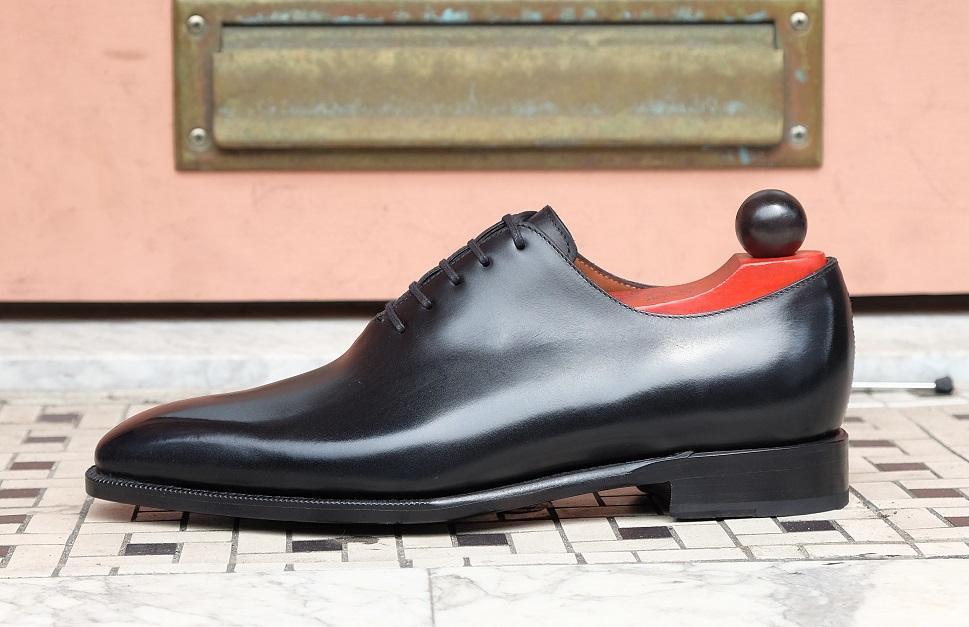
Every so often, someone asks me a question that seems simple on the surface but reveals a lot about how little most men understand their footwear: “If I could only buy one dress shoe, which one should it be?”And while there are many good choices, the real answer — the one that has remained true over the years — is the black wholecut dress shoe. It’s the pair that quietly elevates everything around it without ever shouting for attention.
It’s not the flashiest shoe, nor the most exciting. It doesn’t rely on brogueing or a cap toe to impress anyone. In fact, its strength lies in its simplicity. A black wholecut is the kind of shoe that quietly elevates everything around it. It doesn’t demand attention; it earns it. And while this idea might seem antithetical to my own desires and preaching on this website, this is about educating on the simple reality with regard to this potential scenario that others might encounter.
What got me thinking about all this was a discussion on Style Forum some time ago about a man’s essential shoes. One gentleman said that, rather than having several “must-have” pairs, he would prefer to own just one shoe that could carry him through every situation. He didn’t mention the black wholecut dress shoe — and that’s where he and I part ways — but his comment made me think about the people out there who either can only afford one good pair, or simply can’t justify having a wardrobe full of options.
When you stop and consider society’s “rules” and “norms,” and all the different outfits we’re expected to wear throughout life, it becomes an interesting exercise. So I decided to create my own idea of what the best all-around option would be. And because I once learned in a philosophy class at university that every statement ought to be argued against and then argued for again, I’ll do the same here. Below, I’ll lay out my dos and don’ts — the reasons why I believe the black wholecut is the only shoe you’d need, if you could own just one.
A Clean Slate: What a Wholecut Really Is
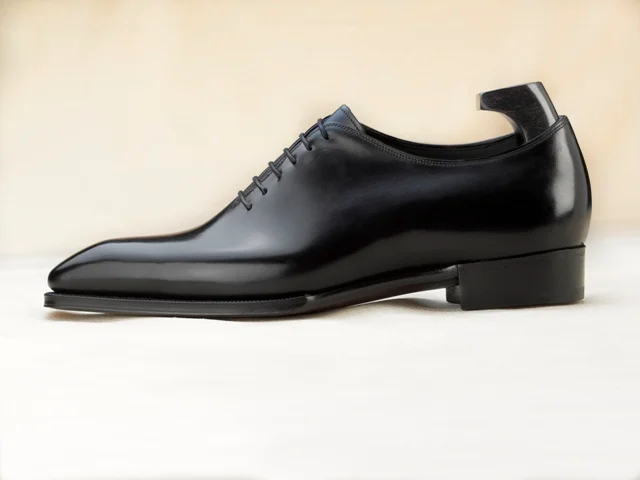
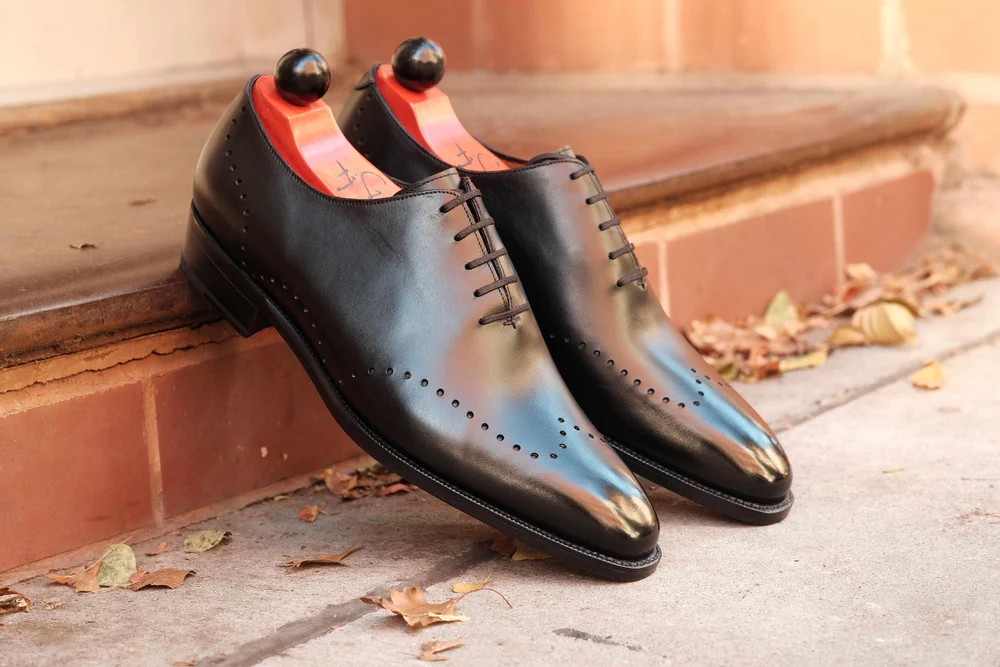
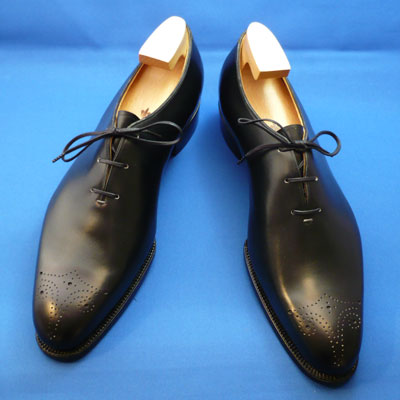
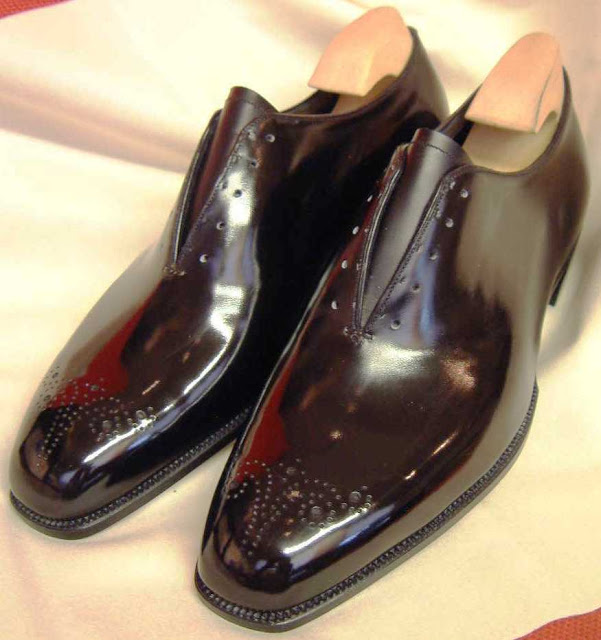
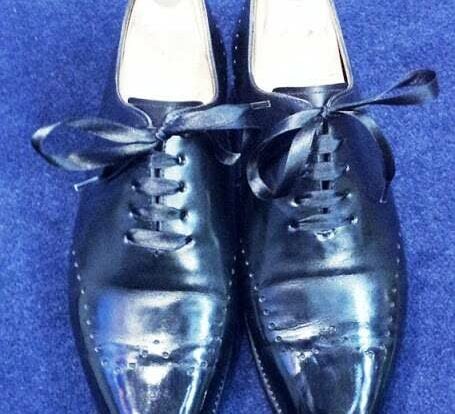
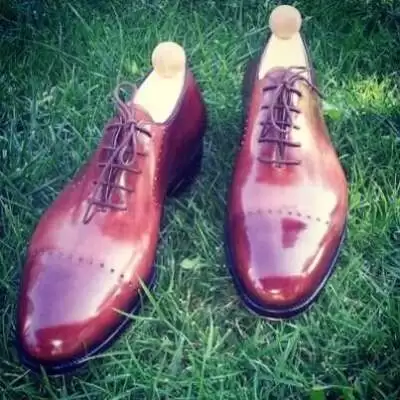
A wholecut is carved from a single piece of leather. The most common whoelcut has a seam on the heel counter and nothing more. The premium wholecut is one that is seamless. Those are rarer. Because of this feature, i.e., being seam-free, the leather has to be good — genuinely good. With a wholecut, the shoemaker can’t hide mistakes behind brogue holes or decorative stitching. Everything is front and center.
That’s part of what gives the wholecut its elegance. It’s one pure, uninterrupted line from the heel cup to the toe. When you see a well-made wholecut, it almost feels sculpted.
And in black calfskin, that purity becomes something even more refined.
Why the Black Wholecut Is the Safest, Smartest Choice
When we talk about “the only dress shoe you need,” what we’re really talking about is versatility. A shoe that won’t make you look improperly dressed, no matter the setting. A shoe you can trust.
The black wholecut fits into that role better than anything else I’ve ever worn or sold. It works with nearly every tailored outfit a man could own: navy suits, charcoal, black, mid-grey, even softer flannels. It brings a sense of intention to a look. Not flashy, not overthought — just correct. It conveys elegance and seriousness.
There’s also something modern about a wholecut. While oxfords and cap toes have been around forever, the wholecut’s uninterrupted shape gives it a contemporary sharpness. You look polished without looking old-fashioned.
And because it’s black, it reaches the upper limits of formality without stepping into patent leather territory. Weddings, job interviews, boardrooms, funerals — the wholecut handles all of it gracefully without needing to opt for other options and thus spending more money.
A black wholecut is effortless.
What You Shouldn’t Wear Black Wholecuts Dress Shoes With
In all of shoe-dom, there isn’t a single model that truly goes with everything. Not even the beloved brown full brogue — as versatile as it is, you wouldn’t pair it with a black suit. And while many people assume that a black shoe can slide into almost any outfit, the black wholecut dress shoe is a different story entirely. Its nearly stitch-free, uninterrupted look puts it in its own category. Because of that, certain trousers simply don’t hold up next to it.
Jeans are the biggest example.
And that’s coming from someone who loves denim. I wear jeans often, and I enjoy pairing leather-soled shoes with them. But a black wholecut with denim? I could never bring myself to do it. The contrast is just too strong: an elegant, sculpted dress shoe sitting under a casual, rugged fabric. It doesn’t balance. It doesn’t complement. It just clashes.
The funny thing is, most other trouser styles work surprisingly well. Even chinos — ideally with a crease — can pass in a pinch. But jeans and black wholecuts? Twenty years ago, when dress codes were a thing, that would have been a firm no from me, but in today’s world, let me say that I prefer that contrast to what I see in today’s world of Hoka’s with chinos and the like.
The same goes for anything cargo-inspired or those hybrid “faux dress trousers” with elastic waistbands and nylon sheen. And don’t misunderstand me — I wear cargo chinos myself. I enjoy them. But I wear them with suede shoes and boots, where the textures make sense together. With a black wholecut, the mismatch is even more obvious.
Some shoes can adapt to casual pieces.
A black wholecut is not one of them.

Living With Them: Care and Longevity
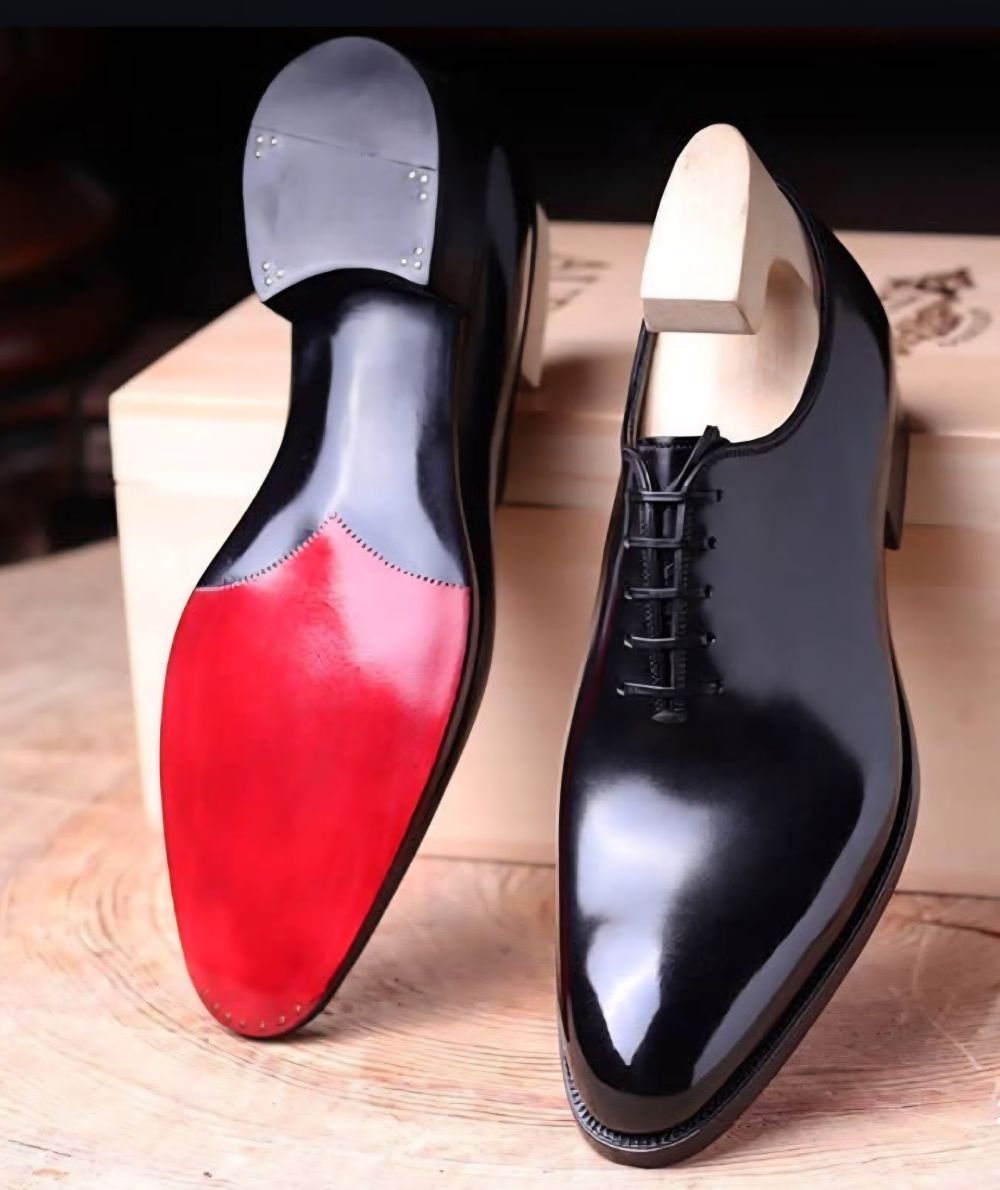
One of the nice things about wholecuts is how straightforward they are to maintain. A good calf will take polish beautifully, and because the upper is uninterrupted, you get a clean shine without much effort. With trees, polish, and a little rotation, a wholecut will look refined for many years.
The Downside of the Black Wholecut Dress Shoe: It Creases
If you are someone who hates leather creasing, you will hate the wholecut dress shoe as it creases the most out of any other dress shoe. There is no way to prevent that, and there is no cure for it either. It simply is what it is. Good fit and shoe trees will help to ensure you do not have excessive creasing, but in owning and wearing a wholecut dress shoe, you will need to come to terms with leather creasing.
The Final Word
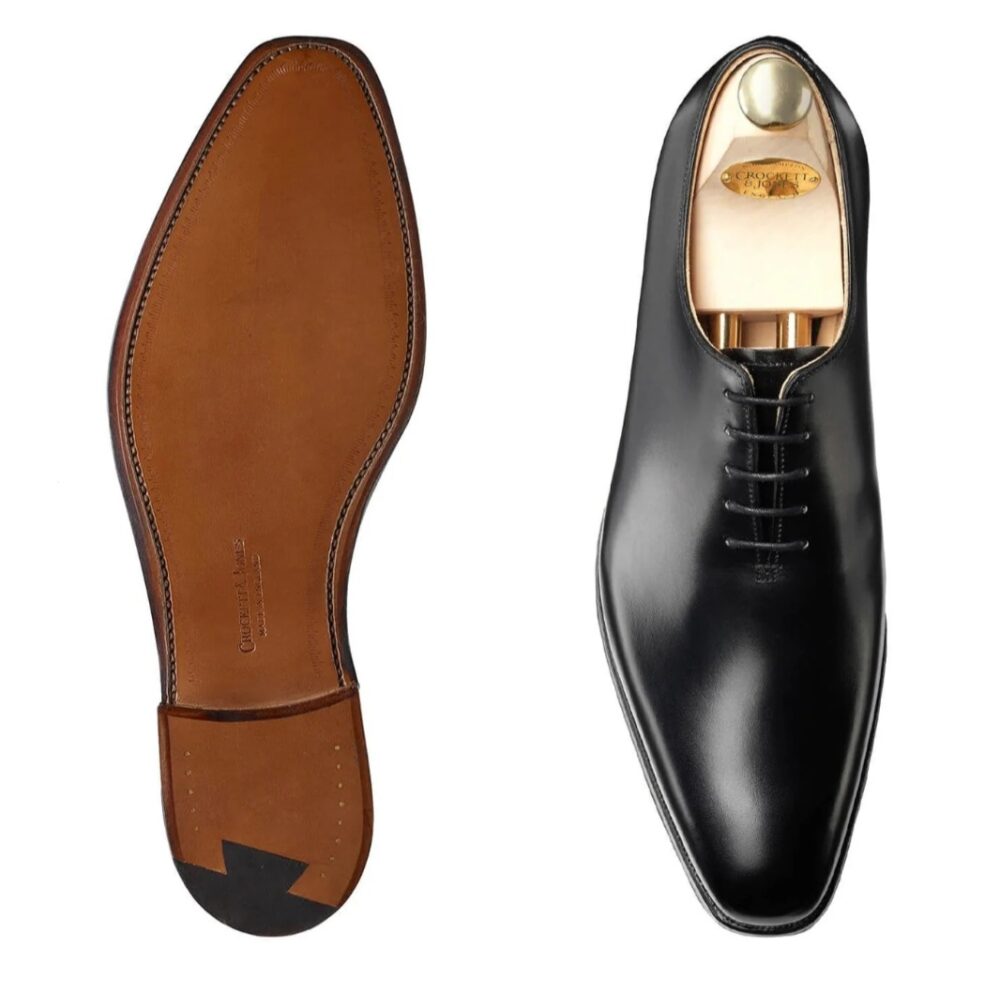
If you’re the type of person who wants a single dress shoe that can carry you through formal life without fuss or second-guessing, this is it. A black wholecut is appropriate, elegant, modern, classic, and endlessly reliable.
It simply works — every time and everywhere that matters.
—Justin FitzPatrick, The Shoe Snob
Shop · Marketplace · Patreon




Great article,thanks. What about the correct socks to go along with them?
What do you think about burgundy wholecut shoes with jeans? Do you think the difference in color allow the wholecut to match nicely with jeans?
Thanks
Anon – You would usually want to match your socks to your trousers, but I like to match my socks to something in my shirt or my tie…
Rolo – I think that it’s a step in the right direction, but in reality it depends on the cut of the shoe. If it is a very sleek dress cut, then no, I don’t think it would go, but if it was a wholecut that was a bit of a rounded toe and heavier sole, then yes, it might work. It just depends really.
-Justin
A perfect pair is needed for a formal look. Formal closet leads to completion because of such formal shoes.
Why does search “Kent Wang wholecut loafer” lead to this?
I assumed it was because of this comment.
I agree with you. However, it seems ironic my black wholecut chelsea boots I consider perfect for denim. That elastic takes thing down a couple of notches in formality
I love a good black chelsea boot, too!