In the last episode, I spoke about who I was before shoes became the real path: growing up in Seattle, chasing the soccer dream, being heavily into music, and eventually trying to find my way into the music industry. That dream, like the soccer one before it, did not pan out the way I had hoped.
At the time, it felt like failure. Looking back, I do not see it that way.
I have said before that I do not really believe in failure, at least not in the simplistic way people often use the word. I believe in lessons. I believe in redirection. I believe God closes certain doors and opens others, even when, in the moment, we do not fully understand why. That does not mean disappointment does not hurt. It does. But when I look back on my life, I can see how certain things that felt devastating at the time were actually pushing me toward the road I was meant to take.
The music-industry opportunity falling apart was one of those moments.
I had worked hard to create an opportunity for myself. I had sold enough internships through the University of Dreams program to earn part of my way there. I had done the interview. I had been accepted into what felt like the perfect internship. Then, at the final hurdle, the money side did not come together, and the whole thing collapsed.
That experience changed something in me. I told myself that the next thing I truly committed to, I would finish. I would not leave it in someone else’s hands. I would not depend entirely on someone else’s promise. If I wanted something badly enough, I would have to build the path myself and keep going until I got there.
That next thing became shoes.
Not simply liking shoes. Not simply selling shoes. Not simply wanting to dress well.
I decided I wanted to start my own shoe company.
Writing Down The Goal
During that period of my life, I was reading a lot of what people call self-help books. I never really liked that term, but that is probably the easiest way to describe them. I read books about success, discipline, business, mindset, personal development, and the habits of people who built something from nothing.
I read Pour Your Heart Into It, Howard Schultz’s story about Starbucks. I read How to Win Friends and Influence People. I read The Game of Life. I read The Secret. I read The Power of Positive Thinking. I read The Four Agreements. I read Tony Robbins. I read whatever I could find that made me think differently about what was possible.
I do not read as much now as I did then, but at that age those books had a major influence on me. They helped me understand that if you want to do something meaningful, you cannot just vaguely wish for it. You have to put it into words. You have to define it. You have to make it real enough that you can look at it, measure it, and hold yourself accountable to it.
One idea that stayed with me was writing down your goals.
A goal for the day. A goal for the week. A goal for the year. A goal for five years. A goal for ten years.
I know some people roll their eyes at that type of thing. I understand why. There is a lot of cheesy language around personal development, and some of it can feel a bit ridiculous. But I also believe there is truth in the basic principle. When you write something down, you force yourself to clarify it.
You may not achieve it exactly when you said you would. You may not achieve it in the exact way you imagined. But if you do not write it down, if you do not define it, then half the time it remains nothing more than a loose idea floating around in your head.
So I wrote mine down. I wanted to start a shoe company, and I gave myself a five-year plan to make that happen.
Why Shoes Became The Plan
At that time, I saw a gap in the market, especially in America.
This was before social media changed everything. There was internet, yes, but not the internet we know now. There was no Instagram. There were no endless shoe pages, shoemaker accounts, brand reels, online trunk shows, and people discovering small European makers from a phone. If you wanted to know about great shoes, you had to search for it in a much more intentional way.
At Nordstrom, I was seeing one side of the shoe world. I was selling American men shoes and watching how they bought, what they cared about, what scared them, what they ignored, and what they were willing or unwilling to try.
Then, through magazines and whatever information I could find, I was seeing another world entirely. European shoes. Sleeker shoes. More elegant shoes. Better lasts. More interesting colors. Better finishing. More imagination. More craft.
To me, there was a major disconnect between what I saw in the American retail environment and what I knew existed elsewhere.
I wanted to bridge that gap.
But I also understood something important: I was a young guy from Seattle. I was not from Northampton. I was not from Florence. I was not from Paris. I did not come from a shoemaking family. I did not have some deep heritage behind me that would make people automatically take me seriously.
If I wanted to build a proper shoe company, I needed to earn credibility. I needed to actually understand shoes, not just talk about them. I needed to understand the retail side, the customer side, the handmade side, and eventually the manufacturing side.
So the five-year plan became pretty simple in my mind:
- First, I would stay at Nordstrom for two years and learn the retail side of the business.
- Then, I would go to Europe and learn how shoes were made by hand.
- After that, I would figure out the manufacturing and business side so that I could eventually create my own brand.
That was the plan.
- Retail first.
- Shoemaking second.
- Business and production after that.
Nordstrom As My Classroom
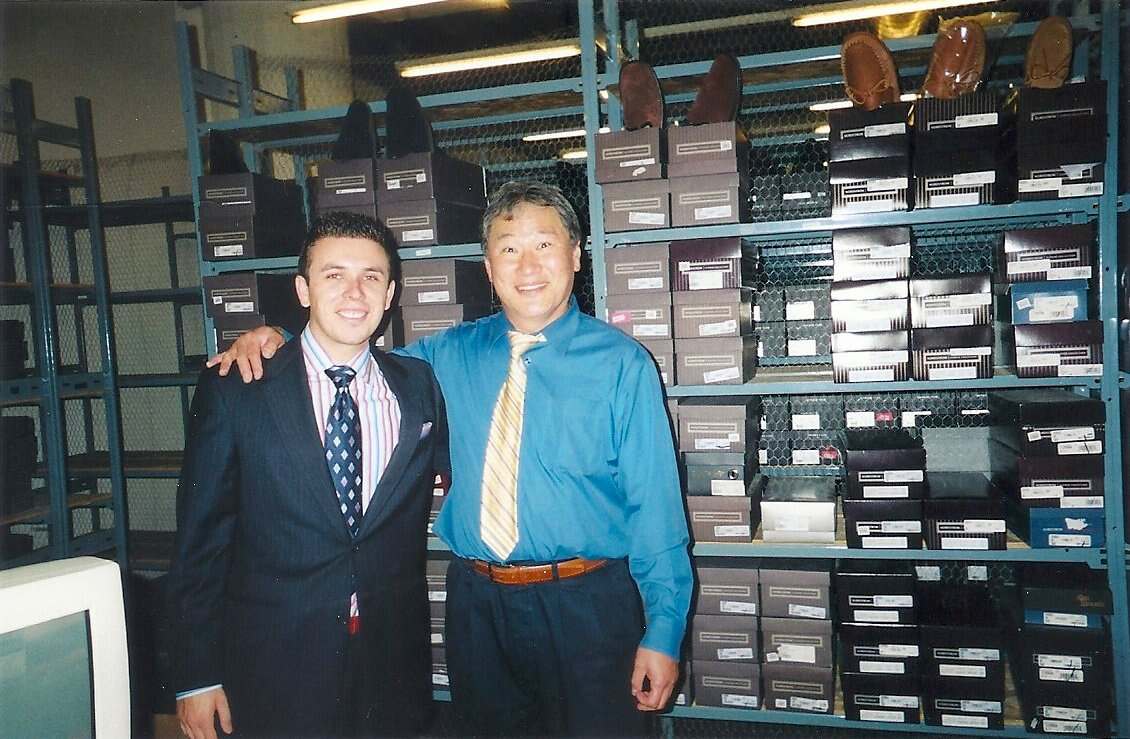
Some people probably thought it was strange that I went to university, studied entrepreneurship and marketing, and then stayed at Nordstrom selling shoes. But I did not see it that way.
To me, Nordstrom was part of the education.
I worked at Store 1 in downtown Seattle, the flagship store. That was where I felt I could learn the most. I wanted to understand how a major retailer worked from the inside. I wanted to see how customers behaved. I wanted to learn why certain brands sold and others did not. I wanted to understand what salesmen pushed, what customers responded to, and what men actually thought about shoes when they were standing in front of a wall of them.
There is a lot you can learn from books, but there is also a lot you can only learn from standing on a sales floor and dealing with people every day.
Men will tell you one thing and then buy another. They will say they want something different and then choose the safest option. They will admire a beautiful shoe and then convince themselves they cannot pull it off. They will come in thinking they need one thing and leave with another because of price, comfort, fear, habit, or confidence.
That was valuable information.
I did not want to start a shoe company based only on fantasy. I wanted to understand real customers. I wanted to understand the American market from the ground level.
So I stayed. And while I was there, I talked about my plan all the time.
Speaking The Dream Out Loud
One of the other ideas I took from those books was the power of speaking things into existence.
I do not mean that in a mystical, automatic sense, as if you say something once and the universe hands it to you. I mean that the words you use start to shape how you think, and how you think shapes how you act. If you constantly tell yourself you cannot do something, you probably will not do it. If you keep telling yourself and others what you are working toward, you begin to move differently.
So I told people.
I told people I was going to start a shoe company. I told people I was going to Europe to learn shoemaking. I told people I was going to become a shoe designer.
I am sure plenty of them thought I was full of it.
That did not bother me too much. In fact, at that age, it probably helped me. I have always had a bit of a chip on my shoulder when people doubt me. I do not think that is always the healthiest fuel, but when you are young, ambitious, and trying to climb out of one world into another, sometimes that fuel works.
There were people who thought I would still be at Nordstrom thirty years later, selling shoes on the same floor. There was even one shoe brand owner who came through and basically told me I should have a Plan B because I was never going to make it.
I remember the feeling of that more than the exact words. It felt condescending. It felt like he saw me as some naïve kid with an unrealistic dream.
Maybe I was naïve in certain ways. But I was not unserious.
When someone tells me I cannot do something, especially in that tone, it usually makes me want to do it even more.
The Early Manufacturing Idea
Because I was talking about the dream so much, people naturally became aware of it. At one point, there was an early idea to start something with two people I worked with at Nordstrom.
One was Ryan, a manager I liked and respected. He was one of the best managers I had there and someone I considered a friend. The other was a fellow salesman and friend from Pakistan whose family had some connection to manufacturing.
On paper, it sounded like it could make sense.
Ryan could manage the business side. I could design, sell, and promote the idea. Our colleague might be able to connect us to manufacturing. At that stage in life, when you are young and hungry, any possible doorway feels exciting.
We even went to MAGIC in Las Vegas, the big trade show, to do some market research and see what was out there. I remember seeing a Hugo Boss shoe that had denim in it. It was some kind of dress shoe or spectator-style shoe with denim panels, and at the time I thought it was amazing.
Looking back now, I may very well think it was hideous if I saw it again. But at that moment, it opened my eyes to using fabric and unusual materials in dress shoes. Anyone who knows my later designs knows that idea did eventually become part of my design language. So even if the shoe itself may not have aged well in my mind, the inspiration did.
Eventually, though, we had some samples made, and I knew quite quickly that this was not the path.
The quality was not right. The feeling was not right. The vision was not right.
I was looking at European shoes, dreaming about Stefano Bemer and Gaziano & Girling, studying beautiful lasts and handmade details. What was in front of me was not that. It was not even close.
So that idea faded away naturally.
I do not look at that as wasted time. It was part of the process. Sometimes you need to see the wrong version of your dream to better understand what the right version needs to be.
My First Shoemaking Course
After that, I realized that if I wanted to eventually go to Europe and learn shoemaking properly, maybe I should at least start with something closer to home.
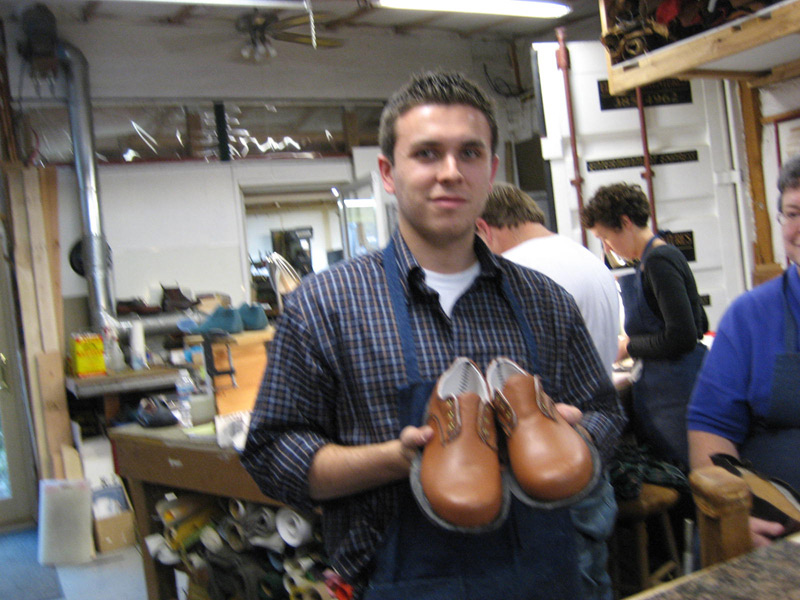
So I searched for shoemaking courses in America and found one in Port Townsend, Washington, only about an hour away. I signed up.
The course was basic, but it was important for me at that time. If I remember correctly, the people running it had a background in making handmade clown shoes. That sounds funny, but it is true. The shoes we made were cemented, not welted, and it was nothing like what I would later learn in Italy. But it still introduced me to the basics: patterns, leather, cutting, lasting, shaping, attaching soles, and understanding that a shoe is not just an object that appears fully formed on a shelf.
And the people running the school were great people.
I made a shoe there. I have no idea where it is now. I probably lost it in one of my many moves, which is unfortunate because I would love to still have it, if only for sentimental reasons.
But the value was not really in the shoe itself. The value was in taking the next step.
I hate feeling stagnant. I hate feeling like I am not moving forward. Learning something, even at a basic level, made me feel like I was progressing toward the larger plan.
I was still at Nordstrom. I was still selling shoes. I was still reading magazines. I was still talking about going to Europe. And now, at least, I had physically made a shoe, even if it was a very basic one.
That mattered to me because it showed I was not just talking.
The Magazines And The Dream Of Florence
During this period, I became obsessed with magazines.
I bought American fashion magazines, European menswear magazines, and Robb Report whenever it had something interesting about clothing or shoes. My father gave me an issue of Robb Report that featured Gaziano & Girling, and I remember looking at those shoes and thinking, “I am going to know these guys one day.”
Not simply admire them from afar. Know them.
At the time, Tony Gaziano and Dean Girling were creating some of the most beautiful shoes I had ever seen. Their shoes represented the level of elegance and craft I wanted to be around. Years later, I did come to know them, and they became friends, but back then they were just names and images on a page.
There was another magazine I loved even more. I believe it was simply called Menswear. It was a larger-format quarterly magazine and, from what I remember, it had much better content than the usual fashion magazines. Less fluff, more substance.
In one issue, I found a spread on Stefano Bemer in Florence. That article had a major effect on me.
There were these incredible shoes: green shoes, two-tone shoes, exotic leathers, elegant shapes, beautiful finishing, and a level of artistry that felt completely different from what I was seeing around me in Seattle. Then there was Florence itself. The Arno. The Ponte Vecchio. The romance of the city. The idea of learning shoemaking there felt almost too perfect.
I remember thinking that if I could learn from anyone, it would be Stefano Bemer. His style resonated with me.
At that point, Stefano was not a name the average person knew. This was before Instagram, before shoe blogs had really opened the world up, before every enthusiast could discover makers from around the globe with a few clicks. You knew Stefano Bemer if you were a serious shoe connoisseur, if you had read the right magazines, or if you had the money to travel to Florence and order shoes from him.
He was famous in the right circles, but he was not globally visible in the way many brands and makers are now.
I wanted to learn from him. The question was how.
Rolando
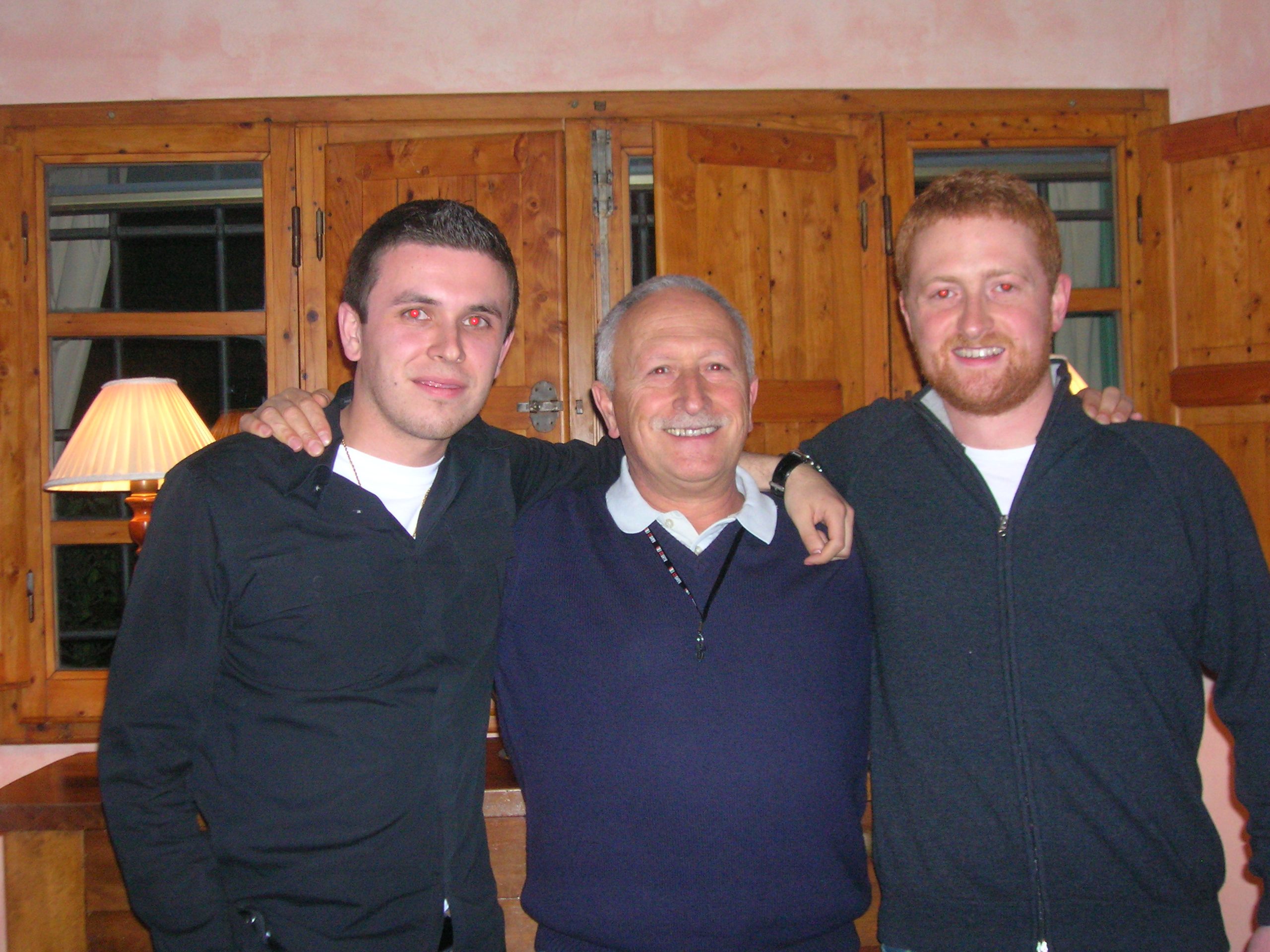
Around the same time, a young man named Rolando came to work on the Nordstrom shoe floor.
Rolando was from Florence. His father, Giovanni, had worked with Nordstrom for many years through the Italian footwear industry, helping connect them with factories that produced their private-label Italian shoes. Rolando was there, I believe, to understand the business and perhaps eventually follow in some version of his father’s footsteps.
He was around my age, well dressed, friendly, and into shoes.
At some point, the thought occurred to me: he is from Florence, his father is in the shoe industry, and I am obsessed with Stefano Bemer. Maybe he knows him.
Now, Florence is not a village. It is not as if every person from Florence knows every other person from Florence. But I also knew that the high-end shoe world was not enormous, especially back then. So I asked him.
I said something along the lines of, “This may be a silly question, but do you know who Stefano Bemer is?”
He told me that his father was great friends with him.
That was one of those moments where life suddenly feels like it has opened a door right in front of you.
Looking back, I do not see that as a coincidence.
People can call it whatever they want, but I believe God opens certain doors at certain times. Rolando coming to Nordstrom, being from Florence, having a father connected to the Italian shoe industry, and that connection leading directly to Stefano Bemer was not something I could have planned. I had written down the goal. I was working toward it. I was talking about it. But there are moments where the right person appears at exactly the right time, and you either recognize it or you let it pass.
Thankfully, I opened my mouth and asked the question.
I told Rolando what I wanted to do. I explained that I wanted to go to Italy, learn shoemaking, and eventually start my own shoe company. I asked if his father might be willing to introduce me to Stefano.
Rolando said he did not see why not. He told me that when he went back to Italy, he would ask his father.
That was all I could ask for.
The Door Opens
Rolando returned to Italy, and we stayed in touch. About a month later, he wrote back and told me that his father had spoken to Stefano. The answer was simple: I could come whenever I was ready.
To be clear, this was not yet an apprenticeship. It was a meeting. A chance to go to Florence, sit down with Stefano, show him I was serious, and ask if he would take me on. But that was enough. I was confident. In fact, there was no doubt in my mind that he would accept.
I decided I would go around spring break, sometime in April of 2008. I needed to work as much as I could, save money, buy the ticket, and make the trip happen.
So I worked like crazy.
I remember one Christmas period where I worked something like 150 hours in two weeks, fifteen days straight. It was brutal, and it was also one of the first times I really noticed how much Uncle Sam takes out of a paycheck, which was a bit depressing. But I needed the money, so I worked.
Eventually, I bought the ticket and flew to Florence.
My First Real Taste Of Italian Shoe Culture
When I arrived, Rolando and Giovanni picked me up from the airport.
That may seem like a simple detail, but it was the beginning of something I would come to understand much more deeply later: the generosity of Italian culture once you are brought into someone’s circle.
Giovanni and Rolando did not owe me anything. I was some young guy from Seattle with a dream, a basic shoe I had made in Port Townsend, and a lot of ambition. Yet they picked me up, took me around, introduced me to people, and gave me access to a world I could never have entered on my own.
That side of Italian culture became more important in the next stage of my life, when I actually moved there. This episode is not really the place to fully unpack it, because the deeper story comes later. But this first trip gave me an early glimpse of it.
Once Italians accept you and bring you into their world, there can be a warmth and generosity that feels almost familial. Maybe that is part of why I connected with it. Coming from a Mexican family background, there was something familiar in that way of being: food, hospitality, closeness, generosity, and the sense that people look after you once you are inside their circle.
I did not fully understand that yet. At that moment, I was simply grateful.
I was in Italy, being shown the world I had been dreaming about. It was like shoe heaven. I later would realize that being a shoe factory is my favorite place to be.
Before I even met Stefano, Giovanni took me through parts of the Italian shoe industry. He knew everybody. He had worked with factories for years and had deep relationships in that world.
We went through central Italy and into Le Marche, one of the great Italian shoemaking regions. In my mind, it is like the Northampton of Italy or the Almansa of Spain: a place where shoemaking is deeply embedded in the region.
We visited factories like Doucal’s, Silvano Sassetti, and Santoni. Santoni, in particular, was incredible. Maybe things are different now, but at that time, during the height of retail dress-shoe sales, that factory was one of the most impressive I had ever seen. I remember meeting Giuseppe Santoni, the son of Andrea Santoni, and being amazed at the scale and polish of the operation.
That trip was one of the greatest experiences of my life.
Driving through Italy, eating incredible food, visiting factories, seeing how shoes were made, and meeting people inside the industry made the dream feel tangible. It was no longer just magazine pages and imagination. It was real leather, real workshops, real factories, real people, real towns.
I remember stopping in a small town in Le Marche. I believe it may have been Civitanova, though my memory could be slightly off. We went to lunch at a place that did not even really look like a restaurant from the outside. There was no obvious sign. The doors were frosted. You could have walked straight past it and never known what was inside.
When we opened the door, the whole place went silent.
It was exactly like something out of a film. One second, there was noise and commotion. The next, everyone stopped and looked at us.
Italy is very regional. Someone from another town can be treated almost like a foreigner, even if they are Italian. So there we were, clearly outsiders, walking into what must have been a local place where the same people probably ate every day. You could feel the entire room wondering who we were and how we had even found the place.
The food was incredible. The memory has stayed with me all these years. And all of this happened before I even had the meeting with Stefano.
Meeting Stefano Bemer
Eventually, Giovanni introduced me to Stefano.
I brought the shoe I had made in Port Townsend. It was the cemented clown shoe, as I half-jokingly think of it now. I was embarrassed to show it to him, especially standing near the kind of work he had in his shop. His shoes were works of art, and mine was very obviously the product of a beginner.
But I brought it for a reason.
I wanted him to see that I had already taken steps. I was not just some kid who liked the idea of Italy or the romance of shoemaking. I cared enough to start learning, even in the most basic way. I wanted to show him that I was serious.
So I showed him the shoe. He chuckled and said that it looked like the first shoe he made. I knew in that instance he would accept me.
I told him I wanted to apprentice with him.
To put it into perspective, Stefano Bemer was the shoemaker Daniel Day-Lewis had apprenticed under. Norman Vilalta worked under him. Other talented makers passed through that workshop as well, such as the late Stephane Jimenez. Stefano had a serious history of training people who went on to do great things.
And there I was, a young guy from Seattle, asking him to take me on.
The workshop was small. He only took one apprentice at a time because there simply was not room for more. The back room was tiny. There were three permanent makers and one apprentice working at a small table. It was not some giant school or romantic movie set. It was a real workshop, compact and serious.
And he said yes.
He told me he would take me on and that I could come whenever I wanted.
I told him I would come in October 2008.
That gave me about six months to go back home, make as much money as possible, and prepare to move my life to Italy.
A Fair Exchange
At the time, I thought about the opportunity mostly from my own point of view. I wanted to learn shoemaking. I wanted to get closer to the dream. I wanted to become more credible and more knowledgeable so that I could eventually start my own shoe company.
Later, I understood there was another side to it.
Stefano and Giovanni also had their own reasons for helping me. Stefano was interested in growing his ready-to-wear business and exploring the American market. These were hand-welted ready-to-wear shoes, beautiful shoes, but this was before his name was widely known outside serious shoe circles.
Outside Italy, the average person had no idea who Stefano Bemer was. You knew him if you were a real shoe connoisseur, if you read the right magazines, or if you had the money to travel to Florence and order shoes.
So, in some ways, Stefano wanted to use me to better understand or reach America, and I wanted to use Stefano to learn how to make beautiful shoes.
I do not say that negatively. That is how the world works. The best opportunities often involve an exchange. Giovanni essentially told me, in a roundabout way, that Stefano would help me and I should help him.
That seemed fair to me.
I was happy to help however I could. I was getting the opportunity I had dreamed about.
Preparing To Leave Seattle
I returned to Seattle with the answer I had wanted. I had been accepted. Now I had six months to make it happen.
I told people I was leaving for Italy. I told the people who had doubted me that I was actually going. I would quit Nordstrom around October 1st and move to Florence.
That was the first major stage of the five-year plan coming true.
I had said I would stay at Nordstrom for two years to learn the retail side. In reality, it took about two years and four months, but close enough. I had done what I set out to do. I had learned a tremendous amount about customers, sales, retail, brands, and the psychology of how men buy shoes.
Now I was moving into the second stage: Europe, handmade shoemaking, and apprenticeship.
That second stage was probably the hardest one to make happen. Getting an apprenticeship in Europe as an American was not easy, especially in traditional handmade shoemaking. Then there were visas, money, housing, language, and the reality of leaving the only place I had ever really known.
But I had made up my mind.
So I worked. I saved. I sold what I could.
I sold my car, an old 1988 BMW that had probably cost me more in repairs than it was worth. I sold my CD collection, which was around nine hundred CDs. I sold my DVDs, which were around 300-400. Thankfully, there were CD and DVD stores buying those then! I gave clothes away to friends. I packed up sentimental things and left some with my mother and some with my father.
I basically reduced my life to whatever I could take with me.
I threw a goodbye party, and it was emotional. Seattle was all I had known. My family was there. My friends were there. My memories were there. And now I was leaving for a country where I did not know the language, did not know pretty much anyone, and had no guarantee that it would work out.
I found a flat in the Santa Croce area of Florence, where I would be sharing an apartment with two girls. I shipped three big UPS boxes ahead of me. I cashed out my 401k. I said goodbye to my family and friends. I was 24 years old.
Then I got on the plane.
I looked down at Seattle and knew that part of my life was over.
I was not sad in the way one might expect. I was emotional, of course, but I also felt alive. I was about to do the thing I had said I was going to do. I was about to chase the dream properly, not just talk about it from a distance.
That was the end of the first stage of the five-year plan.
Nordstrom had done what I needed it to do. It taught me retail. It taught me customers. It taught me sales. It gave me the environment where I could speak the dream out loud until the right person eventually crossed my path.
And then, by the grace of God, that right person did cross my path.
The next chapter would be Florence.
Life in Italy.
Learning from Stefano Bemer.
And discovering that chasing a dream is usually far more complicated, humbling, and unpredictable than it looks from the outside.
But I was on the plane.
And at that moment, that was enough.
Read Episode 1 HERE
Read Episode 2 HERE
—Justin FitzPatrick, The Shoe Snob
Shop · Marketplace · Patreon
👉 Listen to the video on my YouTube Channel