The World Championships of Shoemaking 2026 once again showed just how far the craft of shoemaking can be pushed when the world’s best makers are given a brief, a deadline, and the freedom to create something truly exceptional. We often get flak for allowing people to create shoes/boots that are technically ‘unwearable,’ which I completely understand, but at the same time, this flexibility produces concepts the world would otherwise never see. And that, for me, is the beauty of this contest. Today, we look at the World Championships of Shoemaking 2026 top three, a sneak-peek special we give before unveiling the rest.
The World Champs in Shoemaking is held yearly during the London Super Trunk Show. This year’s competition brought together a new group of handmade boots from makers around the world, all judged on a mixture of technical execution, difficulty, design, aesthetics, and overall craftsmanship. And as is often the case with this competition, the final podium was not simply about who made the prettiest shoe. It was about who managed to combine skill, originality, precision, and ambition in a way that stood above the rest. According to the judges as well as most of the attendees, one clearly stood out above the rest.
This year’s top three were:
- Ken Kataoka, Japan
- Twinkima.G, China
- Dmitry Avdyukhov, Russia
The contest is organized by Shoegazing, The Shoe Snob, Kirby Allison, Master Shoemakers, and Parker Schenecker (brother to co-founding member, Edmund Schenecker), continuing what has become one of the most important showcases for high-level handmade shoemaking worldwide.
1st Place: Ken Kataoka, Japan
This year’s winner was Ken Kataoka from Japan, a maker who has been circling the top spot for several years now. After finishing second in both 2023 and 2025, he finally took home first place in 2026. A well-deserved win.
And what a boot it was!
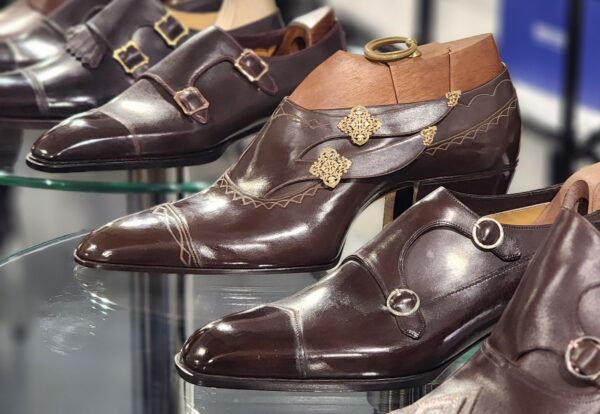
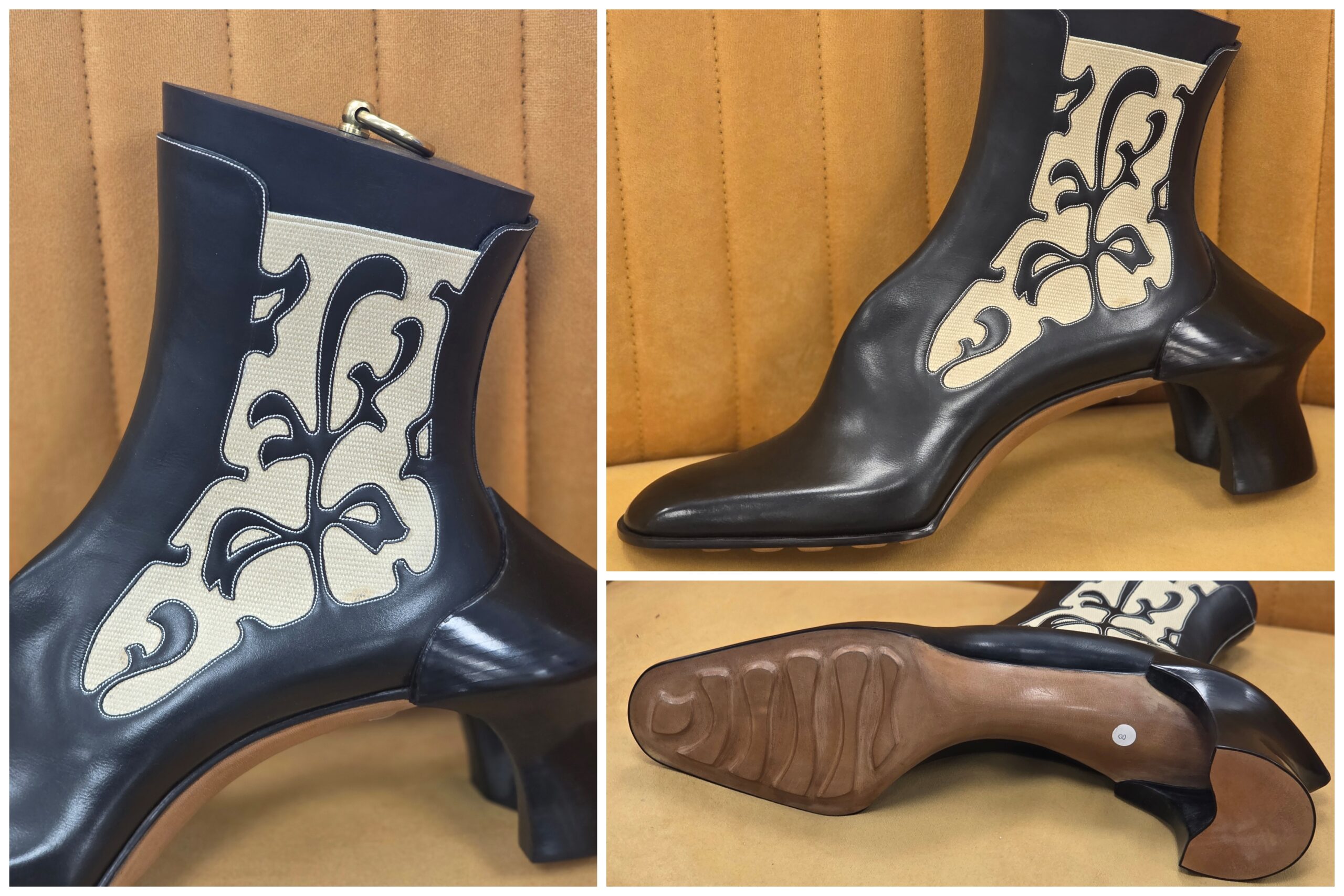
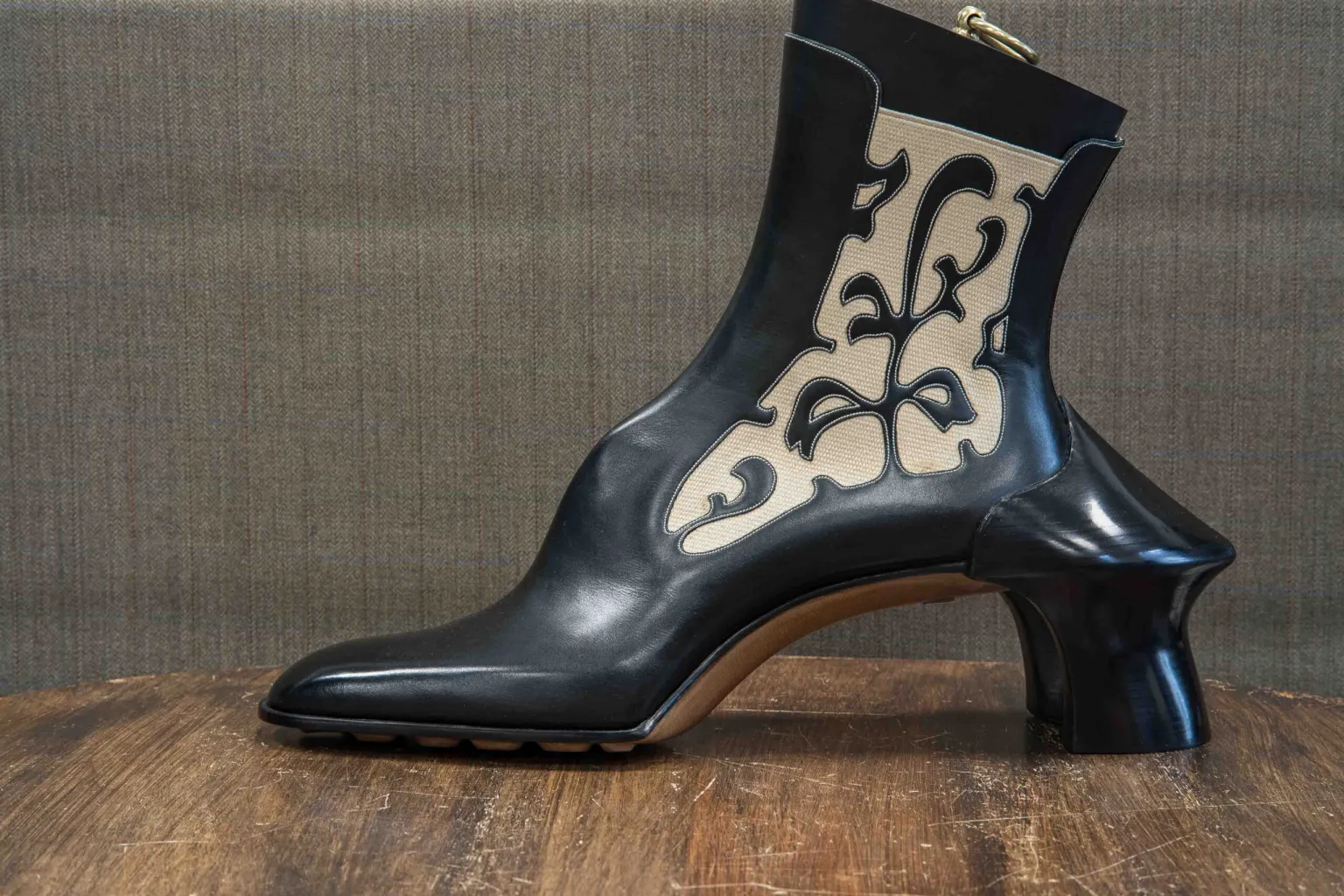
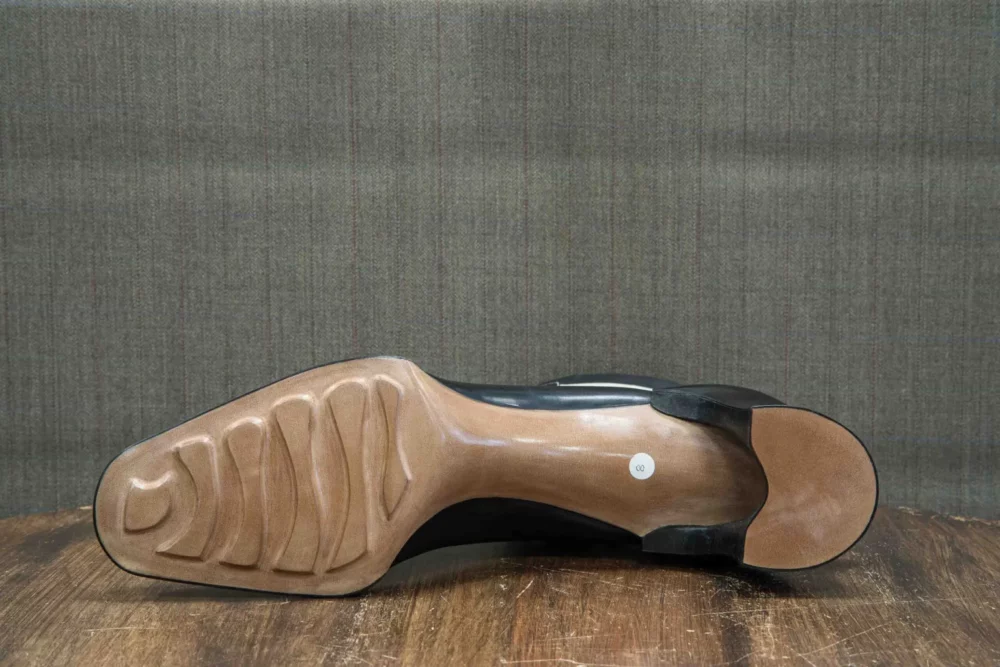
Kataoka’s entry was not the safe option. It was not a quiet, conservative shoe that simply relied on clean finishing and elegant proportions. It was a full-on showpiece, drawing inspiration from Victorian-era exhibition shoes, with a flowering upper design reminiscent of lace, a sharply sculpted heel, a long bevelled waist, and a rather bold “bumpy” art sole.
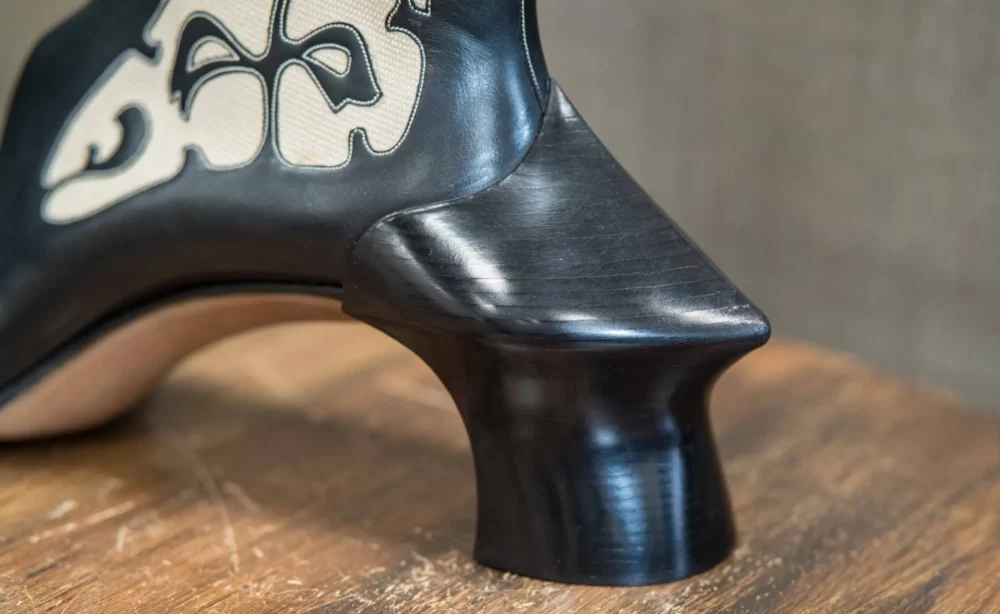
This is exactly the type of shoe/boot that tends to divide people, and that is not a bad thing. In fact, that is often where true competition pieces become interesting. A boot like this is not trying to be everyone’s ideal daily wearer. In fact, it cannot be. It is trying to show the possibility of what the body can create when the mind pushes it.
It is trying to show command of technique. It is trying to take the old craft of shoemaking and push it into something almost sculptural. A real future museum relic!
That is where Kataoka’s boot succeeded. Whether or not one personally loves the design, there is no denying the sheer level of work involved. The upper alone carries a level of complexity that would scare off many makers, and the sole work adds another layer of difficulty. The heel, with its sculptural shape and piano-like finish, gives the whole boot a sense of dramatic effect. It immediately invokes a reaction. And clearly, that reaction was more admiration than not.
This is the type of piece that reminds you that shoemaking, at its highest level, is not simply production. It is architecture, sculpture, leatherwork, patternmaking, and engineering all rolled into one object.
2nd Place: Twinkima.G, China
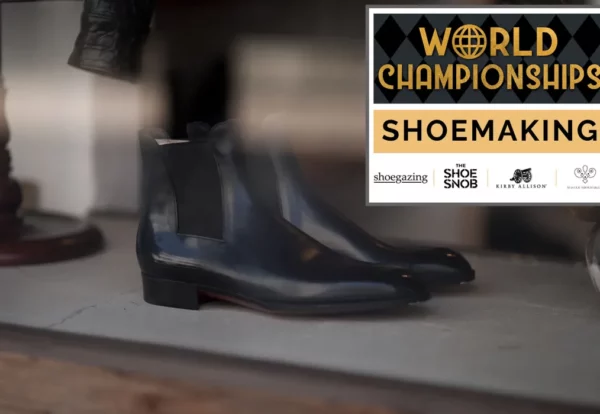
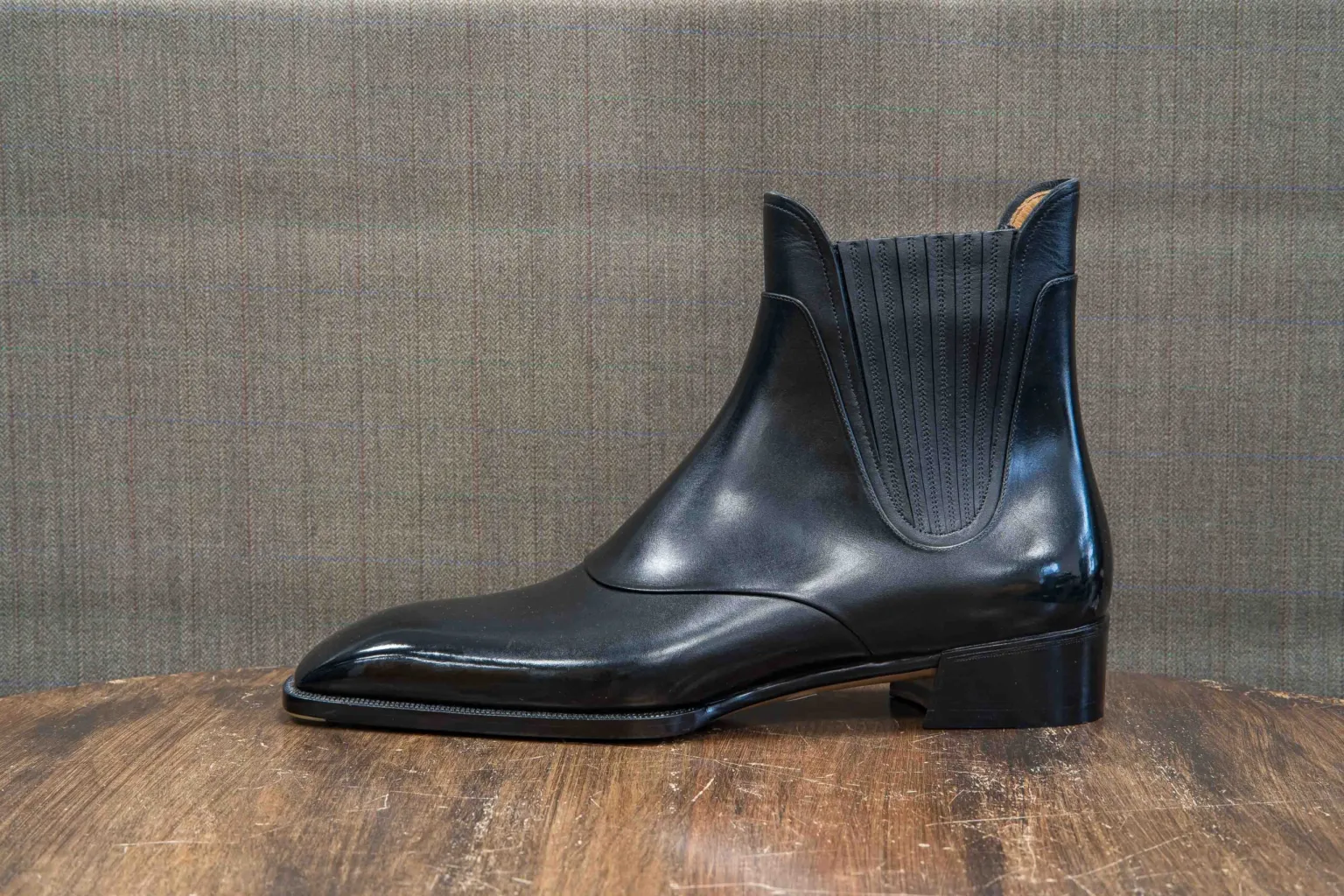
Second place went to Twinkima.G from China, a brand founded by Meng Guan and known for making hand-welted shoes from its factory in Dongguan. Their entry was made by a team within the Twinkima.G factory, with different specialists working on the last, design, bottoming, carving, and finishing.
The team behind the boots are all full-time workers in the factory, as follows: Yukun Zhang – organizer (designer), Jay Chu – lastmaker and shoe designer, Jack Wang – bottom maker, Daniel Lee – carving artisan specialist, and Felix Yip – shoe shine.
This was probably the more wearable-looking shoe of the top three, at least at first glance. It had a more classical base, but with enough design detail to make it stand apart. And that is often the harder balance to achieve. If your shoe is too plain, it is not seen as creative enough, and if too crazy, it can be seen as overkill. It is always a risk to go either way, and most makers try to meet in the middle. But Twinkima.G made a boot that they could likely turn into a RTW model.
It is one thing to create something wild and force attention. It is another thing to create something restrained but still memorable. Twinkima.G’s entry did the latter very, very well.
The hidden seams in the upper gave the boot design character without making it feel overdesigned. It is very hard to reinvent a chelsea boot. The proportions were extremely well executed, and the sole engraving added a level of refinement that helped elevate the entire piece. This was not a shoe trying to win by shouting the loudest. It was a shoe that showed how far excellent execution and tasteful design can take you. And that also matters. You see how varying our top three can be, on nearly opposite sides of the spectrum.
Because in shoemaking, beauty often lives in clever restraint with subtle hints of twists. A curve that is just right. A pattern that looks simple until you realize how difficult it was to make. A bottom that is decorated but not cartoonish. Twinkima.G’s shoe seemed to live in that world: elegant, controlled, and technically impressive.
3rd Place: Dmitry Avdyukhov, Russia
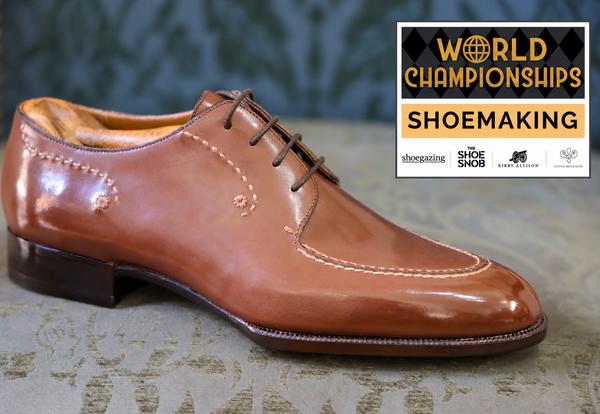
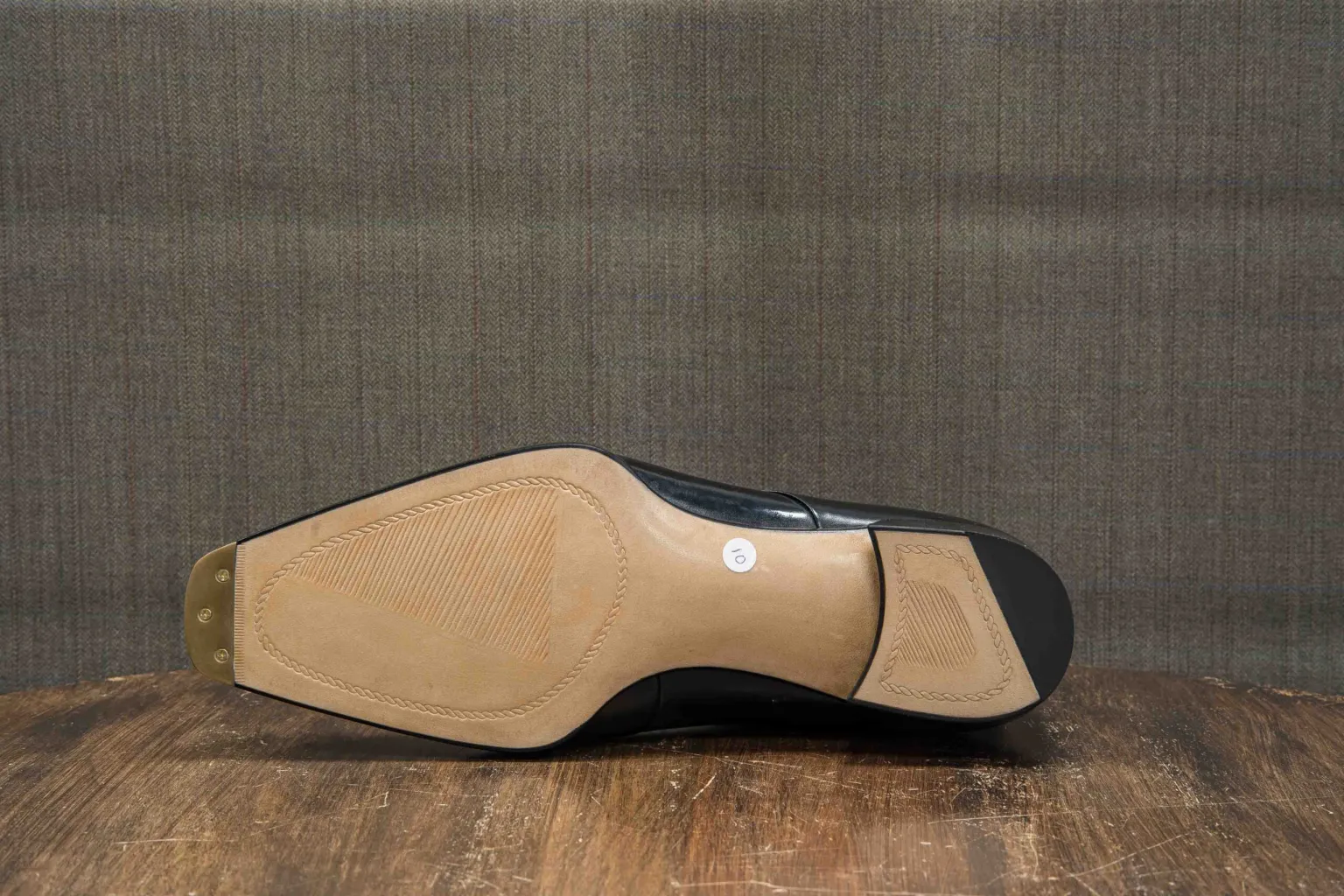
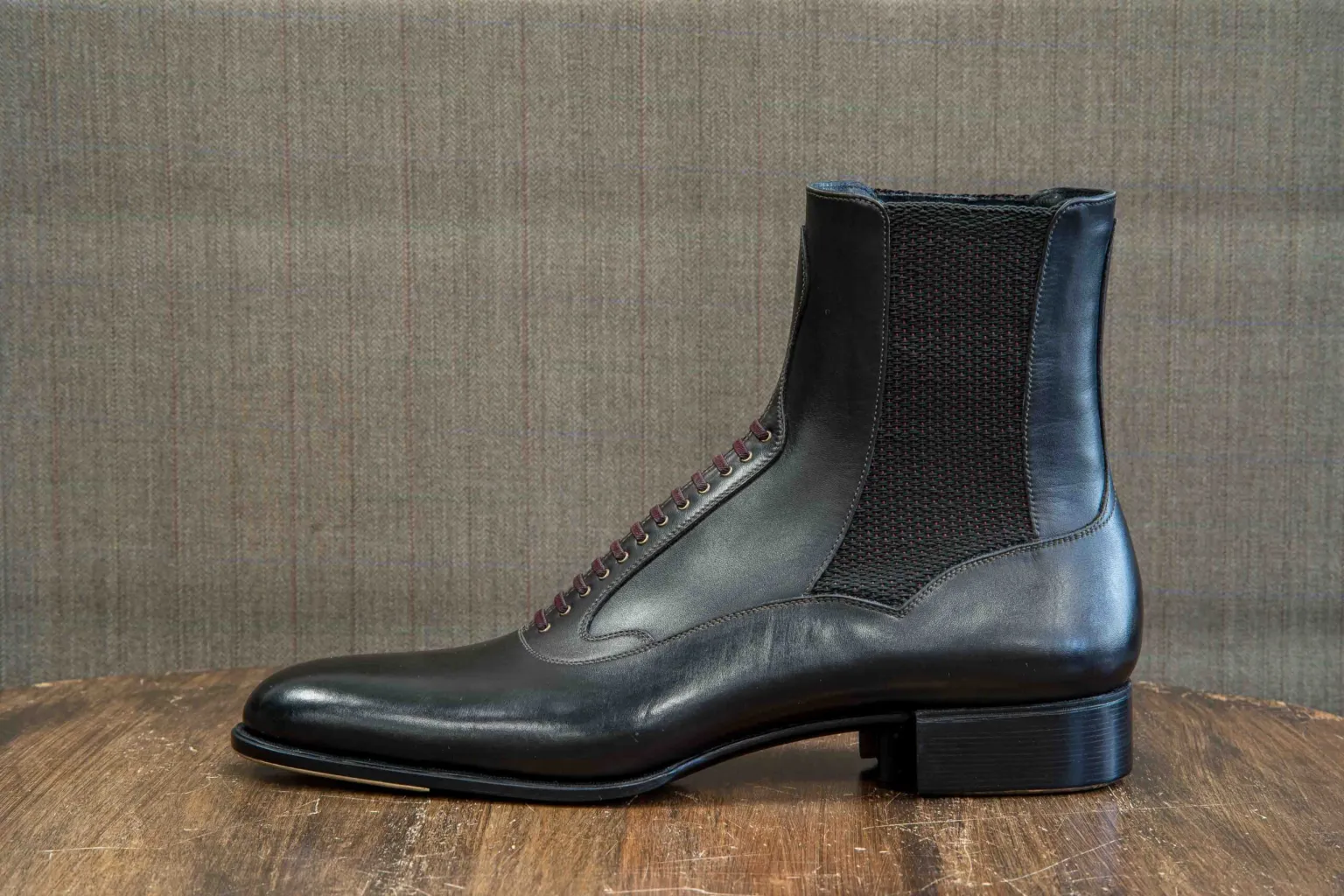
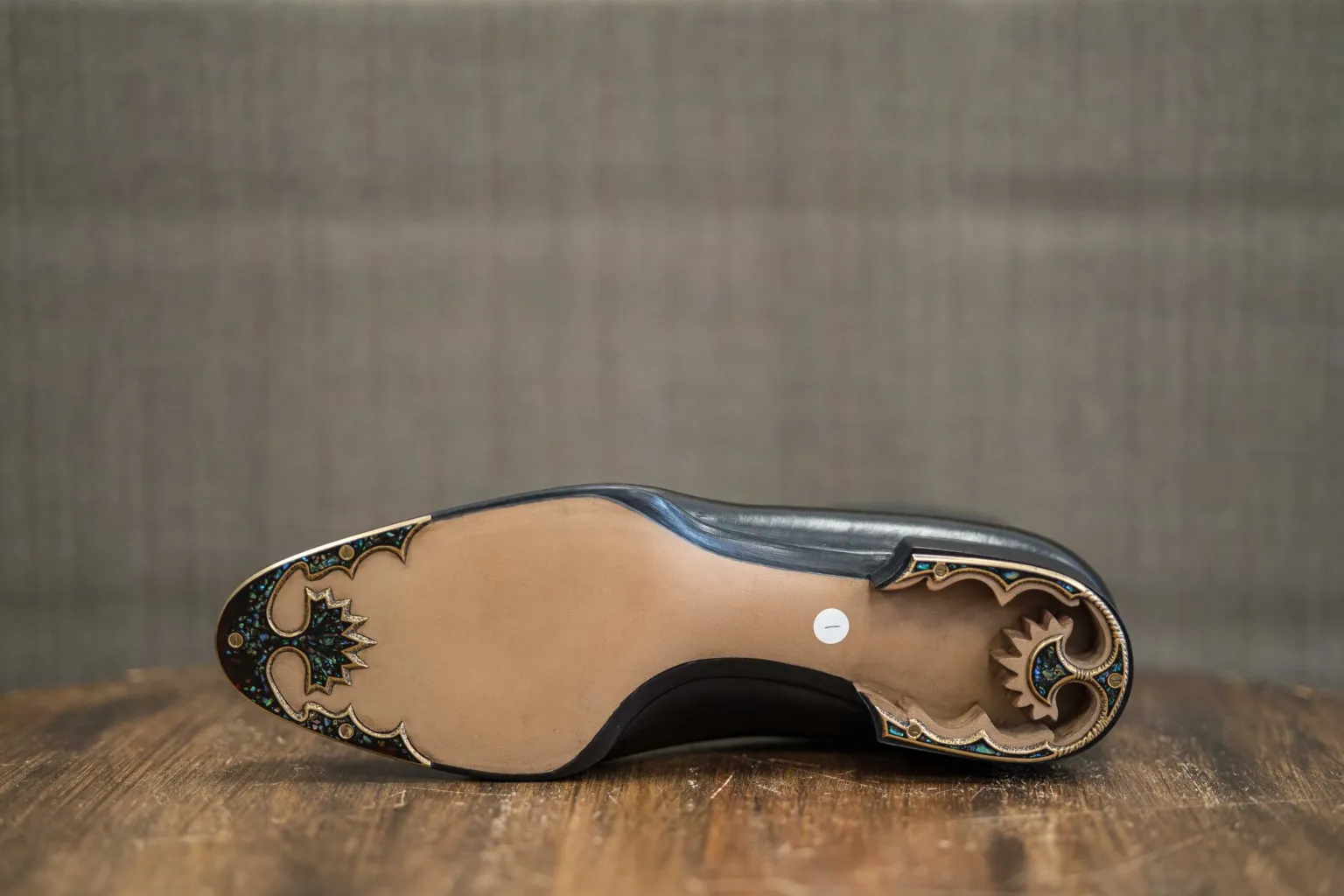
Third place went to Dmitry Avdyukhov, a bespoke shoemaker from Russia. His entry had a large seamless section of upper, extremely fine 24 stitches-per-inch sole stitching, decorative lacing, and brass toe and heel plates with urushi lacquer detailing. Dmitry Avdyukhov was responsible for making the last, pattern making, upper making and bottoming. He was helped by Evgeny Tabunshchikov, who made the stacked leather heel and the brass decorations.
This shoe had a very different personality from the first two. Where Kataoka’s shoe leaned toward dramatic exhibition work, and Twinkima.G’s leaned toward refined classical beauty, Avdyukhov’s shoe had a mix of elegance, technical detail, and historical reference.
The decorative lacing was especially interesting, giving the shoe something of a balmoral boot feeling, even though it was based around a Chelsea-style concept. That is a clever nod, as the Chelsea boot itself has historical roots connected to lace-up boot forms. When done well, that kind of reference gives a shoe depth. It is not merely decorative for decoration’s sake. Being a balmoral boot lover myself, I was particularly fond of this one for the style side.
The brass toe and heel plates with urushi lacquer were also a standout feature. They were unique in what we have seen in the past, and were very strikingly beautiful. I would not want to ruin them; that’s how nice they were.
And then there is the 24 spi sole stitching. For those who may not obsess over this sort of thing, that is incredibly fine work. It requires not only patience, but control, consistency, and a deep understanding of how to execute fine hand stitching. One wrong move and you can make a blunder!
What This Year’s Results Show
What I like about this year’s podium is that all three shoes represent different interpretations of excellence.
Ken Kataoka won with a bold, artistic, technically demanding showpiece. Twinkima.G took second with a more elegant and balanced shoe, where execution and design restraint carried the day. Dmitry Avdyukhov took third with a highly refined, detail-heavy piece that mixed seamless work, fine stitching, and decorative metalwork.
That is what makes the World Championships of Shoemaking so interesting. It is not simply about making the most beautiful shoe in the conventional sense. If that were the case, everyone would make a black oxford with a fiddleback waist and call it a day. The competition asks for more than that. It rewards difficulty, originality, execution, design, and the ability to create something that leaves an impression. That impression is not always wearable, and many complain about that. But you cannot win them all, as they say. We are pleased with the results.
This contest is important because shoemaking needs both tradition and experimentation. Without tradition, the craft loses its foundation. Without experimentation, it becomes museum work. And this contest pushes experimentation where otherwise shoemakers wouldn’t have that creative outlet. Clients often order the usual. We dare them to defy the boundaries.
The best competition shoes live somewhere between these worlds of thought.
For those interested, check out past competitions and all of the other beautiful shoes that were created under the World Champs of Shoemaking.
Stay tuned for more!
—Justin FitzPatrick, The Shoe Snob
Shop · Marketplace · Patreon