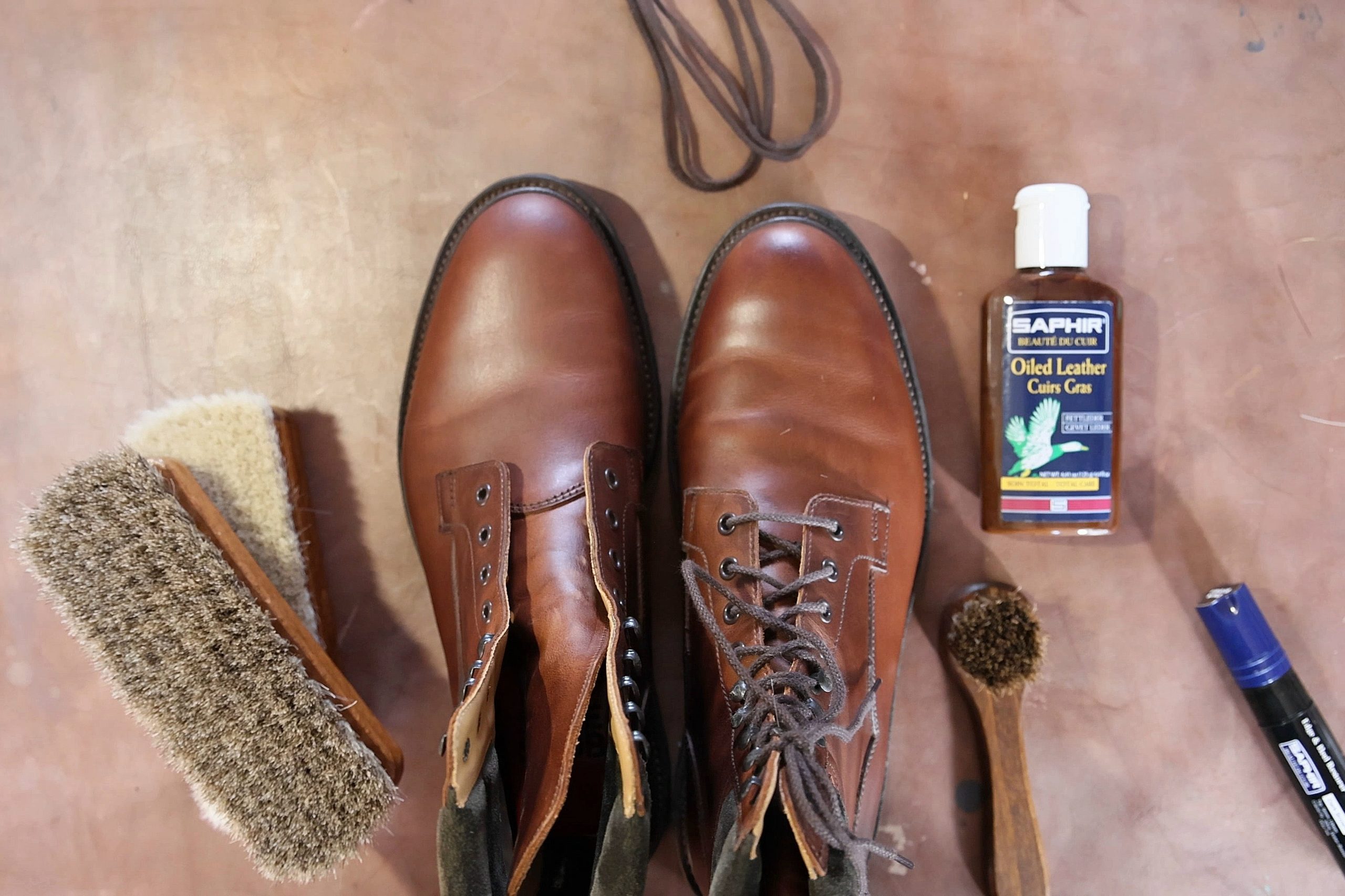
There is something about a good pair of country boots that makes you want to put them through the ringer. After all, that is what they are made for. But even the most rugged leather needs a little attention from time to time, especially after a particularly dusty day outdoors. Living more rural now, those dusty days are becoming more common than not.
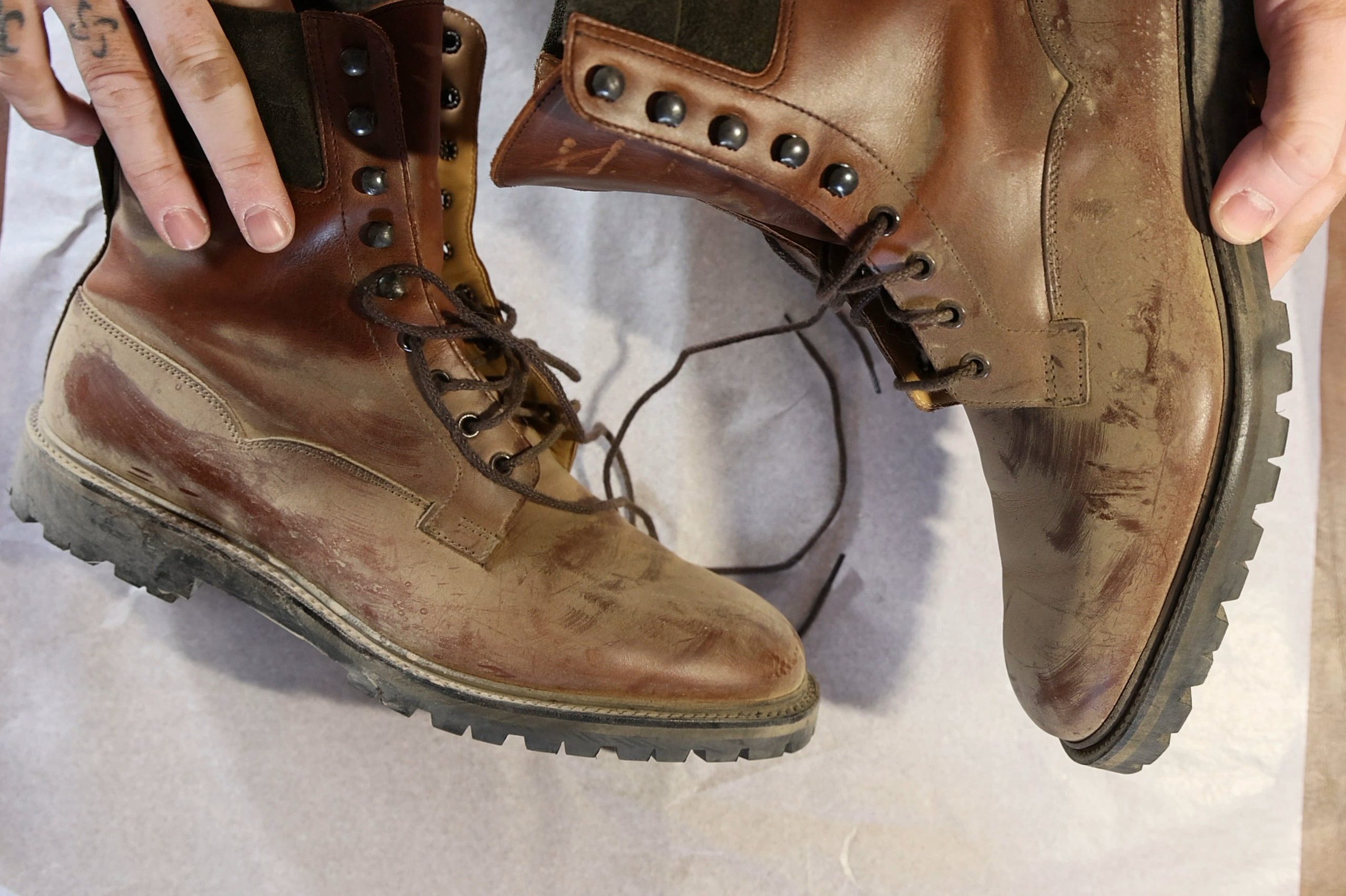
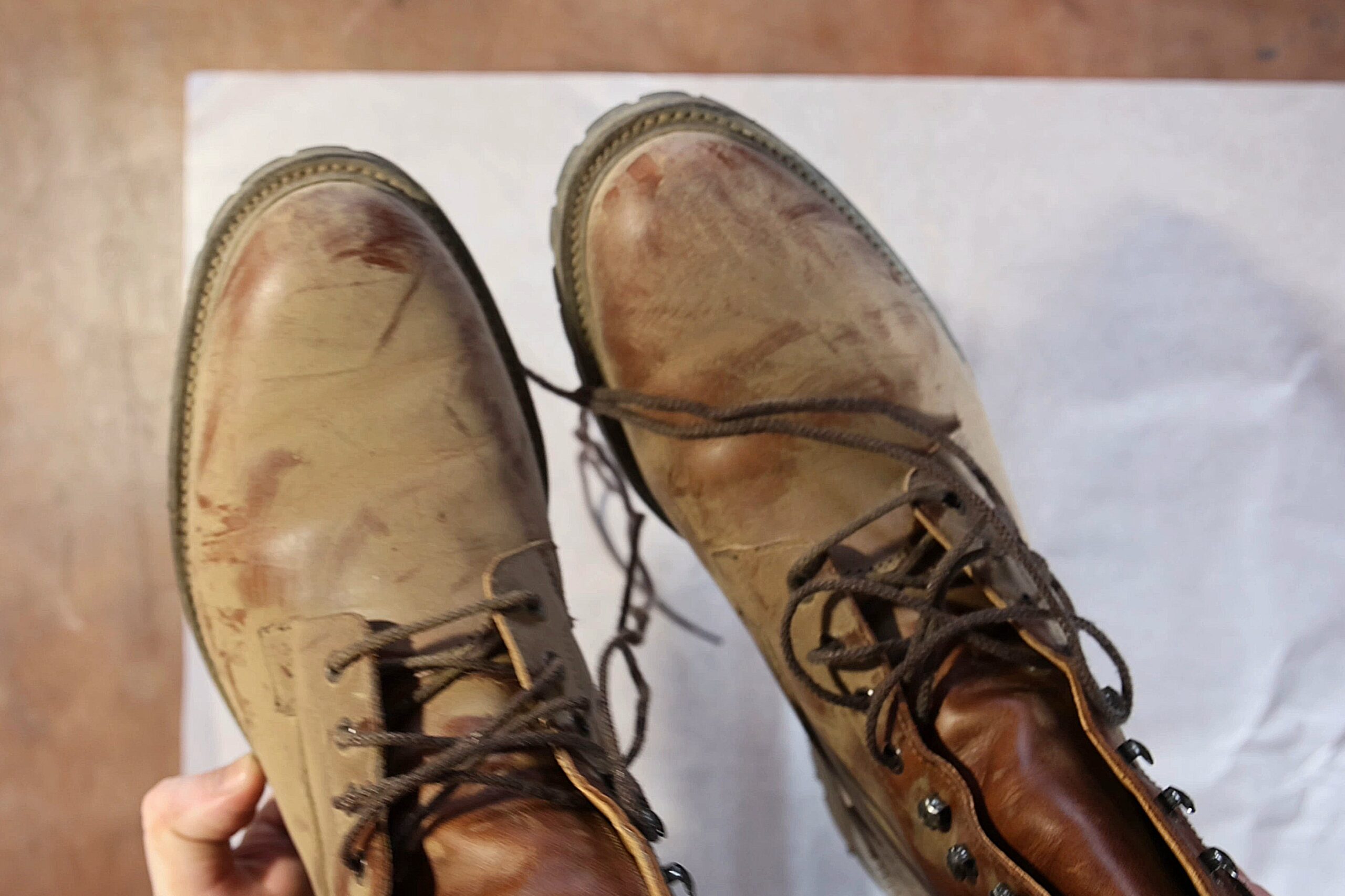
That was precisely the case with my Crockett & Jones Ross boots, made in their Chocolate Hurricane Hide leather. After a Sunday trip to the pumpkin patch, they were absolutely covered in dust. And I mean covered. You could clearly see where my trousers had stopped, and the dust had accumulated across the leather below.
Thankfully, the suede collars managed to escape most of the mess, which made cleaning these boots considerably easier.
So I thought this would be a good opportunity to demonstrate two different ways to clean oiled leather boots, compare their effectiveness, and then use Saphir’s brown Oiled Leather Cream to bring the leather back to life.
The entire process is relatively simple, and as you will see, it does not take much to get a heavily dust-covered pair of boots looking nearly new again.
👉 Watch the full video here:
Understanding Oiled Leather
Before getting into the cleaning, it is worth briefly discussing the leather itself.
Crockett & Jones uses its Hurricane Hide leather on several of its more rugged models, including the Ross boot. It is an oily pull-up leather, designed to withstand the elements while developing character through regular wear.
One of the appealing characteristics of this type of leather is how the oils within it create variations in the finish as the leather flexes. This is what gives pull-up leather its distinctive appearance, where some areas become lighter or darker through use.
Unlike traditional smooth calfskin, you are generally not trying to build up layers of cream and wax polish to achieve a highly polished finish. The objective is to keep the leather clean, nourished, and protected while preserving its natural character. You can, of course, high shine this leather and it can look nice, but it somewhat defeats the idea of it being more rugged in nature.
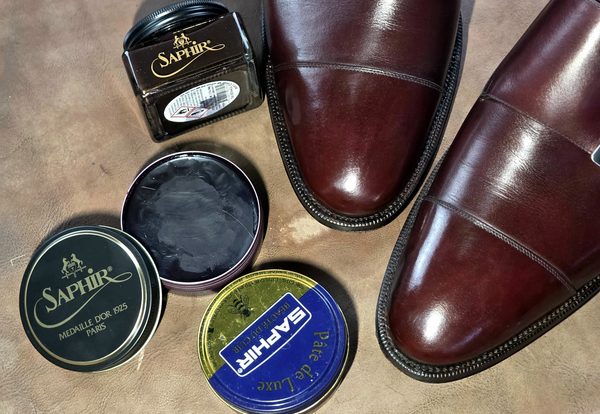
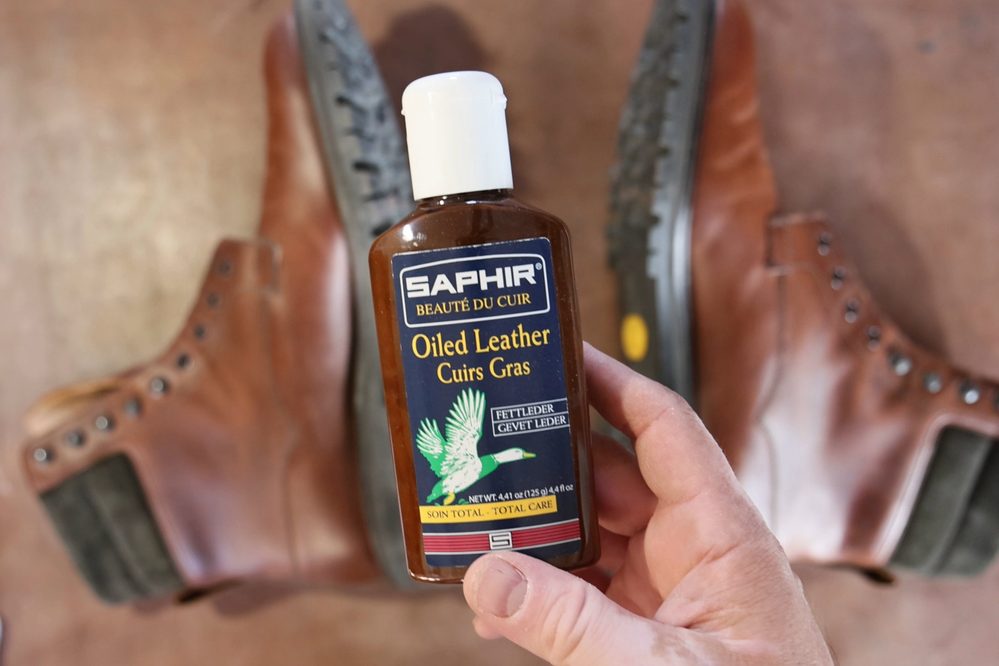
For this demonstration, I decided to use Saphir’s Oiled Leather Cream from their Beauté du Cuir range, specifically the brown version, which is one of their newer products.
I had previously used the neutral cream on a pair of heavily neglected Waxy Commander boots, with excellent results. This time, however, I wanted to see how the brown cream would perform on a more traditional oily pull-up leather.
Two Ways to Clean Dusty Leather Boots
Before applying any product, you need to remove as much of the surface dust and dirt as possible.
For this demonstration, I decided to try two different approaches, using one boot for each method. First, I removed the laces to gain access to the tongue and surrounding areas, which had accumulated quite a bit of dust themselves.
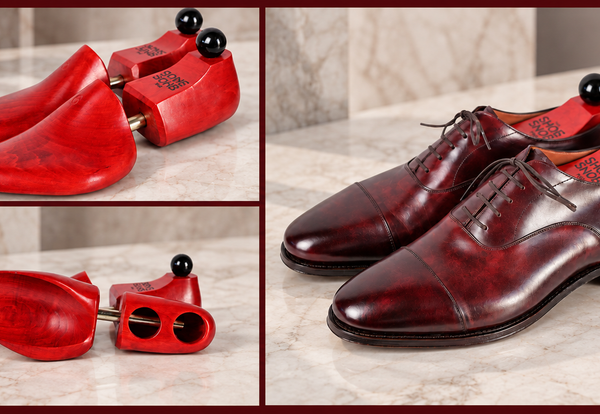
I also inserted shoe trees to help maintain the shape of the boots while cleaning them.
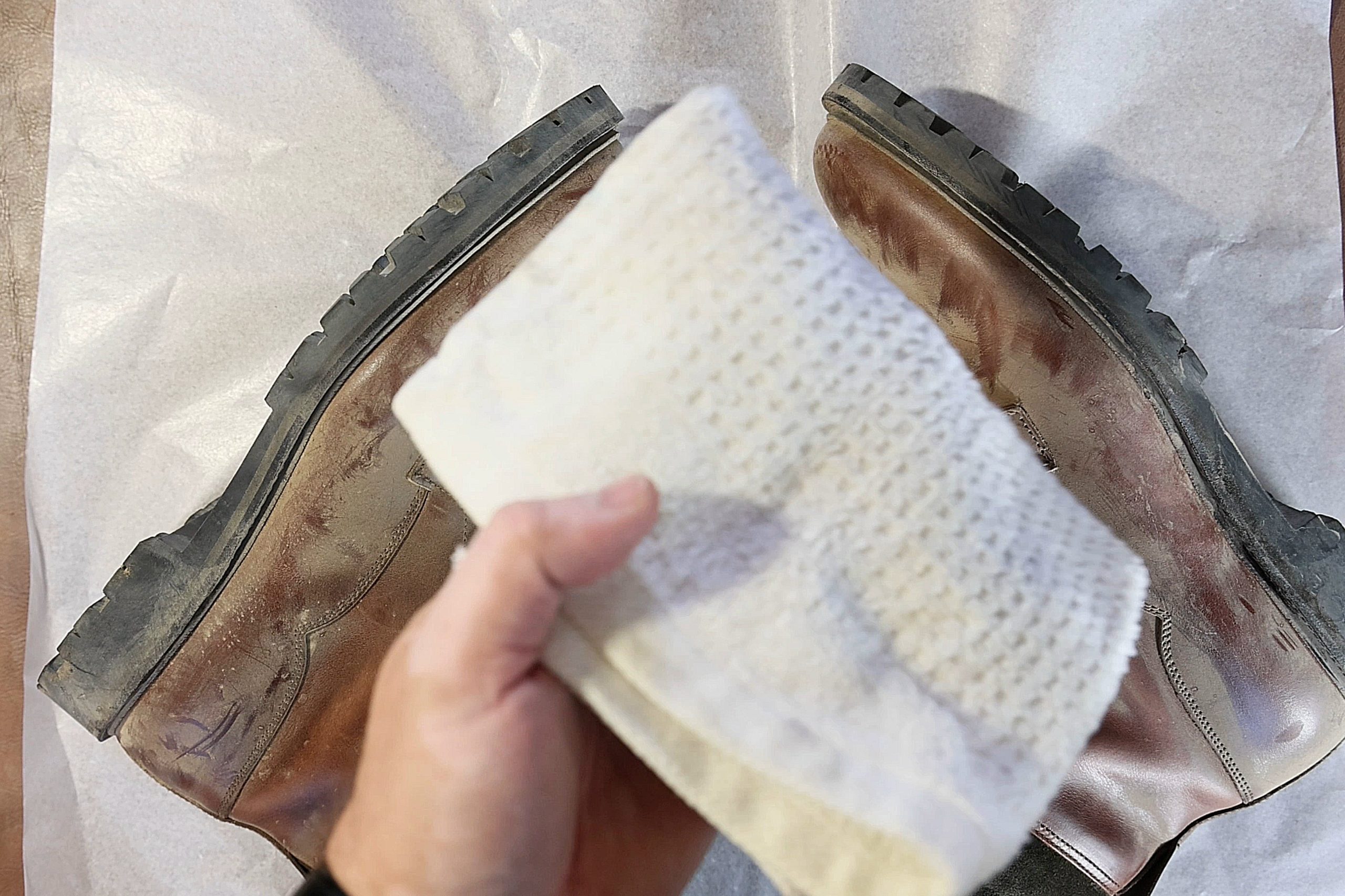
Method One: Cleaning with a Damp Cloth
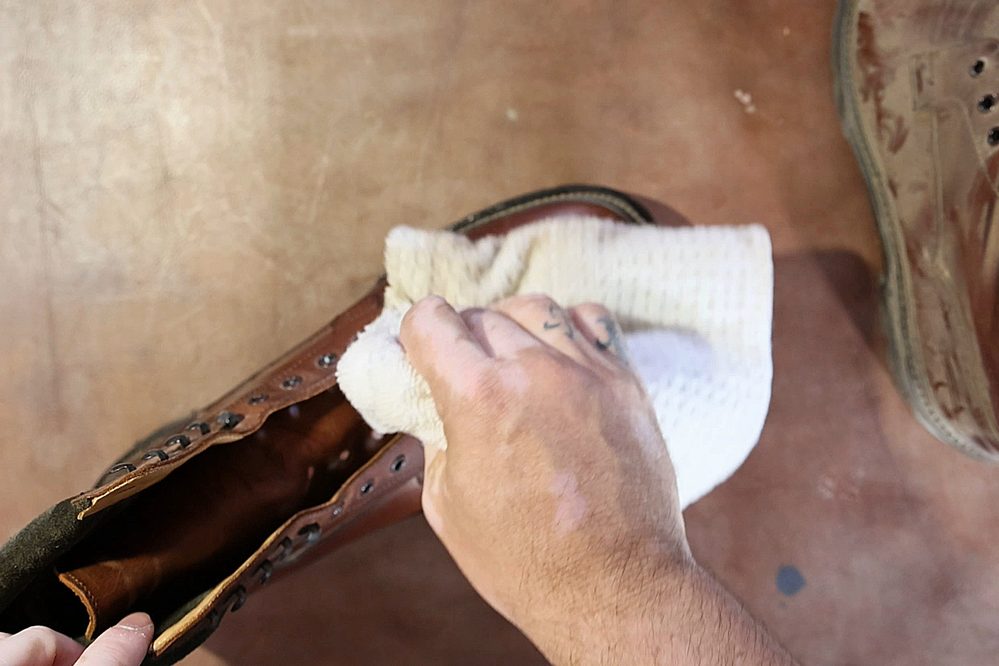
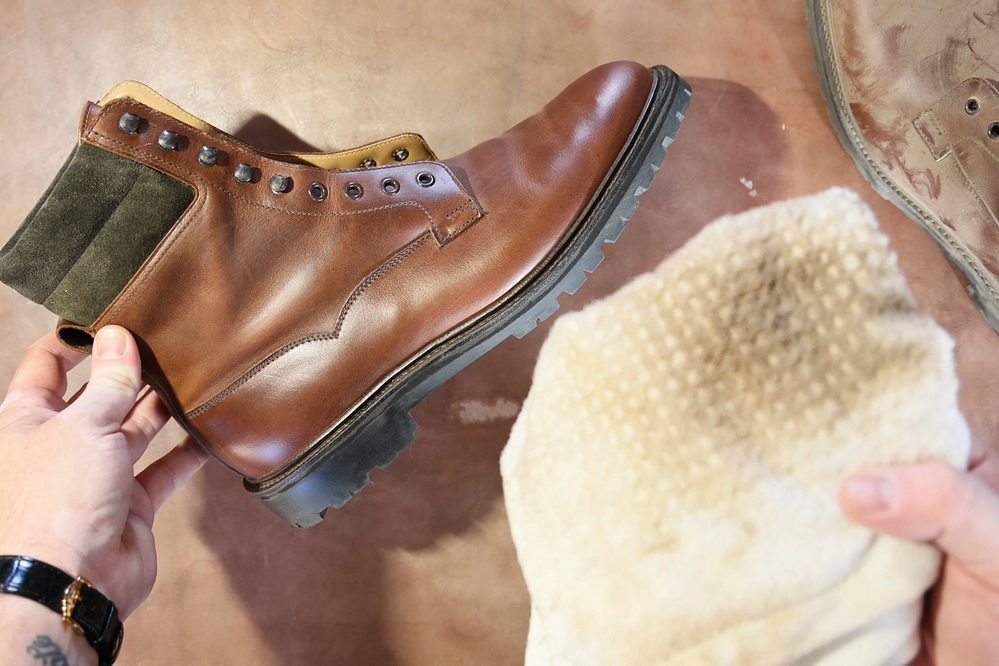
The first method was simply using a slightly damp cloth to wipe down the leather. It’s simple and straight to the point but isn’t good for all leathers. You have to know which leathers can easily take this treatment. I know that some people might be hesitant to introduce water to their leather shoes, but on a rugged, properly finished oiled leather like this, a lightly dampened cloth is generally not a problem.
The key is not to soak the leather. You want just enough moisture to lift the dust without saturating the surface. I worked the cloth evenly across the leather, paying particular attention to the creases where dust tends to accumulate.
This method is very effective. The damp cloth picked up the majority of the dust and left the surface looking considerably cleaner.
Of course, this approach is not appropriate for every type of leather. More delicate finishes, particularly certain untreated vegetable-tanned leathers, can be much more susceptible to watermarks and discoloration. Always consider the type of leather you are dealing with before applying moisture.
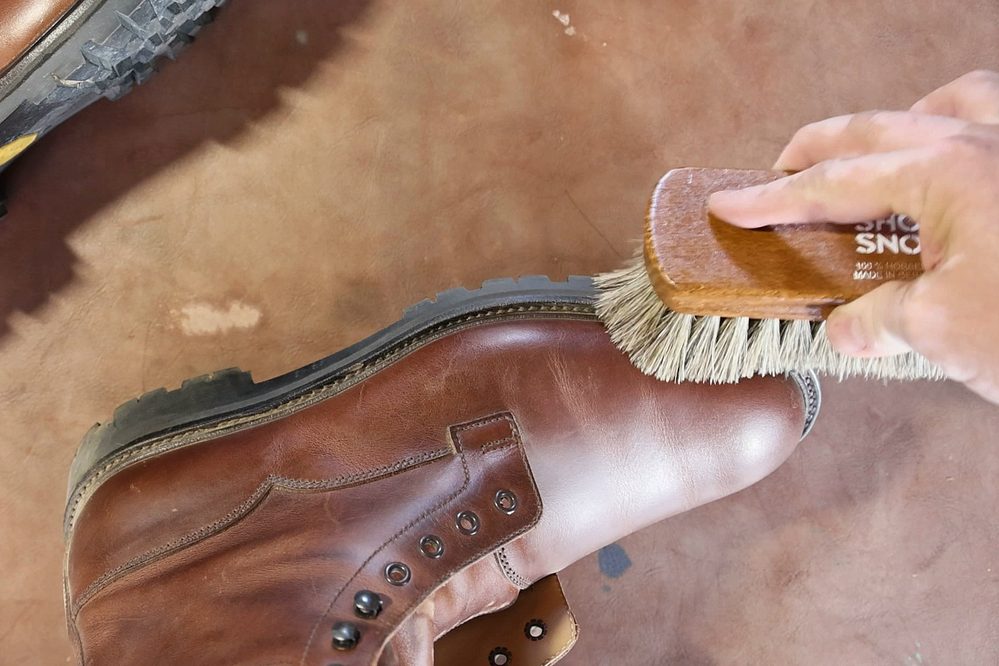
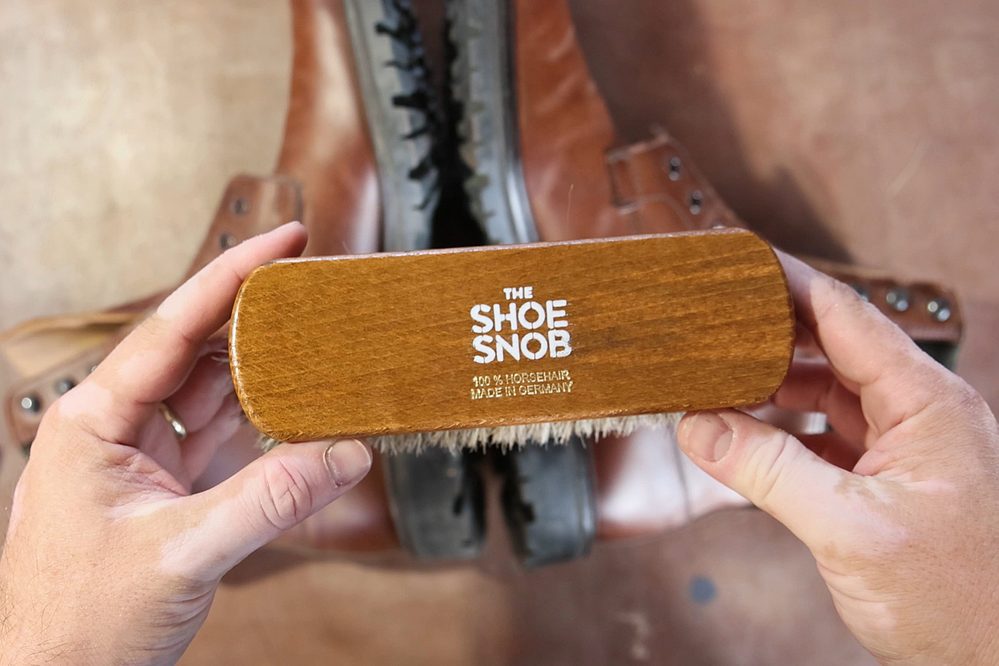
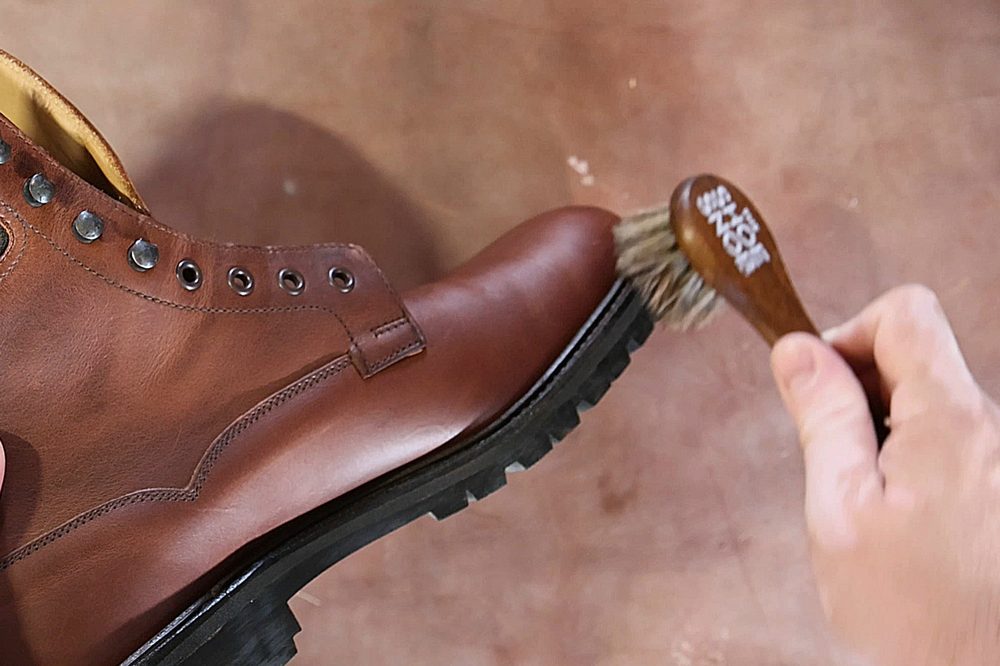
The one drawback of using a cloth is that it becomes more difficult to get into the welt area. For that, I followed up with a horsehair brush to remove the dust trapped around the edges.
Method Two: Just Cleaning with a Horsehair Brush
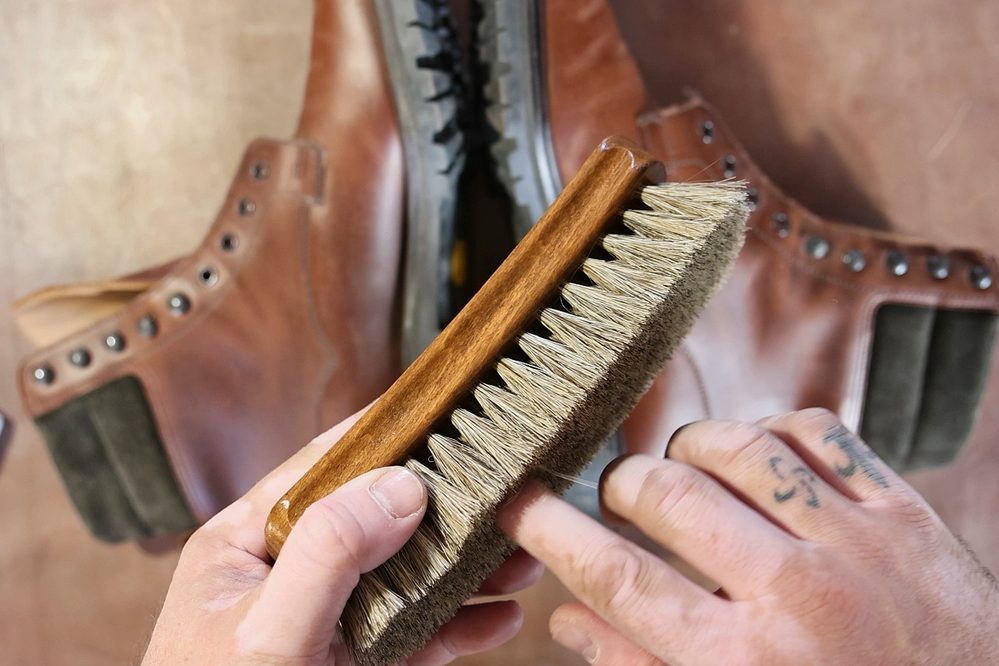
For the second boot, I skipped the damp cloth entirely and simply used a horsehair brush to remove the dust as best as I could. This is obviously a perfectly acceptable method, particularly if you are uncomfortable introducing moisture to the leather.
The brush does a good job of removing loose surface dust, but there is one drawback: the dust goes everywhere. And when you are dealing with the amount of dust that these boots had accumulated, that becomes quite noticeable.
More importantly, I found that the brush did not remove quite as much dirt from the creases as the damp cloth had. I could still see traces of fine dust sitting within certain areas of the leather, even after a thorough brushing.
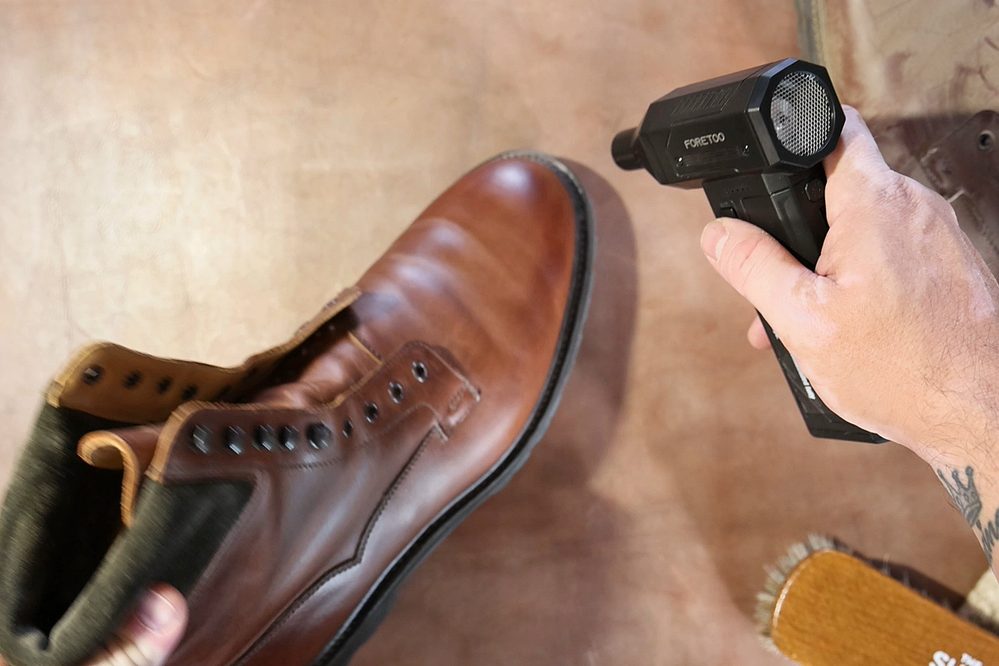
I also used a small electric air blower to help remove the remaining particles. These devices are quite useful for getting dust out of difficult-to-reach areas, although I would still favor a brush or cloth for the majority of the cleaning.
Ultimately, the damp cloth was my preferred method for this particular situation. It removed the dust more effectively and created considerably less mess.
That said, both methods worked, and the remaining residue on the second boot would be addressed during the next stage.
Rejuvenating the Leather with Saphir Oiled Leather Cream
With the majority of the dust removed, it was time to move on to the main part of the demonstration. Saphir’s Oiled Leather Cream is designed specifically for oiled and greasy leathers, helping to clean, nourish, and protect the material without taking away its natural character.
As mentioned earlier, I had used the neutral version before, but this was my first time testing the brown cream. For application, I prefer using a small horsehair applicator brush rather than a cloth. There are two reasons for this.
First, the applicator brush allows me to be much more precise, particularly around the welt, eyelets, and other areas that are difficult to reach. Second, the cream sits within the bristles instead of being immediately absorbed into the cloth. This allows me to use the product more efficiently and have greater control over how much I am applying.
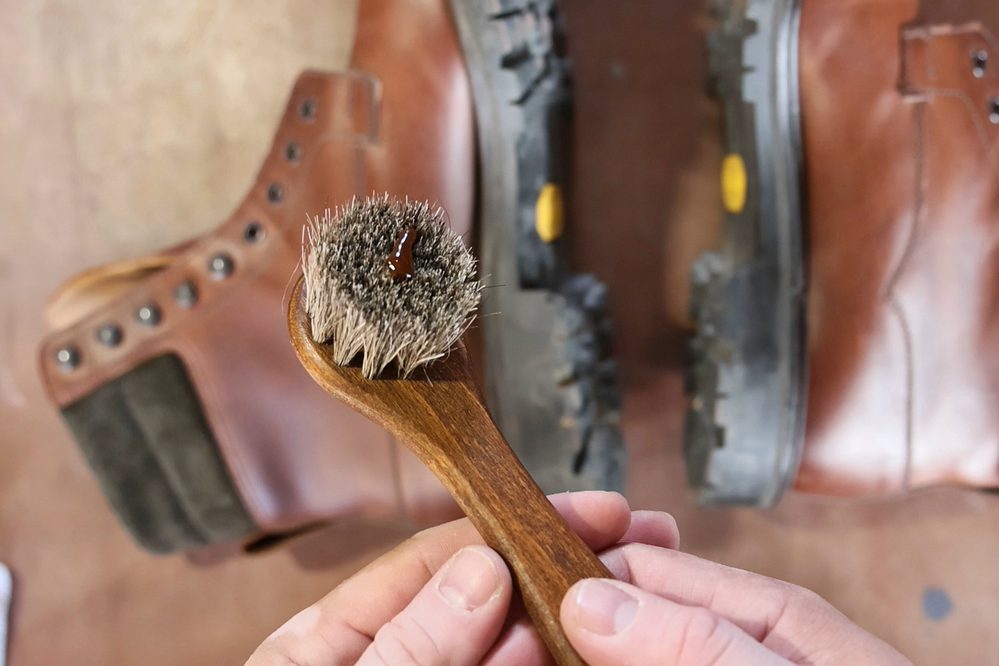
I started by applying a small amount of cream to the brush and working it into the leather using circular motions. One thing I always emphasize when applying shoe care products is that less is more.
There is no need to coat the boots in excessive amounts of cream. A few small applications, worked evenly into the leather, are generally far more effective than applying one large amount and hoping it all absorbs.
Quality products are concentrated, and oversaturating the leather is not going to do you any favors. In fact, it will do the opposite and can have its own adverse ramifications.
On the first boot, which had been cleaned with the damp cloth, I managed to cover practically the entire boot with just two small applications. The second boot required slightly more work, largely because the horsehair brushing had left a little more residual dust on the surface.
As I continued working the cream into the leather, the remaining residue was gradually lifted away, leaving a much more even appearance. I also made sure to work the cream carefully around the welt and lower edges, while avoiding the suede collars.
Does Brown Oiled Leather Cream Darken the Leather?
This was something I was particularly interested in discovering, as I had not previously used the brown version of Saphir’s Oiled Leather Cream. After applying it to both boots, I was pleased to see that the brown cream did not noticeably darken the Hurricane Hide leather.
Instead, it brought back a richer, more even appearance without fundamentally changing the original color. That is exactly the kind of result I would want from a product designed for maintaining this type of leather.
Of course, different leathers will react differently, and I would not assume that the same result will occur on every pair of brown boots. If I were working with a much lighter tan-colored leather, for example, I would probably favor the neutral version instead, particularly if preserving the original shade was important.
As always, testing the product on a less visible area beforehand is a sensible precaution.
Finishing the Boots
Once both boots had received their cream treatment, I moved on to the finishing stages. First, I cleaned the laces with the damp cloth, removing the accumulated dust before putting them back into the boots.
For a casual derby boot like the Ross, I personally prefer crisscross lacing. I think it looks more appropriate for the style, whereas straight bar lacing is something I generally reserve for Oxfords, Balmoral boots, and other dressier footwear.
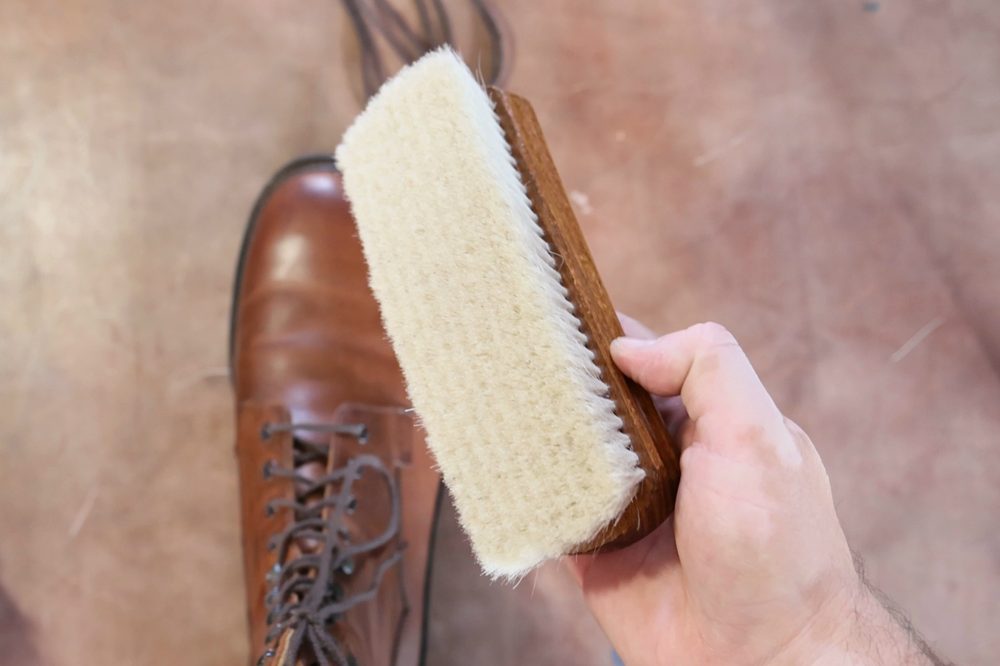
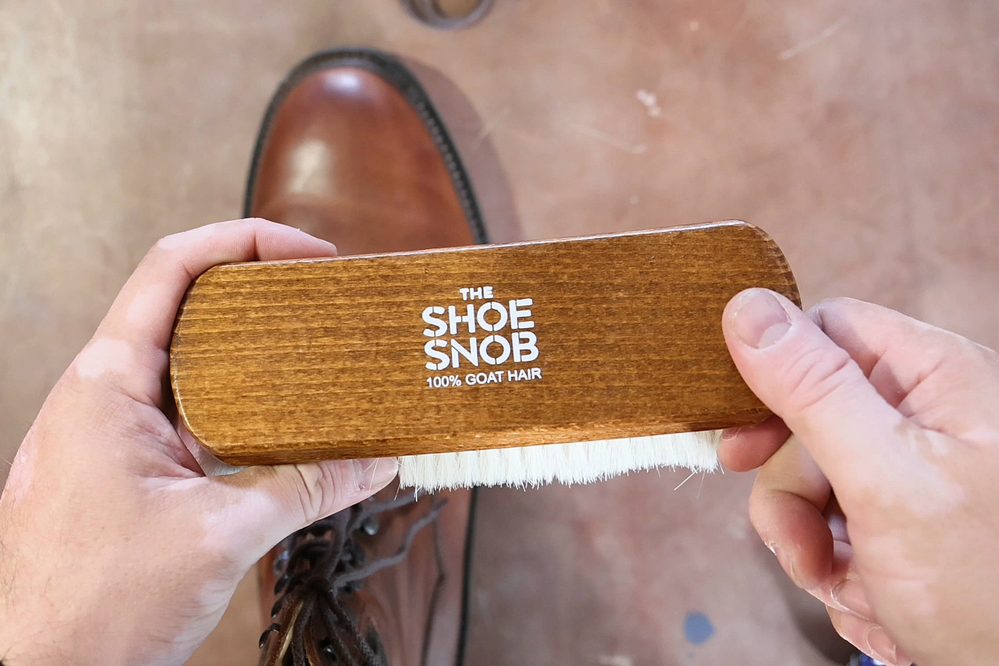
With the boots relaced, I used my goat hair finishing brush to gently buff the leather and bring out a more even finish.
Ideally, I recommend allowing shoe care products to sit for around 10–20 minutes before buffing. For the sake of keeping the video relatively short, I completed this step immediately.
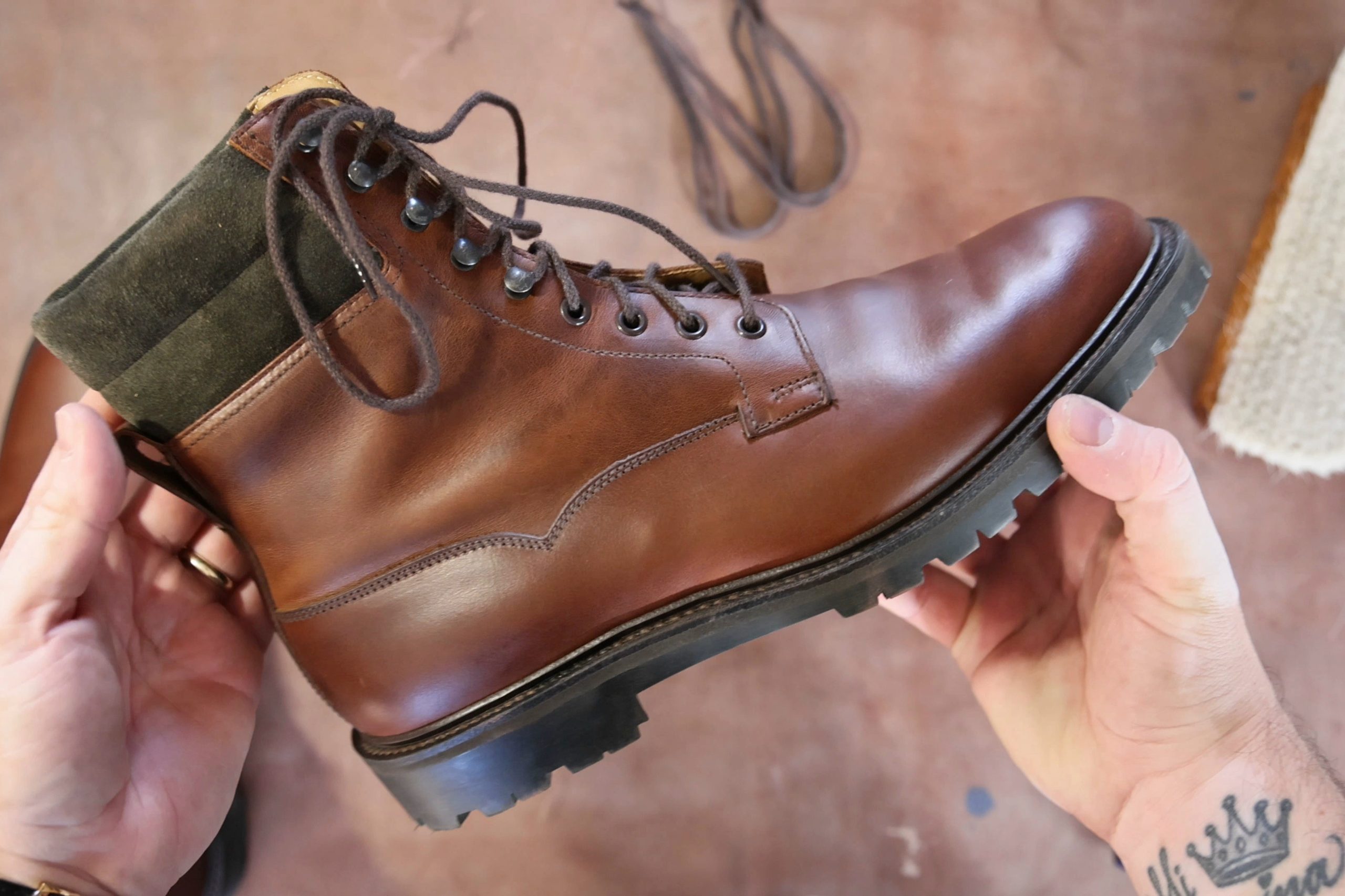
The results were excellent. The boots looked clean, refreshed, and almost back to their original appearance.
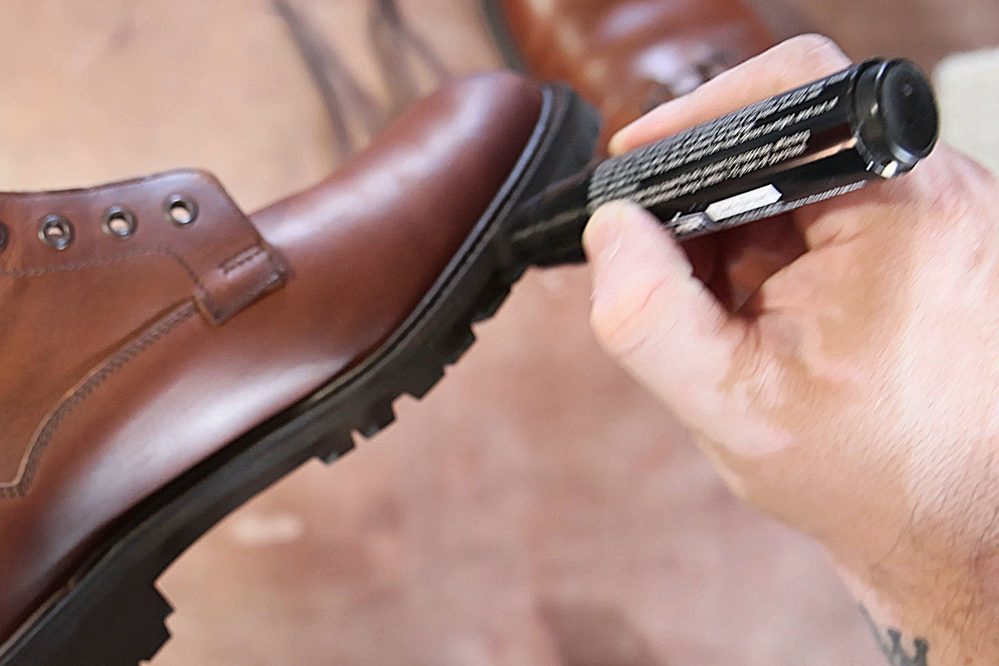
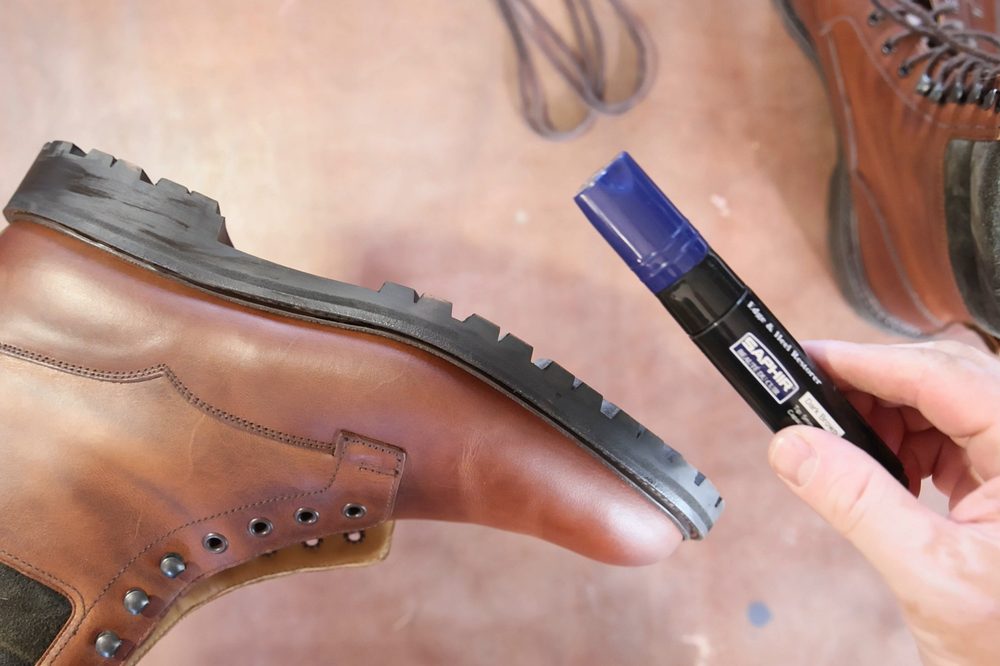
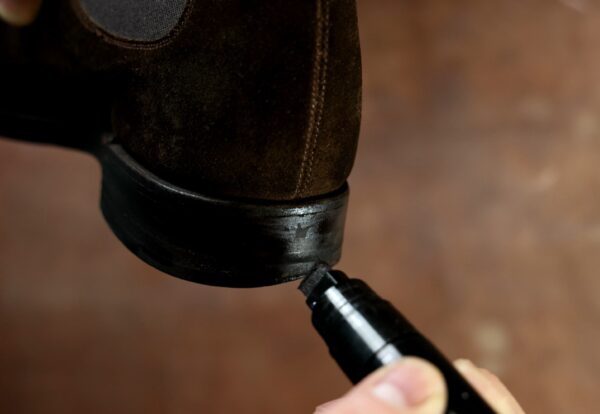
As one final optional step, I demonstrated Saphir’s Edge and Heel Dressing Pen to tidy up the edges of the soles.
This product is primarily designed for restoring the appearance of leather sole edges and heels, although I demonstrated it on the rubber-edged soles of these boots.
It is important to remember that the dressing contains colorants, so you need to be careful not to get it onto the leather uppers. It is also worth testing compatibility before using it on rubber, as that is not its primary intended application.
Final Thoughts
The biggest takeaway from this demonstration is that cleaning oiled leather boots does not have to be a complicated process. In fact, it is much easier than some other leather uppers, such as calfskin. Even after a particularly dusty outing, a damp cloth, a good horsehair brush, and a little patience can remove the majority of the accumulated dirt and bring the boots back to life.
From there, applying a suitable leather care product can make a significant difference in restoring the leather’s appearance. While we focused on the Oiled Leather Cream, a cream polish and/or renovateur is also perfectly acceptable.
For these Crockett & Jones Ross boots, Saphir’s brown Oiled Leather Cream performed very well. It helped bring the leather back to a rich, even appearance without noticeably changing the original color or making the boots look overly polished.
And that, to me, is exactly what you want when caring for this type of leather.
You want your boots to look well maintained, not as though you are trying to turn a rugged country boot into a pair of patent leather dress shoes.
And if you want to see how this product performs on a completely different type of leather, have a look at my previous article on restoring neglected Waxy Commander boots with Saphir Oiled Leather Cream.
Find all of the shoe care products at The Shoe Snob Shop
Find the Crockett & Jones Ross Boots here.
—Justin FitzPatrick, The Shoe Snob
Shop · Marketplace · Patreon
***Saphir and Crockett & Jones are advertising partners of The Shoe Snob Blog***