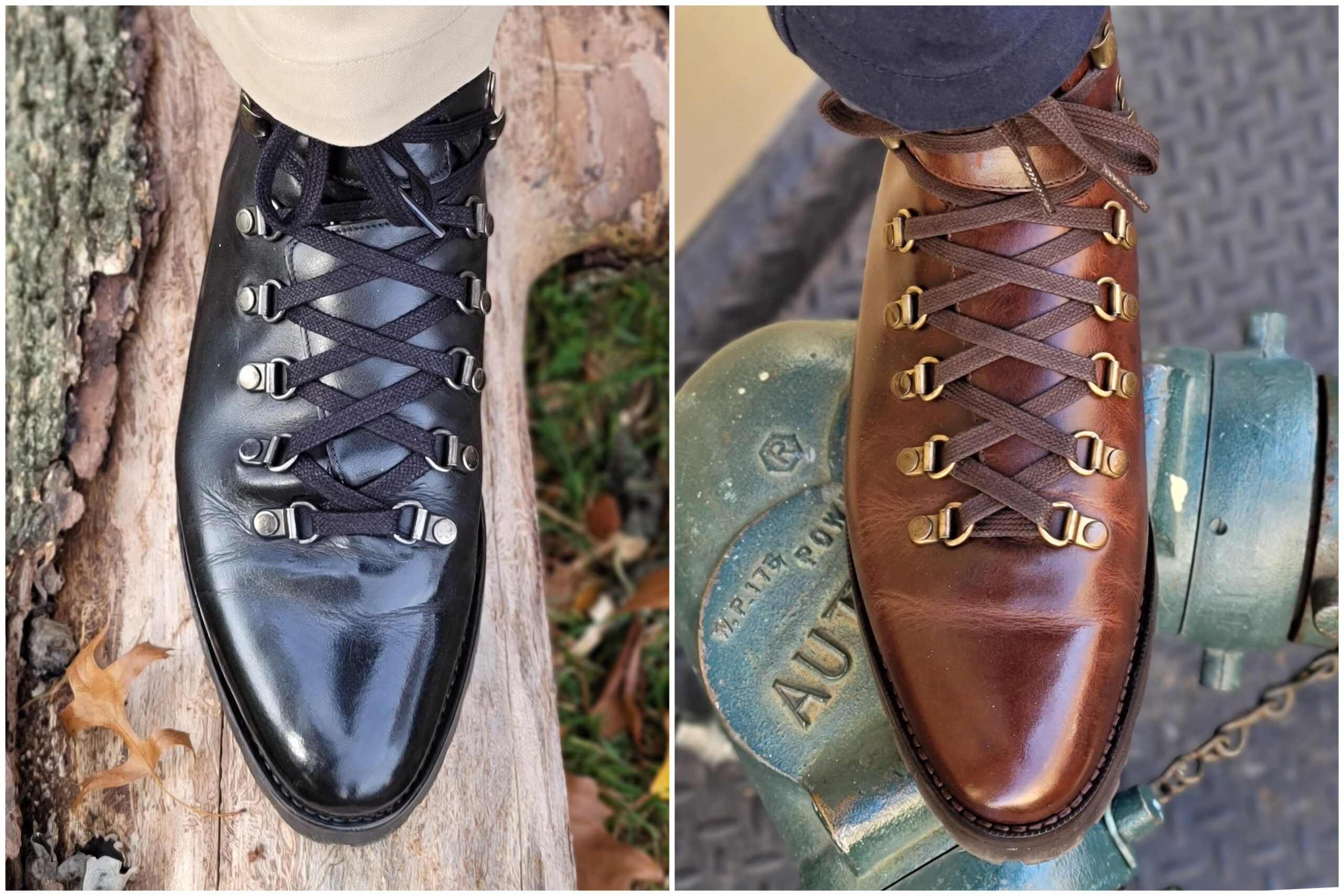
Leather creases. Full stop. And leather creasing is about as natural as your skin eventually wrinkling.
There is no such thing as crease-free leather, and the idea that leather shouldn’t crease is, frankly, absurd. Yet time and time again, I hear people complain about wrinkled leather, blaming either the leather itself or the shoemaker for what they believe to be a flaw.
The reality? Leather creasing is normal. In many cases, it has absolutely nothing to do with leather quality or poor craftsmanship.
I’ve seen some of the best leather in the world crease aggressively—on bespoke shoes, no less—and I’ve seen mediocre leather hold its shape surprisingly well. So this guide isn’t about pretending that all creasing is acceptable, but rather about explaining why most creasing is unavoidable and often misunderstood.
Let’s break it down.
Table of contents
- Does Leather Creasing Mean Something Is Wrong?
- 1. Shoe Fit (Yes, Fit Matters—But Not How You Think)
- 2. Leather Quality: The Biggest Misconception
- 3. Shoe Pattern & Design (This One Is Huge)
- 4. Lasting Time & Upper Formation
- Why Creasing Is Always Different (Even Between Identical Shoes)
- Final Thoughts: Leather Creases. Accept It.

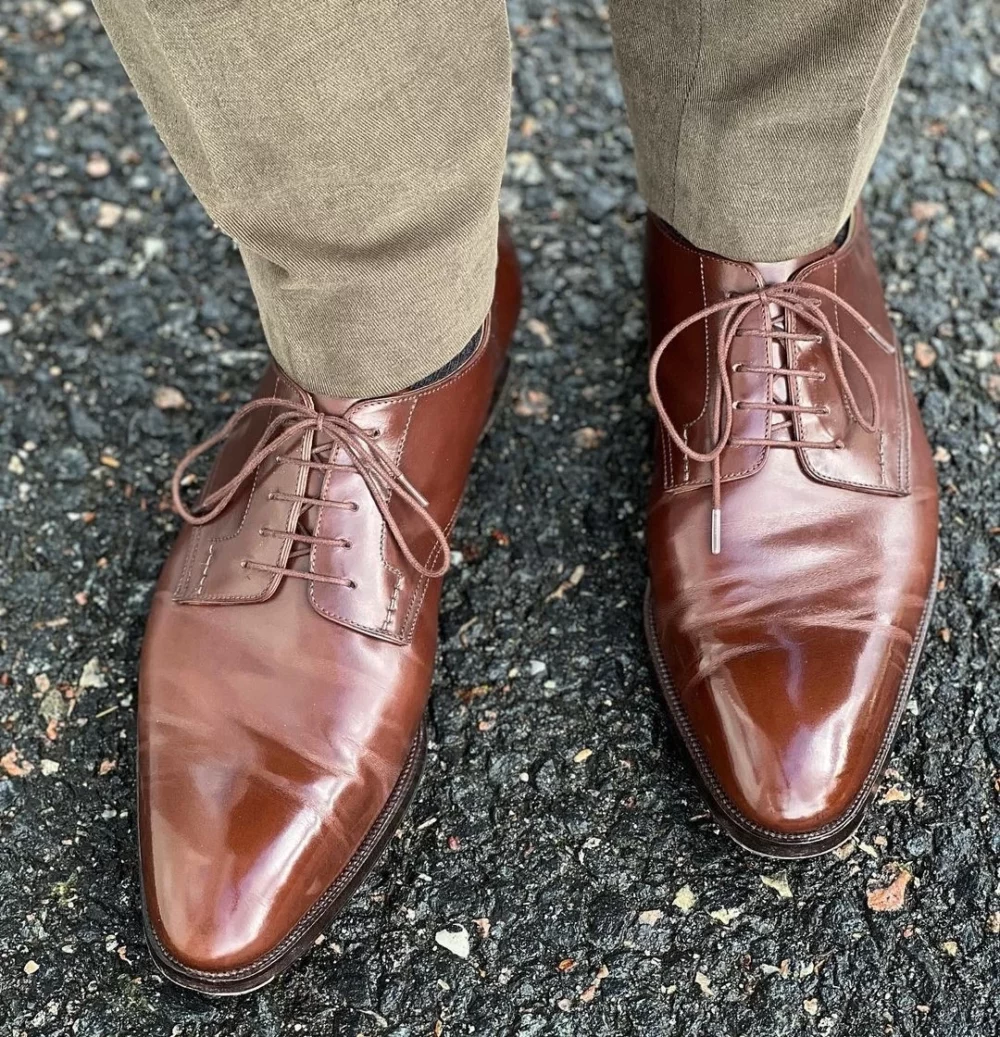
Does Leather Creasing Mean Something Is Wrong?
Short answer: usually, no.
Creasing is the natural response of leather to flexing. Every time you take a step, the leather bends. If it didn’t, you wouldn’t be able to walk. The real question isn’t whether leather creases, but how, where, and why it creases.
And that depends on several factors—many of which people never consider.
1. Shoe Fit (Yes, Fit Matters—But Not How You Think)
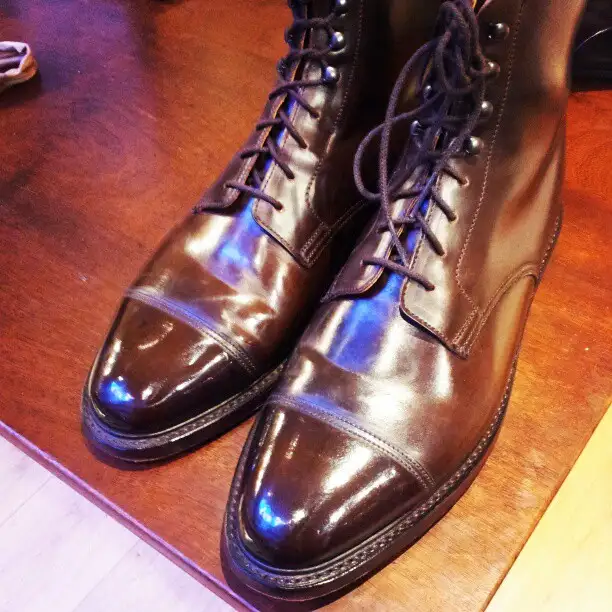
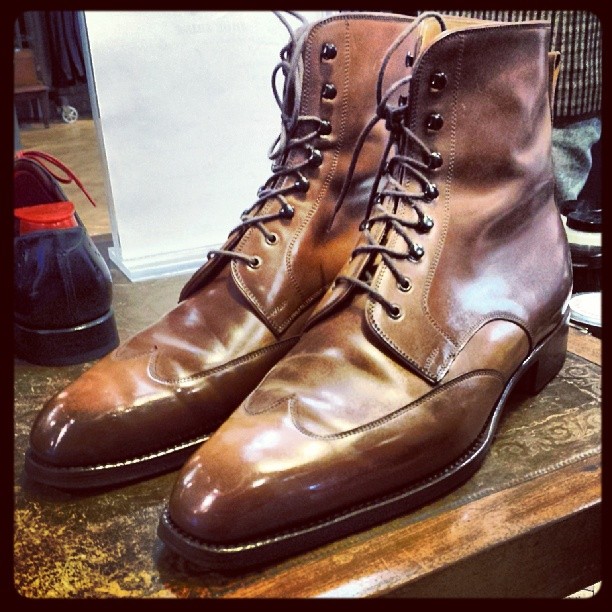
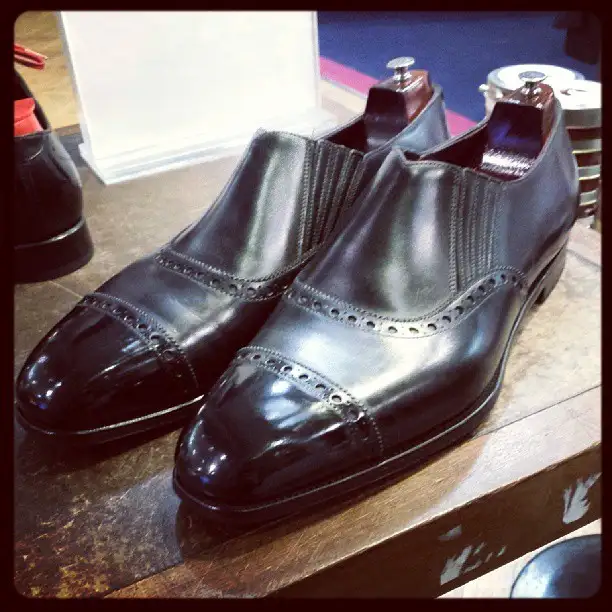
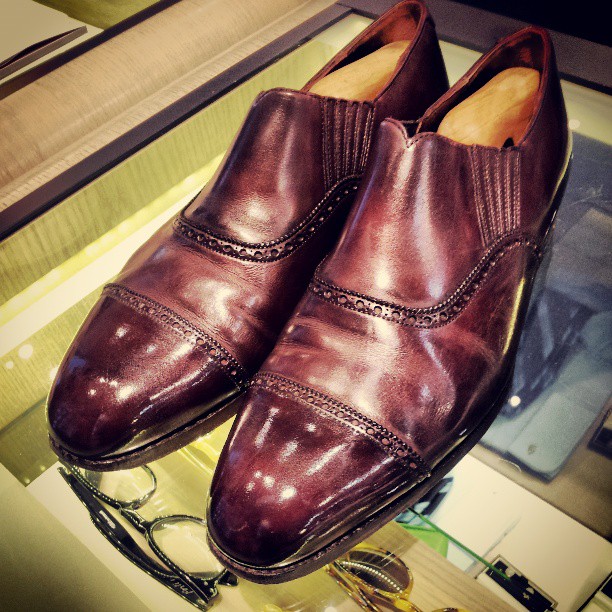
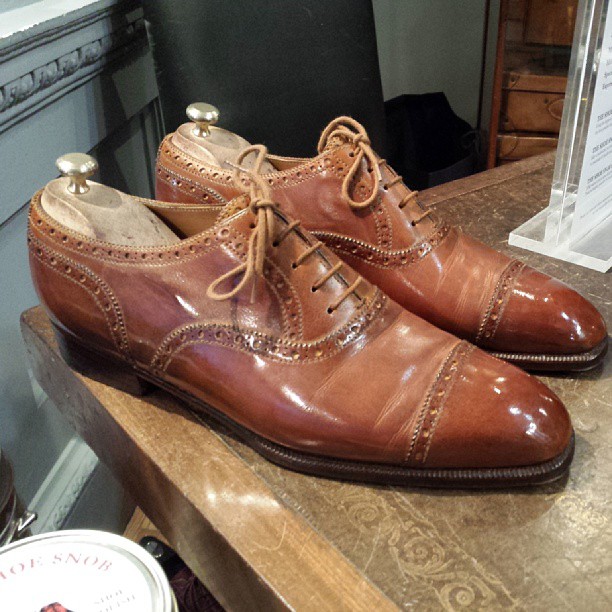
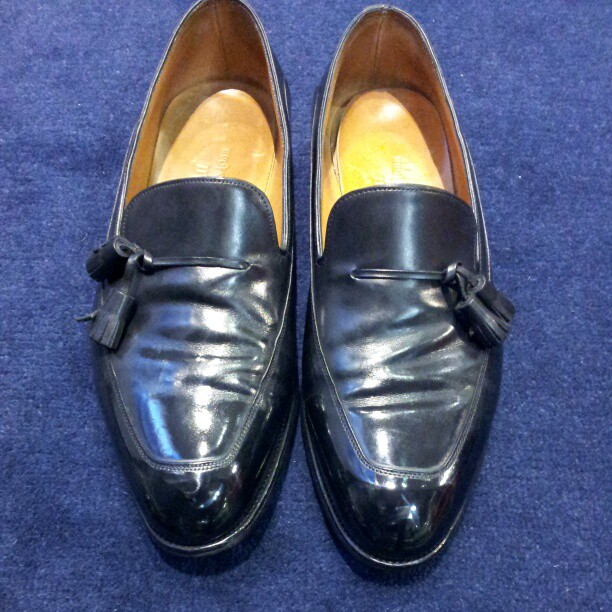
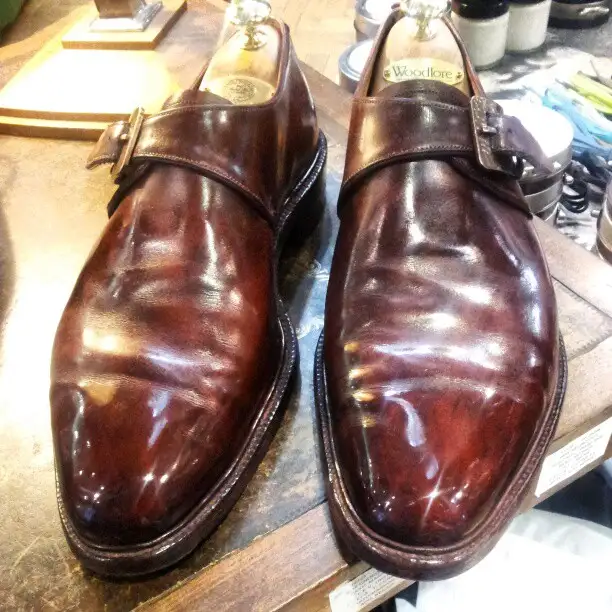
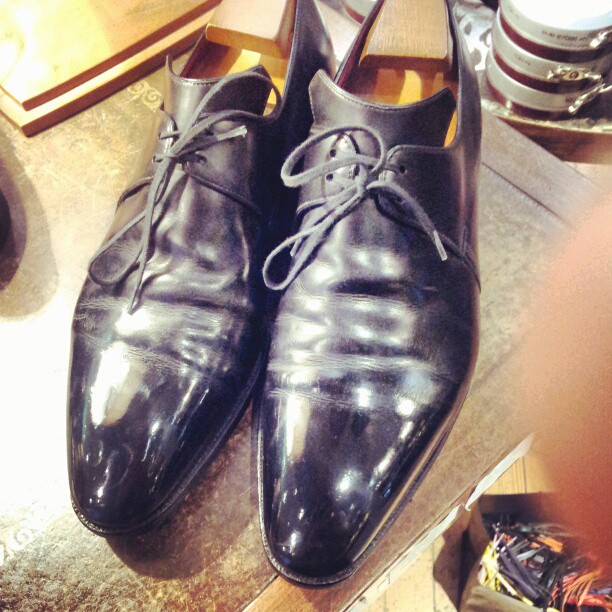
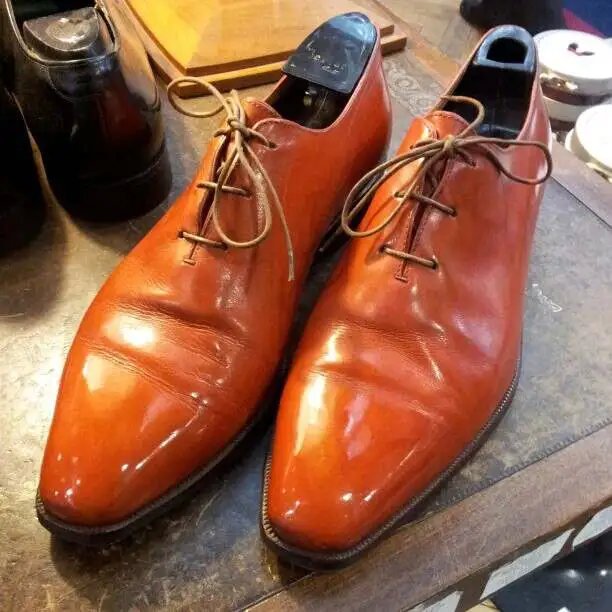
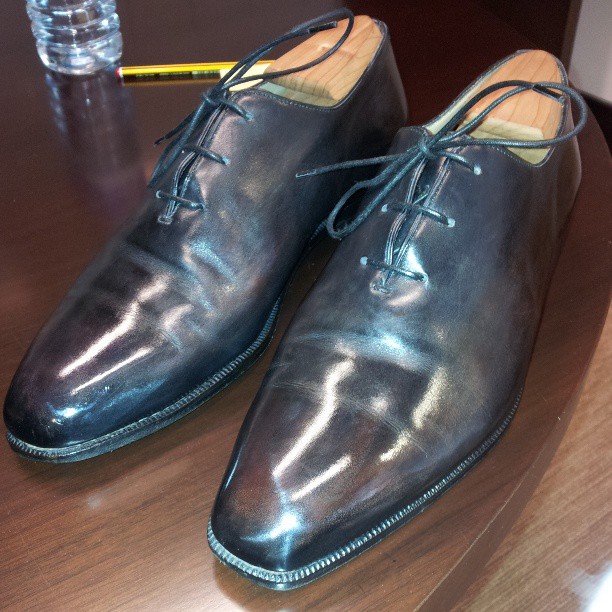
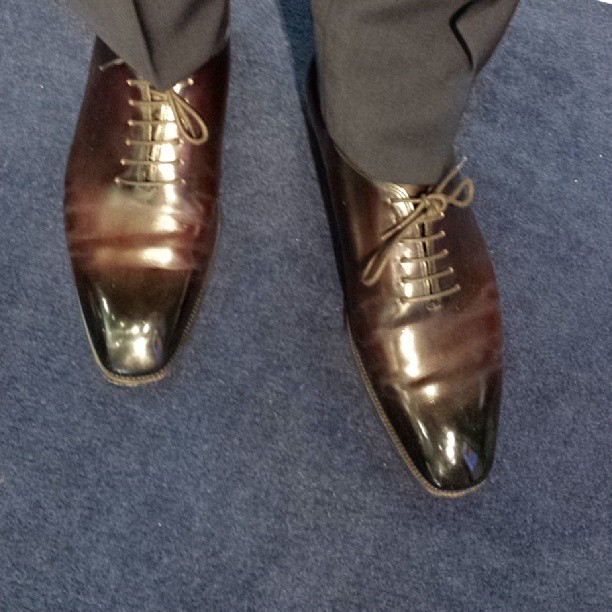
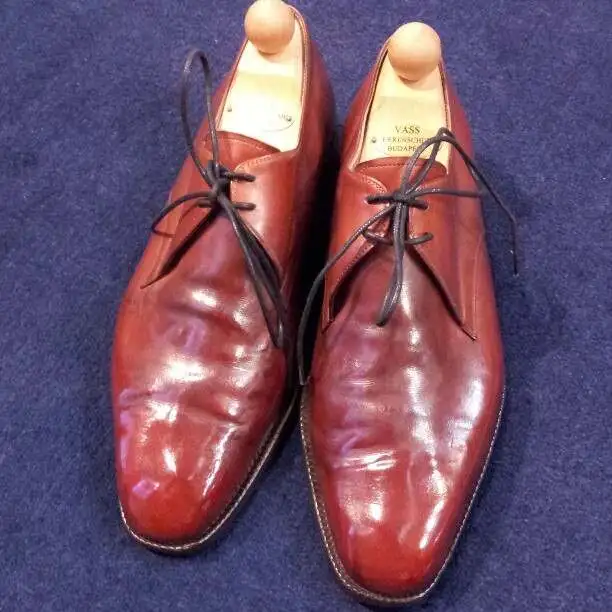
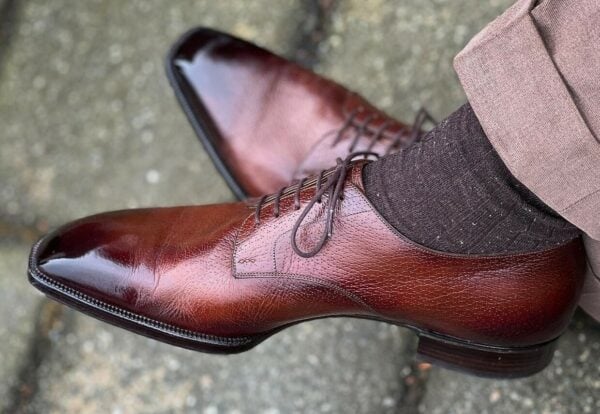
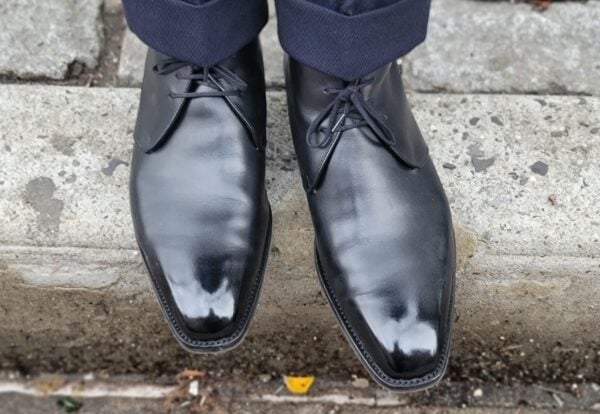
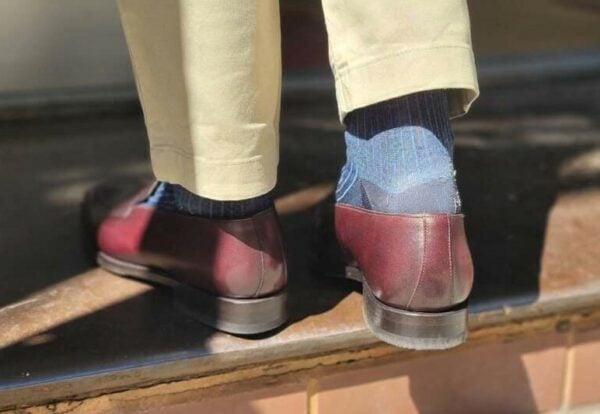
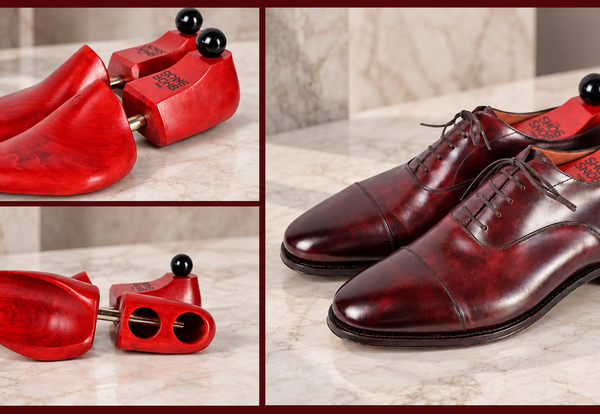
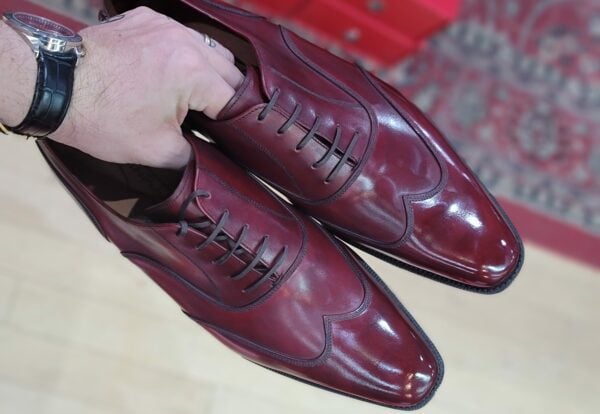
Poor fit can absolutely lead to ugly creasing—but good fit does not guarantee minimal creasing. Just look above at the two examples of bespoke-made footwear, both with a lot of vamp creasing.
Take my own feet as an example. I have very shallow feet, which means that even in the correct size, most ready-to-wear shoes leave excess space between the top of my foot and the lining of the shoe. That empty space allows the leather to collapse inward when the shoe flexes, creating more prominent creases.
Someone with a higher instep or more volume in their foot fills that space naturally, giving the leather less room to bend. That doesn’t mean their shoes won’t crease—it simply means they’re less likely to crease as dramatically.
And no, sizing down isn’t always the solution. The shoe may fit correctly overall, but unless it’s bespoke, it will never match your foot perfectly. Fit influences creasing—but it does not control it. I can say for sure, though, that excess volume in the vamp will always lead to excess creasing.
2. Leather Quality: The Biggest Misconception
This is where most people get it wrong.
High-quality leather does not mean less creasing.
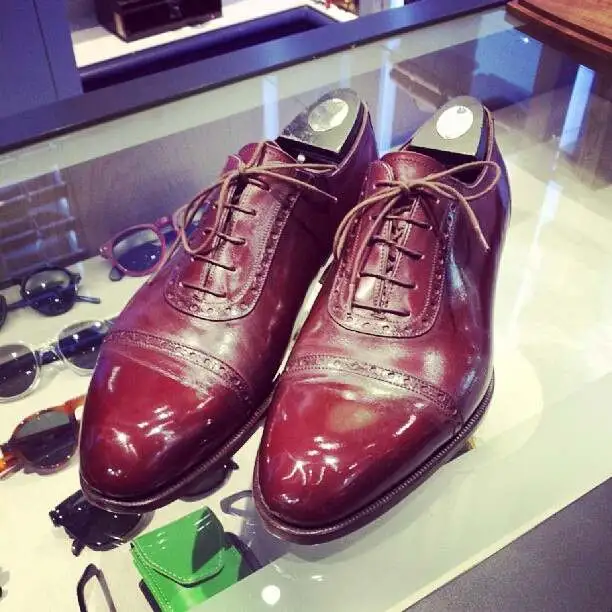
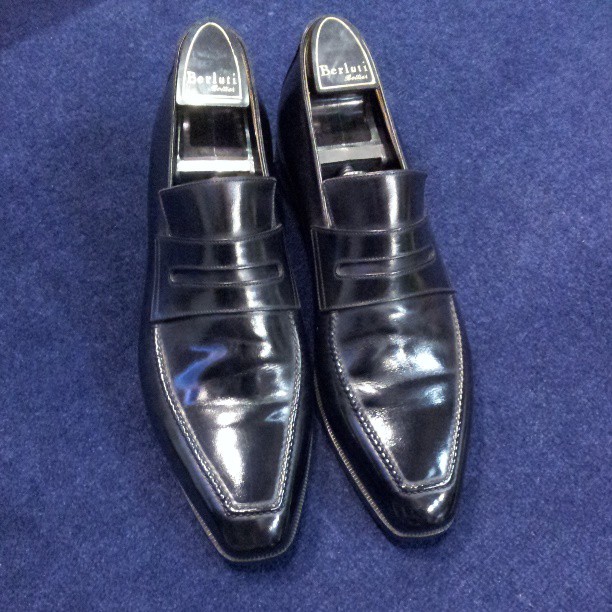
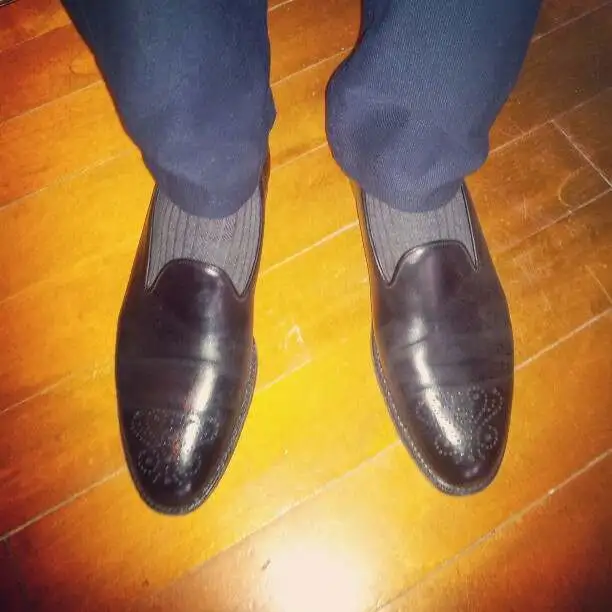
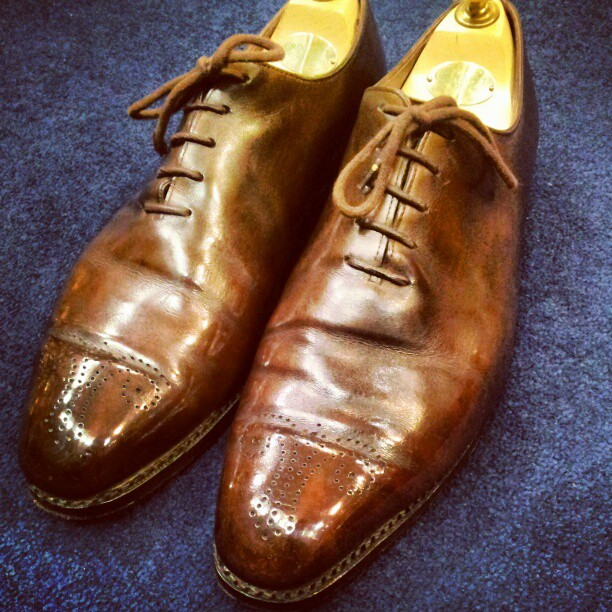
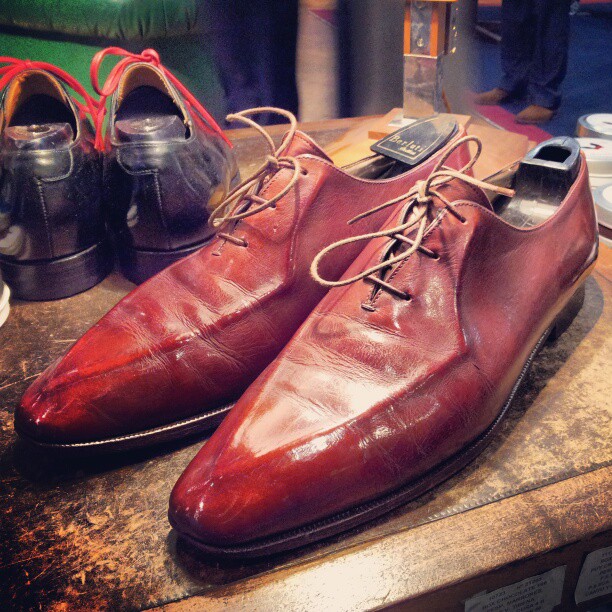
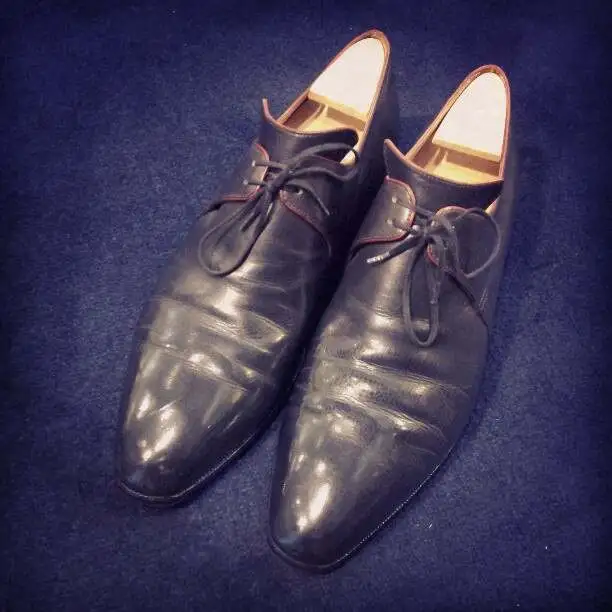
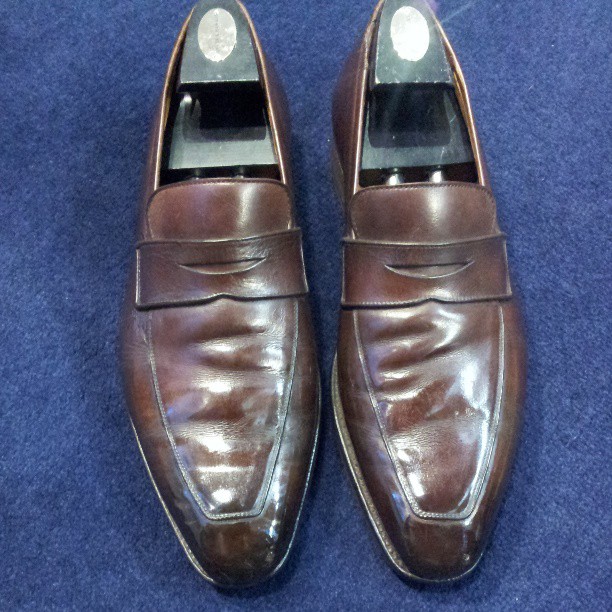
In fact, some of the finest French calfskins I’ve worked with crease more, not less. I’ve seen this repeatedly on bespoke shoes I made during my time with Stefano Bemer, as well as on shoes from Corthay, John Lobb, and Berluti (as you can clearly see in this post).
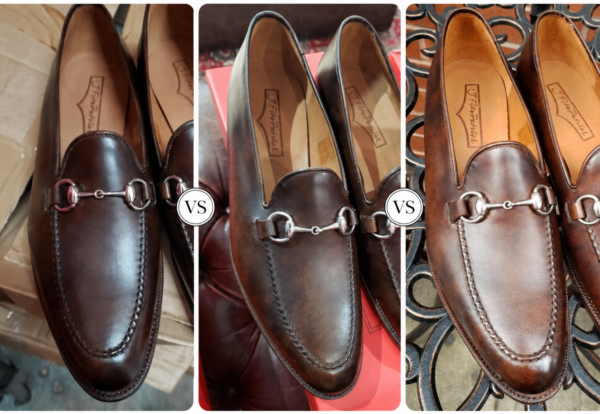
Interestingly, slightly lower-grade French calfskin—like what we use at J.FitzPatrick Footwear and many brands at similar price points—often holds its shape better. But that does not make it superior leather. The higher-grade skins are softer, more supple, and far more comfortable on foot. They simply flex more freely.
Bad belly leather is another story, but reputable makers avoid using excessive amounts of it, so let’s rule that out for the sake of sanity.

3. Shoe Pattern & Design (This One Is Huge)
The model of the shoe plays a massive role in how it creases.
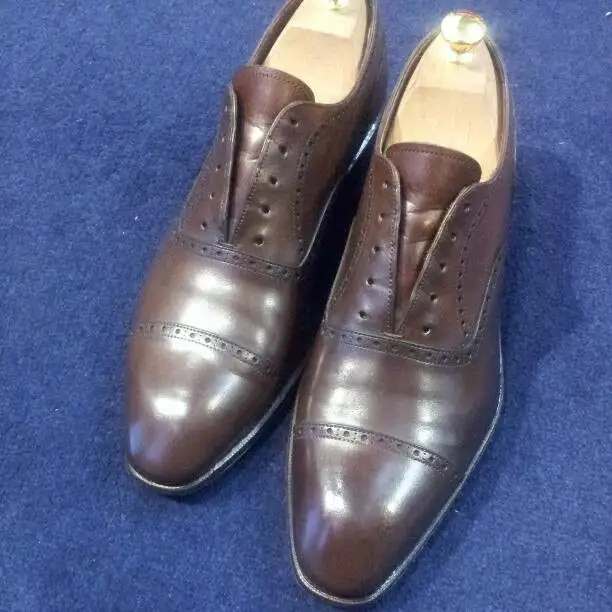
Plain-toe shoes will always crease more. Wholecuts most of all.
Why? Because there is nothing to break up the surface tension. A wholecut is essentially a blank canvas—one uninterrupted piece of leather stretched over a three-dimensional form. When it flexes, the creases have nowhere to hide.
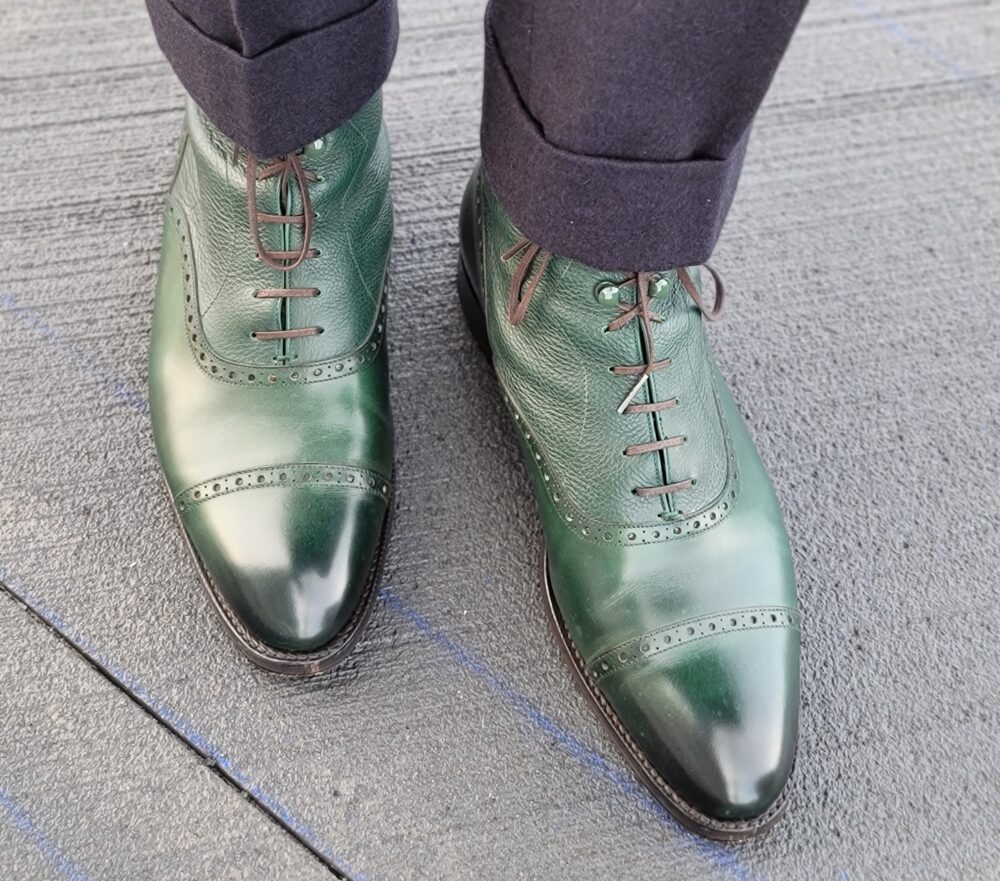
Cap-toe and brogued shoes, on the other hand, distribute that tension across multiple panels. That’s why full brogues and semi-brogues tend to show far less visible creasing.
This does not mean wholecuts are inferior—quite the opposite. They are among the most difficult shoes to make. They simply reveal everything.
4. Lasting Time & Upper Formation
One of the most overlooked factors in leather creasing is how long the upper is allowed to sit on the last.
The longer the leather is left to dry, shrink, and mold to the last, the more form-fitting the shoe becomes. Better formation usually means less excess space inside the shoe—and therefore fewer dramatic creases.
Shoes rushed off the last simply don’t develop the same structural memory. More space inside the shoe equals more room for the leather to collapse when walking.
This is one reason bespoke and higher-end ready-to-wear shoes can crease better—but again, it’s not a guarantee.

Why Creasing Is Always Different (Even Between Identical Shoes)
Here’s the part that drives collectors mad:
You can take:
- The same shoe
- In the same size
- On two different people
…and the creasing will look completely different.
You could even take the same person, buy two identical pairs, and end up with different creasing patterns. Why? Because no two hides are identical, no two sections of leather behave the same, and no two shoes are lasted in exactly the same way.
Add in how tightly someone laces their shoes, how they walk, how often they rotate them—and suddenly you realize:
There is no single cause of leather creasing.


Final Thoughts: Leather Creases. Accept It.
Creasing is not a defect.
Creasing is not a failure.
Creasing is not proof of bad leather or bad craftsmanship.
It is simply leather doing what leather does. There are indicators that might tell you that you are in the wrong size shoe or that a last is not good for you. But that is not the leather’s fault.
When you see beautifully made shoes—some even bespoke—with heavy creasing, it should reinforce this truth: quality and creasing are not directly linked.
So the next time you notice wrinkles forming across your shoes, don’t panic. Understand them. Because once you do, you’ll stop fighting something that is completely natural—and start appreciating your shoes for what they are: a living material shaped by movement.
👉 Read more of our educational shoe guides
—Justin FitzPatrick, The Shoe Snob
Shop · Marketplace · Patreon







Justin,
At long last someone has said this! Shoes are made for wearing, leather is a natural material with an almost infinite capacity for variation in creasing. The only way to prevent creasing is never to wear your shoes.
Chi
precisely! thanks for sharing
If it’s a burnished shoe, the crease is more prominent. Also, I’m a 10 but fit into a 10 1/2.The 10 1/2 shows more crease
I don’t mind creasing at all. I think it looks great on a high quality shoe.
Although what about loose grain creasing? This can happen with the use of poor leather. The upper grain , and lower grain separate and create thick vein like wrinkles.
I purchased a pair of Wolverine 1000 mile boots, they were nearly $400 shipped. The size was perfect! My right boot was perfect, but after just a couple steps, the left boot instantly showed loose grain creasing. Thick creases on the toe box. After just a quick walk around the house indoors. And again, the right shoe shows no wrinkles at all.
Does loose grain creasing wear out quickly? Will Leather split open?
I’m exchanging them. But, I wish I didn’t have to. They are beautiful horween CXL veg tanned leather Wolverine 1000 mile boots!
But, it’s like the left boot uses bad clicking, with belly leather or something lol.
Great post. This makes me feel better about some of my boots. That said out here on the edge of the known world (Edmonton) we do a lot of driving and I hate how my right boot has more creasing than the left.
glad that you enjoyed it!
It can’t be just me but I quite like creasing on some shoes. As long as it is not the embedded creasing from no shoe tree being used, or exaggerated creases from poor care
A quality well looked after shoe I think looks great with some creasing. Especially coupled with a nice natural aged patina. I have also noticed that over time the bigger creases on some shoes slightly mellow due to the leather age.
FYI as you have pointed out in the last picture (your shoes) I did think to myself a week or so ago how little they show their creases
it’s definitely not just you Adam!! Many people do (that know about shoes and how they age)….glad to know that mine have not creased so much for you!
Just like why people ask for non wrinkle shirts! Good one! 🙂
ha! non-wrinkle shirts or trousers or anything…nothing is really wrinkle free….
Great article !
A friend of mine told me once : “if you don’t want your shoes creasing, buy sabot ! ”
I hope i could see you in Paris..
haha! Glad that you enjoyed the article! See you on the 31st then hopefully!
fantastic fantastic post! I learned so much! Seeing the wear and the creasing is really interesting. I wonder why the Carmina has barely any creasing. I am tempted to try a Carmina shoe for the first time to see if this is common with their shoes. Looking forward to more Mythbusters!
not sure why they did not either?? Could have just been the person’s foot in it…like i said, creasing in reality probably has more to do with the foot inside than the shoe itself….a combination of things in reality…glad that you enjoyed the post!
As pointed out in the post it really depends from person to person and shoe to shoe. I have a pair of carmina monks with a cap toe. Where cap toe should technically prevent too many creases, they still have a few of them.
how can I get my hands on the first shoe in this post
sorry Sameer, it is a bespoke shoe…but the pattern belongs to Stefano Bemer, who you could contact to have made up…
Well put my friend! Keep up with content like this!
Thanks Justin!
One thing I’ve noticed: grain calf seems to crease less than plain calf, and if they do, the creases are less noticeable on grain surface. Shell cordovan ripples, but these can be kept at bay with shoe trees that have a higher-than-usual instep.
I am not sure if it creases less or that it is just masked by the grain and not as noticeable??
This post was absolutely an eye opener for me. Looking at all my shoes from American, Italian, and Spain I was trying to figure out why some had more/less creases than others. Now I understand. Thank you sir! Cheers.
glad that you enjoyed it Patrick!
Great article, very informative. What are your thoughts on driving with ‘posh’ shoes? I try to avoid this at all costs as whilst creasing adds character, uneven creasing really annoys me. OCD perhaps?
haha, a little bit of OCD 🙂 But yea I get your point…depends on how much driving you are doing….short trips are fine…long hauls, no go!
To avoid parts of the creasing, install shoe trees regularly in conjunction to conditioning. They certainly cannot go away, but to look better and neater.
Oh, and, different creasing also depends largely on the care regimen provided to the leather. The amount of lubricant (conditioner), recolorant (dyes and pigmented creams), and sealant (waxes) can also provide different crease patterns and creasing degree. What I know is that if a calfskin shoe is lightly greased using something like the Saphir Medaille L’Dor Dubbin Graisse it’ll soften the leather, which, depends on the quality of calf-skin, can improve or worsen creasing. Too much waxes and the grain will be hardened at some points. Too much conditioner can make the leather quite flimsy, thus increase the chances of creasing.
Shell cordovan is, arguably, the least creased of all the leather, if care regimen was provided accurately. The nature of the leather only allows rolls, not creases. The tighter structure also allow less fiber expansion.
I have a question about creasing. I was under the impression that a cap toe shouldn’t have any creases above the cap (that is, no creases from the cap to the tip of the shoe). Is that right? I usually never have creases on the cap, but just got some shoes recently that do and was wondering if that is still just the shoe or a defect.
never does not exist as all people’s feet are different. It really depends on the foot and not the shoe. In theory there should not be creating on the actual cap, but there can be and that does not really mean that something is wrong, just that some people’s feet don’t mesh perfectly with the model…
The creasing doesn’t bother me as much as the uneven creasing. My right always creases badly and the left barely creases. It is because of driving or is something with my gait?
My feet are the same, it cannot be explained unfortunately, as I do not have gait, nor have I driven since living in Europe, but it still happens
This is something that has always filled the spaces of my mind, especially now that I have a husband who creases his shoes terribly and I’m looking to get him new shoes for Christmas. I grew up with a little sister who was just 18 months behind and my mom would always buy us matching shoes. We both had very narrow feet, both fairly shallow as you would say at the bottom half of the foot toward the toes. Her shoes would look creased and terrible in a few weeks and mine would look almost like new at the end of the year. So, I have been noticing since my very young childhood how people walk in shoes. If you are wearing sneakers or shoes that you don’t care how they wear out, kneel down bending the one foot back in exaggeration giving the shoe a full flex as often as you like. But, I was unconsciously conscious growing up about not doing stuff like that in “nice” shoes, anything I wanted to last or that needed to last. Basically, if you don’t want creases, don’t crease them crazy as that sounds. There’s always another way to bend down without creasing your shoe and kneeling, unless you are selling shoes or changing tires all day long is not necessary. Fast forward 40 years to my husband. He is a natural born kneeler. Maybe because he’s tall he feels the need to kneel constantly but he’s constantly flexing the toe of a shoe beyond what the maker intended. So, while I love that he’s caring for me and bowing to my every desire, I’m having to be strategic in buying him shoes that show less wear. And as for Aimee who commented before me, my guess on the uneven creasing is you are kneeling more often on one foot. One stays flat when you kneel and one gets distressed. Mystery solved.
Great article as ever Justin,
After wet weather exposure, would you ever advise shoes to be warmed by a radiator to aid the drying process (back on custom shoe trees) or would you imagine this would increase the chance of further creasing and damage to the shoe?
thanks Nick! But no, never put shoes on or near a heater, that will crack the leather. Always allow to naturally dry.
Is there anything that a cobbler can do to minimize or eliminate creases,
such as with a professional type of shoe iron?
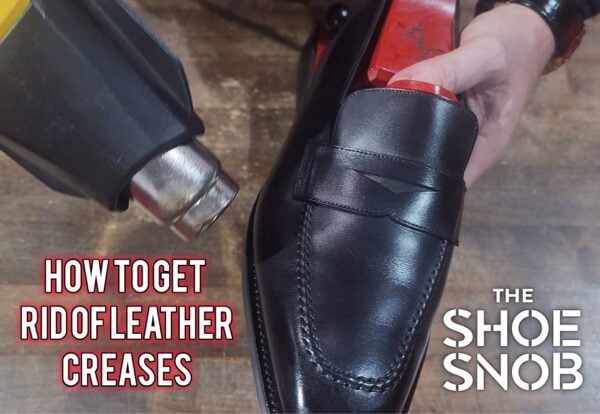
no unfortunately not. To make them slightly go away you can insert a shoe tree and heat them with a blow dryer (but making sure you are doing so from at least 6 inches away)
I’ve heard that a shoe cream should be used to keep the leather supple
and that a tepid iron may be used over a cloth to slowly iron away the
creases, but to keep the shoes on shoe trees to set until cool.
Is this not a good idea?
I have a story to share in which I was perturbed by creases in a pair
of uber trendy, high-heeled, but extremely comfortable clogs. I was in
a rush. I don’t recall having used any buffing cream, because they’re
not formal shoes. I did use a mini travel iron to iron away creases at
the front by the toes which likely appeared from bending of the feet.
The next thing you know, I’m about to enter a car and one of my shoes tore
right above the rim of the metal grommets where the leather meets the wood of the heel!! I was so thankful that I was steps away from the entrance to my home so I was able to quickly change.
Can you explain what would have caused the leather to tear? Is it that I didn’t allow the leather too cool or that I hadn’t used cream to first soften the leather? Again, this was an unconventional leather for my shoes..
more heavy and thick unlike most of my shoes which are much more supple and formal.
Your suggestion of the blow dryer 6 inches away suggests that I may have
charred and weakened the leather by an excess of heat from the iron or that perhaps the heat close to the metal on the leather contributed to the tear. 🙁
Great article Justin,
🙂 One other factor involved with creasing relates to the amount of toe spring the shoe has; a very flat to the ground toe has to bend more when you walk, verses a toe with a fair amount of lift has to bend significantly less as you walk. Fine veg Kangaroo hide creases, but feels beautiful, and the ceases even out over time eg. when I’d first made them they developed quite distinct creases visible at rest, but 90 full day wears later the upper has softened into more, finer creases when at rest. Got to put in more toe spring next time 🙂
Thanks again.
Well said Justin, great piece, nothing more to say except that you’re 100% right
Thanks John, I appreciate that. Still been meaning to come visit the shop one day soon!
yes, shoes with elongated toe boxes are more prone to creasing, but that is only natural as they are not shaped like our feet are
glad that you enjoyed the article Matt, thanks for sharing
thanks for letting me know, I only just now saw this. That is weird. Thank you though
Another great article. Great to learn it!
I read this blog, very interesting and informative. It will help me to protect my leather shoes from damage and easy to find out quality shoes in the market. Two boots, with two very different leather creasing patterns, both are good types of leather, one C&J, one VASS is really very good. I also like shopping, have many of Leather branded shoes.
great post! i really liked it.
Great post, love how knowledgeable you are about shoes!
I just want to add that I think the wearer’s gait might have quite some impact on creasing (extent and pattern both). Also, the quality of after-wear care and storage of shoes too.
Thanks for this article! Sounds like we have similarly shaped feet. I’m glad to know that going down a half size/size is not a solution (for me it would be a 10.5 to a 10). Size 10s just pinch my toes too much and the 10.5s always feel just right in almost every shoe and boot.
Hi Justin. Love your articles as you always seem to tell it straight, the good the bad and the ugly, so folks have realistic expectations about what they should expect from their footwear.
Question for you, specifically on the pic of your magnolia and a pair of Redmond III brogues I have. Is that little wrinkle on the seam of the toe cap a crease or just a result of the 2 pieces of leather overlapping and creating the impression of a crease?
Nice post and awesome formal leather shoes. Thanks for sharing.
Any truth to the rumor that hatch-grain from Horween is very prone to creasing?
I would not know, I do not support Horween