
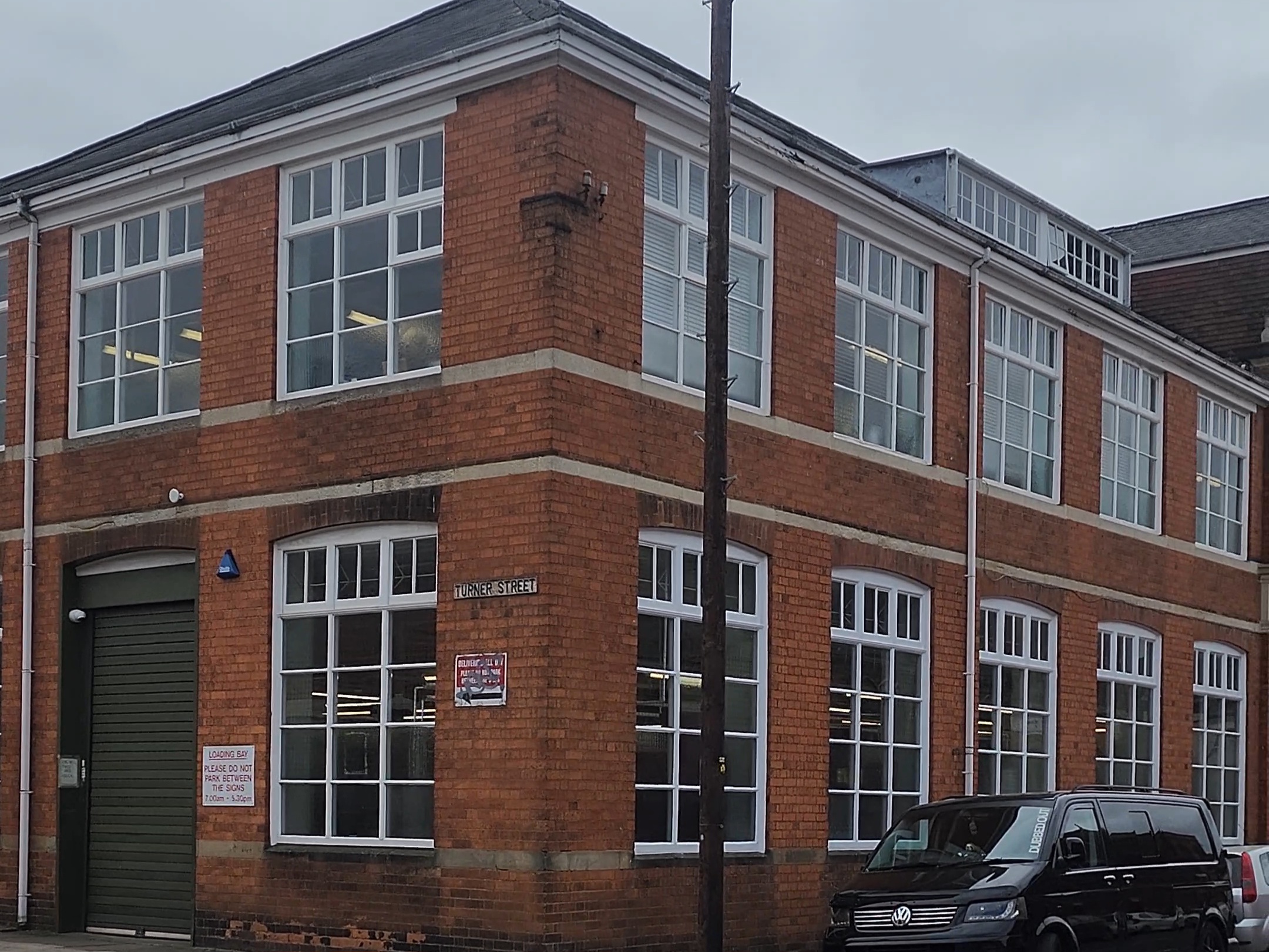
The Crockett & Jones factory in Northampton is one of the most respected shoemaking facilities in the world. As one of England’s last major producers of Goodyear welted footwear, it represents a level of craftsmanship that has become increasingly rare.
After years of meaning to visit, I finally made my way to Northampton to see firsthand how Crockett & Jones shoes are made — and more importantly, what actually separates them from the rest.
Because while most people know the name, far fewer understand what goes into the product.
👉Watch the Video Tour Here:
Inside the Crockett & Jones Factory
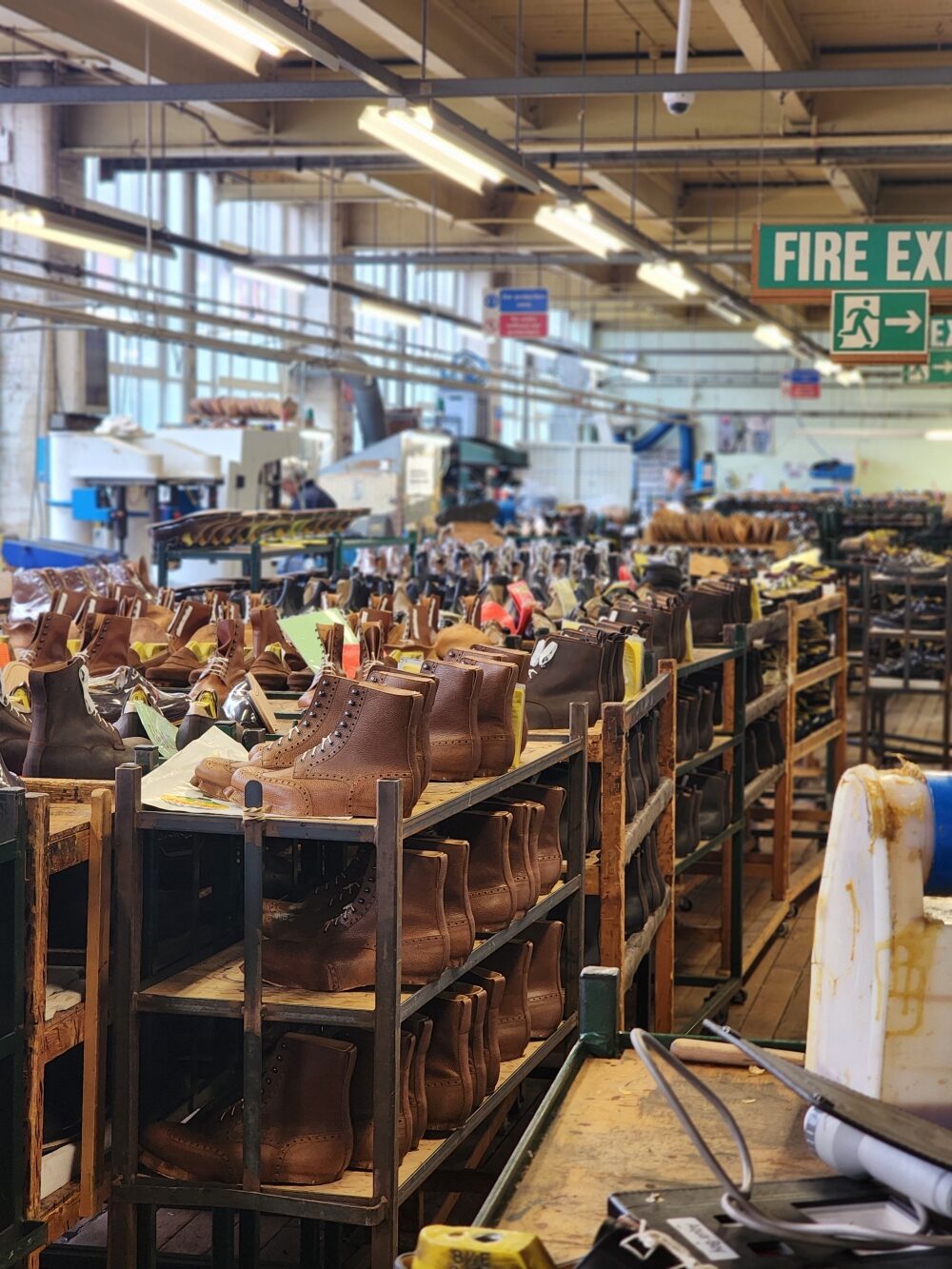
Walking through the Crockett & Jones factory, one of the first things that stands out is the scale. It felt easy to get lost inside. It is a tall building with many levels, as opposed to a more traditional, large, open-plan building with maybe two stories: One for the factory and one for the offices.
This is not a small, boutique operation. It is a full-scale manufacturing facility — but one that still retains a surprising amount of traditional craftsmanship.
You have entire sections dedicated to specific parts of the process. In fact, I was told they have around 100 workers just in the closing (upper-making) department alone. That alone gives you an idea of how much labor is involved before a shoe even reaches the welt.
And yet, despite that scale, everything still feels controlled, deliberate, and consistent — which is not always easy to achieve at this level of production. It was very well organized despite it feeling overwhelming with production everywhere – a good thing for C&J!
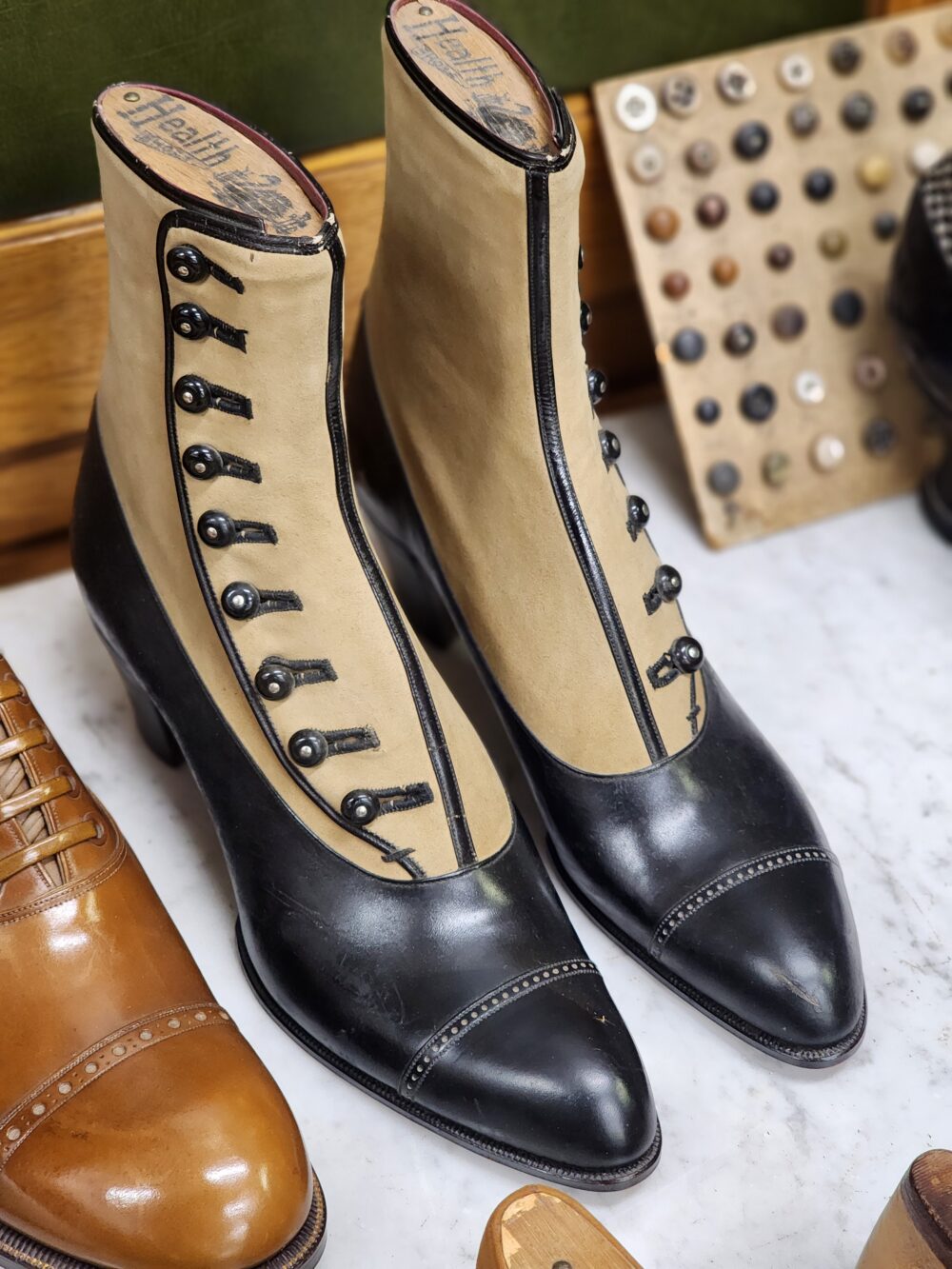


Is Crockett & Jones Made in England?
Yes — and that matters more than people think, especially in a world of outsourcing where getting it cheaper is easy to do.
Crockett & Jones is deeply committed to keeping production in Northampton, England. This means that the vast majority of the process is handled in-house rather than outsourced across multiple countries.
That decision has consequences. It means higher labor costs, stricter quality control, and less flexibility when it comes to cutting corners. But it also means that what you are getting is a product that has been made under one roof, with consistent oversight from start to finish.
In a time where many brands quietly shift production elsewhere, that commitment carries weight.

How Crockett & Jones Shoes Are Made
While the full process is extensive, the key stages follow the traditional path of Goodyear welted shoemaking:
- Upper making (closing)
- Lasting
- Welting
- Bottoming and sole attachment
- Finishing
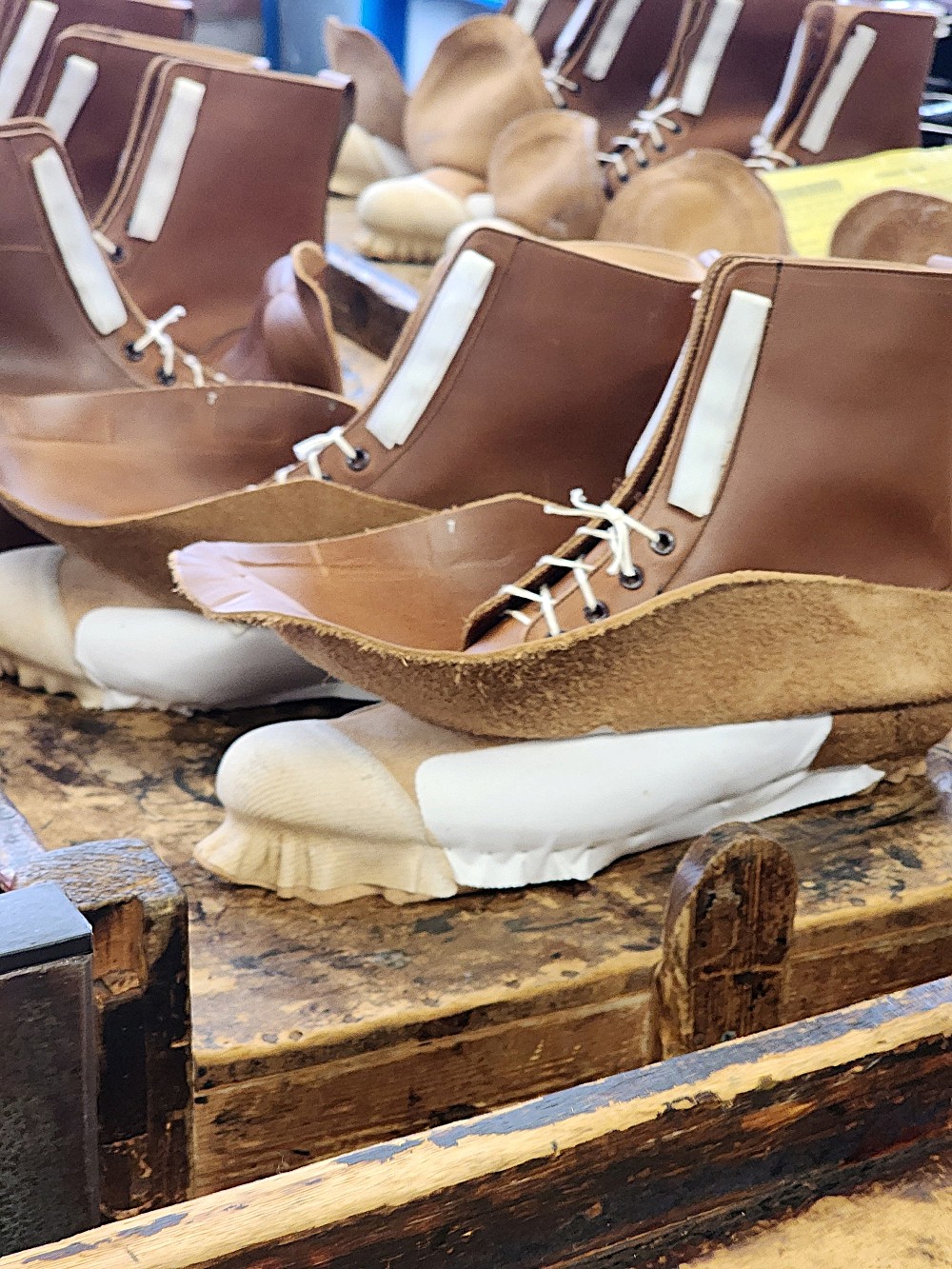
What stood out most during the visit wasn’t just the process itself — it was the emphasis on what happens inside the shoe. Most consumers focus on visible details: waist shape, sole finishing, edge work.
Crockett & Jones, on the other hand, puts a significant amount of attention into internal components:
- The strength of the stiffeners
- The quality of the linings
- The durability of the materials you never actually see
These are the things that ultimately dictate how the shoe wears over time and how you feel inside of it, standing all day or being supported by it. The internal structure is more important than many realize. We often focus too much on finishing details, which are only nice to look at before the shoe is worn. After that, it is entirely about how the shoe feels and performs throughout its lifespan, and that is what Crockett & Jones appears to focus on most.
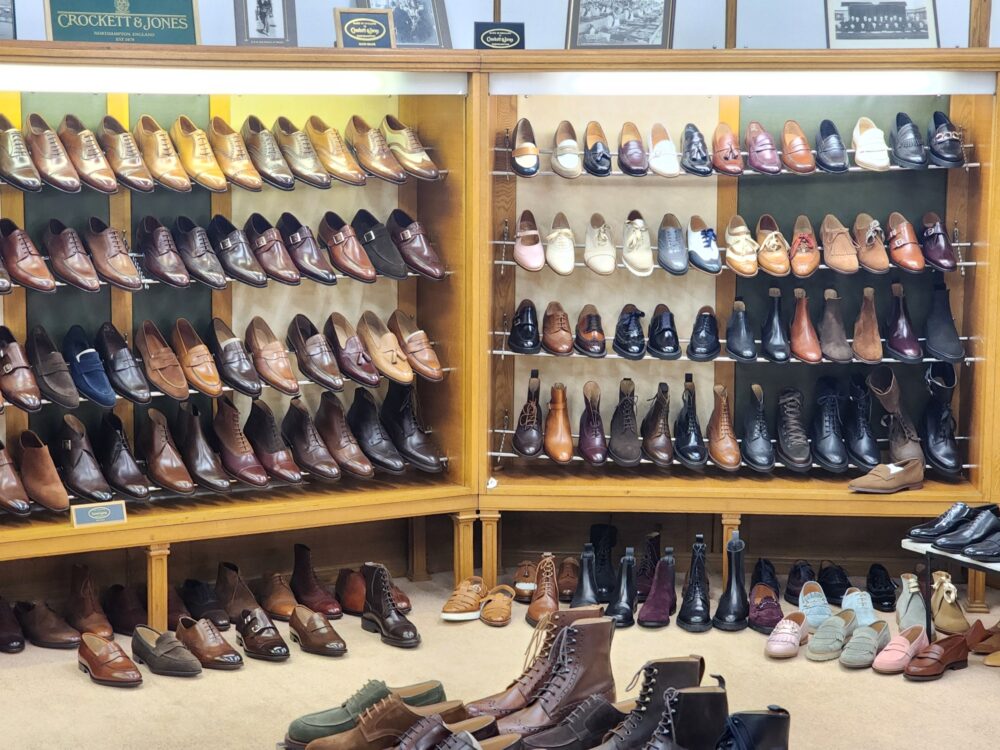
Why In-House Production Matters
One of the biggest takeaways from visiting the factory is understanding how costs are built into a shoe. When everything is done in-house — from cutting leather to final finishing — there is very little room to reduce expenses.
Materials sourced locally or within England come at a premium. Skilled labor in Northampton is not cheap. And maintaining large teams across multiple departments adds up quickly.
But this is also where Crockett & Jones separates itself. Rather than investing heavily in highly stylized finishing details, they invest in: Durability, consistency, and long-term wear.
It’s a different allocation of resources — one that isn’t always immediately visible, but becomes very clear over time.
Northampton’s Role in Shoemaking
It’s impossible to talk about Crockett & Jones without mentioning Northampton.
For over a century, this region has been the heart of English shoemaking. Many of the world’s most respected brands have operated here, and that heritage still influences how shoes are made today.
There is a level of institutional knowledge in Northampton that is difficult to replicate elsewhere. And it is pertinent that Northampton thrives and remains a pillar of the shoemaking world. One great thing that Crockett & Jones is doing is offering apprentice programs to ensure the youth get in, learn the trade, and remain. This system becomes increasingly difficult to maintain.
Generations of craftsmen, established processes, and a culture built around shoemaking — all of it contributes to the final product in ways that are hard to quantify but easy to recognize once you see it up close.
Final Thoughts on the Factory Tour
Visiting the Crockett & Jones factory doesn’t just show you how shoes are made — it gives you a better understanding of why they are priced the way they are.
It’s easy to look at a finished shoe and compare it purely on aesthetics. But once you see the number of people involved, the level of detail behind the scenes, and the commitment to keeping everything in-house, the picture becomes much clearer.
Crockett & Jones has never been about chasing trends or pushing the boundaries of visual design.
Instead, they focus on making solid, reliable, well-constructed shoes — and doing so consistently. This is why they have been around more than 100 years, and will likely be here at least another 100 more.
And after seeing the operation firsthand, it’s clear that this is not by accident.
Learn more here: https://us.crockettandjones.com/
—Justin FitzPatrick, The Shoe Snob
Shop · Marketplace · Patreon










I enjoyed the video. Thanks for doing what you do. Keep the industry alive.
Thank you Arthur! I appreciate it!
I love English shoes and looing foward to learn more about the Crocket & Jones range.
Thank you for sharing!