
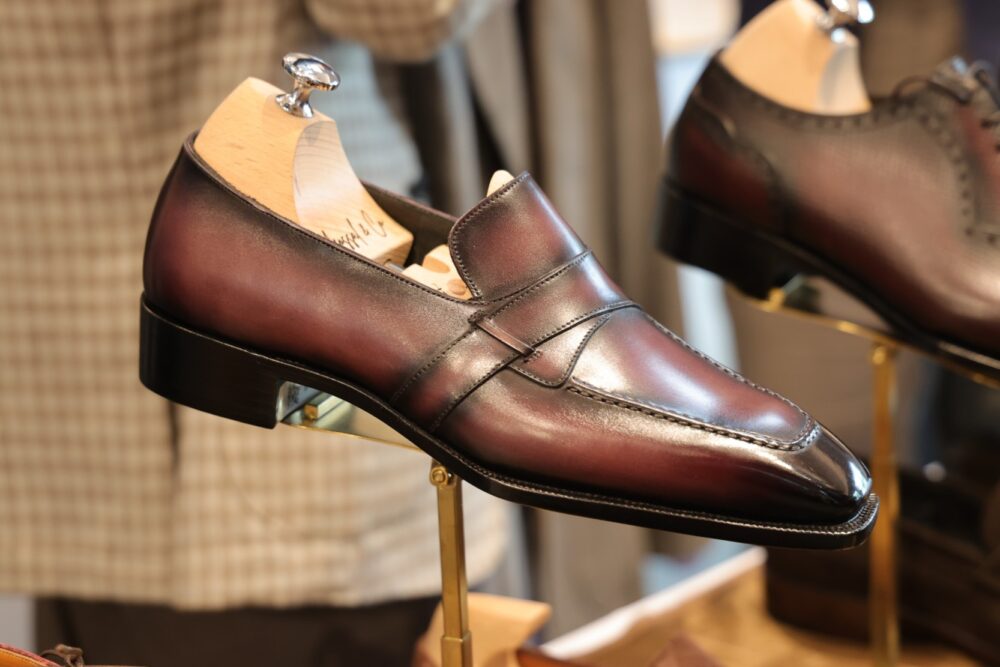
Do Not Condition Brand New Shoes
To condition new shoes or not? That is the question many apparently face. And the answer is simple: DON’T. That simple rule will save you from prematurely ruining a perfectly good pair. For those who only like to read titles and headlines, allow me to stipulate: Conditioning your shoes is great. It is necessary. BUT not when brand new, straight from the manufacturer. Then it is redundant and can cause further complications. Now, let me explain.
Wear them first. Condition later.
I’ve never quite understood why people feel the need to go through a full shoe care routine the moment a new pair comes out of the box. A light toe shine, sure—I understand that. But applying conditioner straight away? That’s where things start to go wrong.
Conditioner is meant to rejuvenate leather. Brand-new leather does not need rejuvenation. That process has already been handled at the tannery and during production. What your shoes need now is time on foot—movement, flex, and a natural break-in.
New Leather Is More Sensitive Than You Think
There’s a misconception that fresh leather is at its strongest. In reality, it’s often at its most reactive.
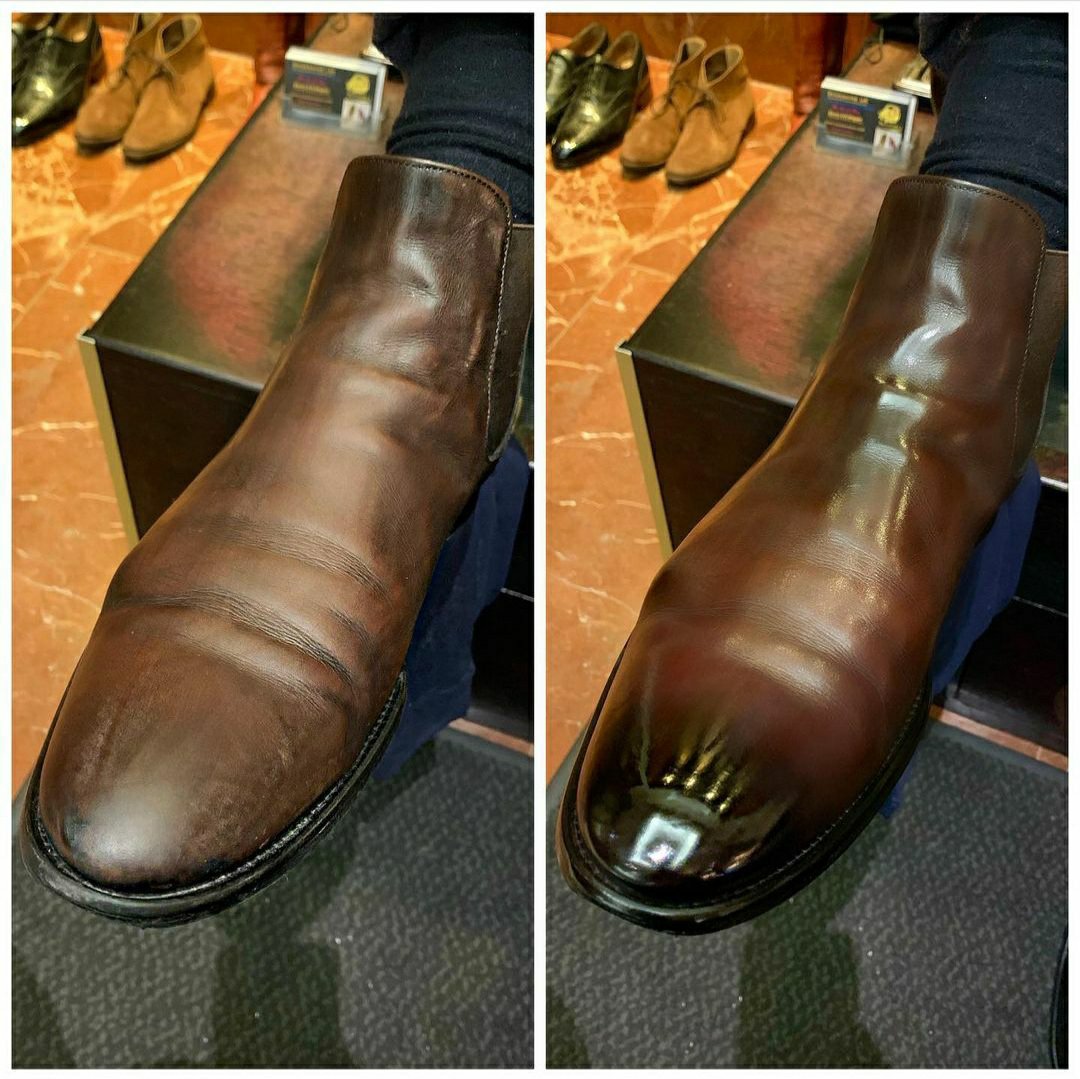
Over the years, I’ve seen it time and time again—new leather is far more susceptible to damage than a worn-in pair. Whether that’s from conditioner, water, or even excessive wax, the results tend to show quickly and not always in a good way.
This is especially true with lighter finishes—on crust leather, museum calf, vegetable-tanned leathers—where much of the color sits closer to the surface. These finishes are beautiful, but they’re also more delicate when new. Apply a heavy-handed conditioner, and you risk darkening, staining, or even stripping parts of the finish altogether. Trust me, I have done and seen it done. Far too many times.
Black leather can handle far more abuse. Tan and lighter tones? Not so forgiving.

Why Break-In Comes First
Leather needs to relax before it can properly accept care.
As you wear your shoes, the fibers begin to soften, the pores open up, and the leather becomes more stable. This is when it starts to respond better to polishing and conditioning. It’s also when it becomes less reactive to moisture and less prone to staining. I don’t know this from a technical point of view. I am not a tannerist. But I have shined more than 10,000 shoes in my life, professionally and for my clients. And have made a lot of mistakes along the way. Experience has been my teacher.
Jumping the gun on overzealous conditioning disrupts the process of leather break-in.
That’s also why you’ll often see brand-new shoes stain more easily in the rain, or why an over-applied shine cracks after just a few wears. The leather simply hasn’t settled yet.

A Few Simple Rules to Follow
You don’t need a complicated system—just a bit of restraint and trust. Good shoes have almost always been cared for by the factory. That is a part of the finishing process and the main reason why you shouldn’t need to condition new shoes.
You only need to condition new shoes if the leather is genuinely dry out of the box—which is rare. And if you absolutely must, use the smallest amount possible and test it somewhere hidden, like the inside heel. If the color shifts or the finish reacts, stop immediately.
Second, avoid heavy mirror-shining straight away. Keep it to the toe tips and outer heel edges if you must. The rest of the shoe needs time to flex and settle. Otherwise, you’re almost guaranteed to see cracking—and in some cases, that cracking will pull the finish with it.
Third, be cautious with neutral wax polish. Despite its name, it’s not always “safe.” On certain leathers—especially crust or museum calf—it can behave almost like a stripping agent. You’re always better off using a wax that closely matches the color of the shoe.
And finally, wear your shoes before doing anything else. One proper wear does more for the leather than any product ever will at that stage. I am sure you can live one day without a high shine or deep conditioning. After you wear them, knock yourself out!

Respect the Material
Leather is a natural material. It was once living, and it still behaves that way to a degree. Shoe care products are tools—they help when used correctly, but they can just as easily cause damage when overapplied or used at the wrong time.
The biggest mistake I see isn’t neglect—it’s over-enthusiasm. Too much product, too soon, on leather that isn’t ready for it.
Take your time. Let the shoes break in. Then, and only then, start thinking about conditioning. And if you ignore all of this and go full throttle out of the box, just know that fixing the result will be far more difficult than preventing it in the first place.
But, as with most things in shoe care, that’s how many people end up learning the hard way.
—Justin FitzPatrick, The Shoe Snob
Shop · Marketplace · Patreon
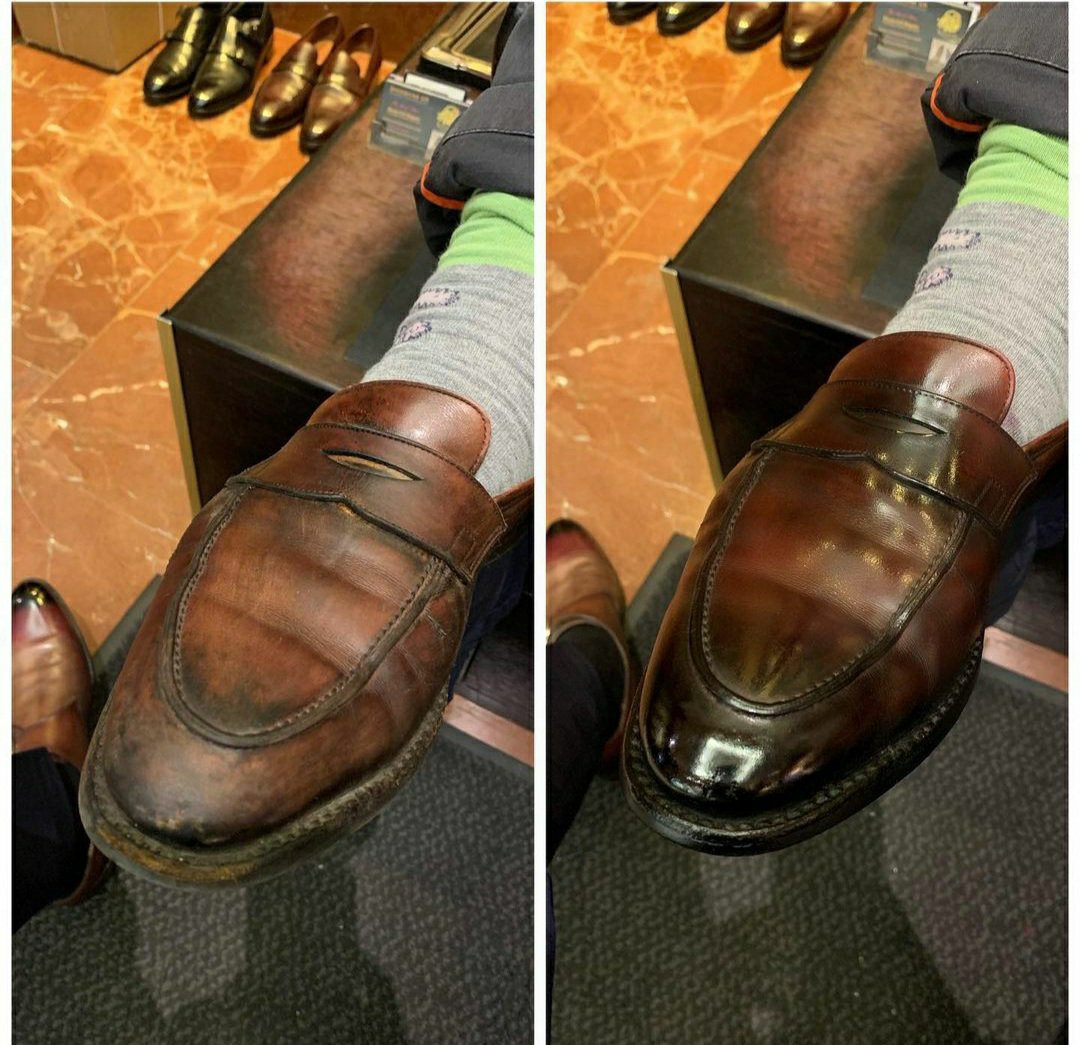



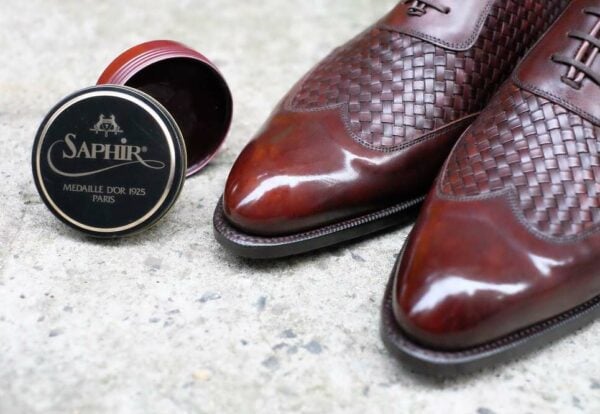
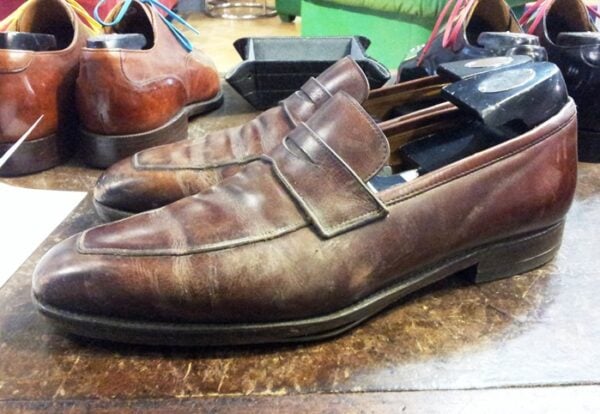



I think it’s often as simple as people are excited with their new purchase, and conditioning seems like the natural thing to do. I very much learnt my lesson on this after damaging a pair of Saint Crispin’s crust leather with some Saphir Renovateur which, in hindsight, just didn’t need applying.
Thank you for sharing Sam!
Hi Sam!!!
I have a pair of nubuck boots that are brand new, never worn – however; they are 5.5 years old. Is there a caveat in this type of situation when it comes to conditioning or should I keep them as is? They are kept in an original box with tissue and plastic form-keeping inserts.
Thank you!!!
Hello Meleha, I would just wear them. You normally do not condition nubuck. It is not the same as calfskin. Enjoy them
This is an interesting post. Kirby Allison from the Hanger Project religously applies conditioner to each new pair of shoes he gets as he claims it’s been drying out sitting there on those shelves. I’ve been following his example ever since whenever I buy new shoes.
I will explain myself better in a new podcast soon. Stay tuned
Justin, do you have any updates on this thread? I heard some people (like Kirby Allison) use Saphir Renovateur on new shoes while others advised not to as the product would strip off some factory finish.
not sure what you mean by updates? I don’t recommend it for the average person, unless only on black shoes. Most shoes do not need it. If they do, I sure hope that the person paid less than 50% off. Good leather is good to go and is nearly always finished (i.e. cream polished minimum) at the factory
The main rationale I�ve heard about conditioning shoes out of the box is that they might�ve been sitting out on a shelf for a long time prior to shipping. As I am an amateur when it comes to these things, do you think that point is valid?
Key word is “might.” Best to wear shoes one day, at least, and then condition. Thats what this post touches on. Pores need time to open
Justin, I enjoy your direct approach to shoes and their care. I have a number of pair in museum calf from TLB. I have been using neutral polish to keep the contrast. In choosing a color closest do I go towards the lighter color? I hope to check out your shop when COVID subsides. Greg did a phenomenal job on the shoes I had done. Thanks
Hey Russ, thanks for the kind words and support. Yes I would use the wax one shade down from your leather color to keep the undertones enhanced
Justin, Another follow up to your post. When I was thinking of getting a rifle for long distance target shooting, I found a ton of articles on how to break in a new barrel for accuracy. The various techniques gave me a headache as they were quite detailed and time consuming. I found an article by one of the best shooters on the subject. I found the Holy Grail on the subject. When I clicked on the link, the page was blank. He had no magic formula, just shoot. The same holds true for shoes, just wear them. Never got the rifle. The people making it complicated we�re in the business of selling barrels and cleaning products.
Great analogy Russ and very true. People dont realize the stories created and mass spread for marketing purposes i.e. money making. A classic one is cedar shoe trees being the best. An American myth created due to our abundance of cedar trees in the US. No one outside of of the US pedals them they way we do and no bespoke shoemaker puts them in their $4000 shoes. Go figure 😉
Hi Justin, are you refeering to shoe trees in general or just specifc to them needing to be made of cedar?
Needing to be cedar. Shoe trees are important for maintaing the shape of the shoe
Never thought of this, but makes sense! Classic marketing, a la the diamond industry saying “diamonds are a girl’s best friend” and we all believed it, no questions
Thanks again for sharing
I have 3 brand new unworn pairs of Allen Edmonds that have been in my closet for over 4 years. Do you think I should just wear them a day or two then condition? Looks like wax on one pair has turned white in a couple of areas. 5hanks
Hard to say for sure without seeing them. Instead of adding conditioner you could always add neutral cream polish which will help nourish them without the stripping agent. If any are black then feel free to do so as black doesnt strip easily. Its the tan ones you have to worry about. Also using a little conilditioner wont hurt. This article is for those that dump it on as if it was free
I have a question? After wearing, can veg tan leather be mirror shined? From what I understood in the video, there was some mentioning of veg tan leather
anything with pores can be mirror shined. But it might be a touch more difficult
I think a big part of the reasoning behind conditioning new shoes is that you never really know how “new” they actually are. Have they been sitting on the shelf for a long time, and while appearing to be somewhat shiny, are actually drying out from being in stock for months or longer? I appreciate the counter-argument to this though, good article 🙂
I can understand that but most shoe companies have a solid turnaround where shoes are not sitting for 5 years in the warehouse. A shoe that needs conditioning is usually quite obvious. Most new shoes are treated during production and good leather sustains itself when stored in a well circulated environment
I absolutely would detail a brand new car as soon as possible. That is the best time to do a paint correction and seal your finish. The guy at the dealer who washes your car and applies spray wax on it within minutes before driving off is most certainly introducing micro scratches and swirls.
maybe the car relation was not ideal but does not apply to well made dress shoes. They are without doubt well nourished during production and then sit in a box that protects them. That’s what ‘dust bags’ are for
Thank you for pointing this out! I did use shoe care products on new shoes, because Saphir recommends it here: https://saphir.com/pages/smooth-leather-new-shoes-care-guide
I always wondered though, why you should do that. Seems quite unnecessary at the best and after reading this even potentially harmful.
Thank you for sharing and glad that you enjoyed the article. And yes, it is unnecessary when buying quality shoes
Why are Allen Edmonds shoes so hard to fit and break in? For the price they charge, they shouldn’t fit like a glove.
That is a great question. I believe it will be a combination of patterns, lasts shapes and leather quality