Hi there, my name’s Nick, and I’ve appeared on The Shoe Snob Blog a few times with Justin, like in our guide to sizing loafers. I’ve spent the last seven years writing and filming content for my own footwear blog called Stridewise which focuses a little more on the casual side of boots than The Shoe Snob.
When you’re a guy who writes about boots and jeans as much as I do, you wind up talking a lot about brands that make everything in America. But I’ve spent six of the last twelve months exploring this space in Asia, looking at how Americana and hardy welted footwear have found their way so far East. A lot of these journeys have been covered on my YouTube channel, but a lot of what I encountered didn’t make it into a video.
So here, in no particular order, I’m covering ten weird things about shoes that I saw in Asia this past year — from elephant leather to artisans holding boots with their feet as they hand-welt.
1. Tattooed Shoes in India
First is India’s Toramally, a Kolkata-based brand that makes hand welted shoes and doesn’t have a huge presence online — but as I’ve learned, that doesn’t mean your business isn’t thriving when you’re an Asian brand. Rahul, the owner, even told me that one reason he doesn’t have a website is because his customers don’t want to buy something that anyone else is wearing!
Rahul is from Uttar Pradesh, where there’s a long tradition of leathercraft, including a technique I had never seen before: inking or tattooing leather shoes.
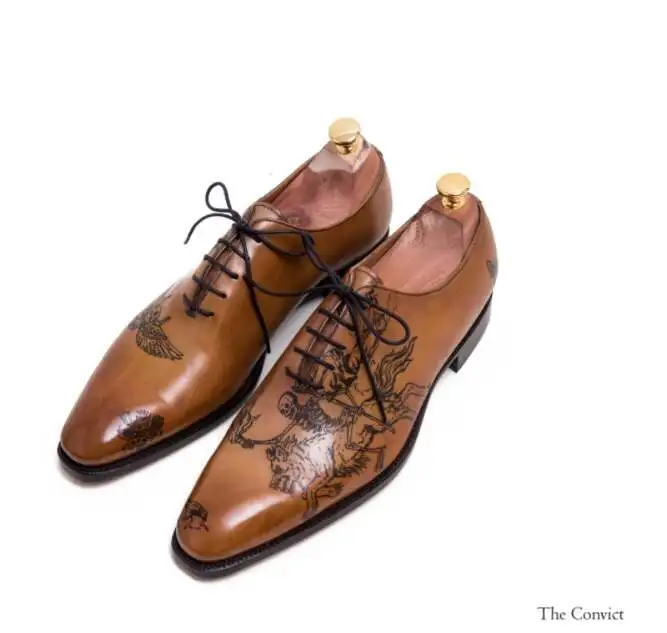
Now, he has continued this tradition at his current store and his wares are a great example of ways to personalize your shoes: tattooing, carving, painting, scarring, and more. If you DM them on Instagram, you might be able to buy something there yourself.
2. Vietnam’s Raw Denim Community
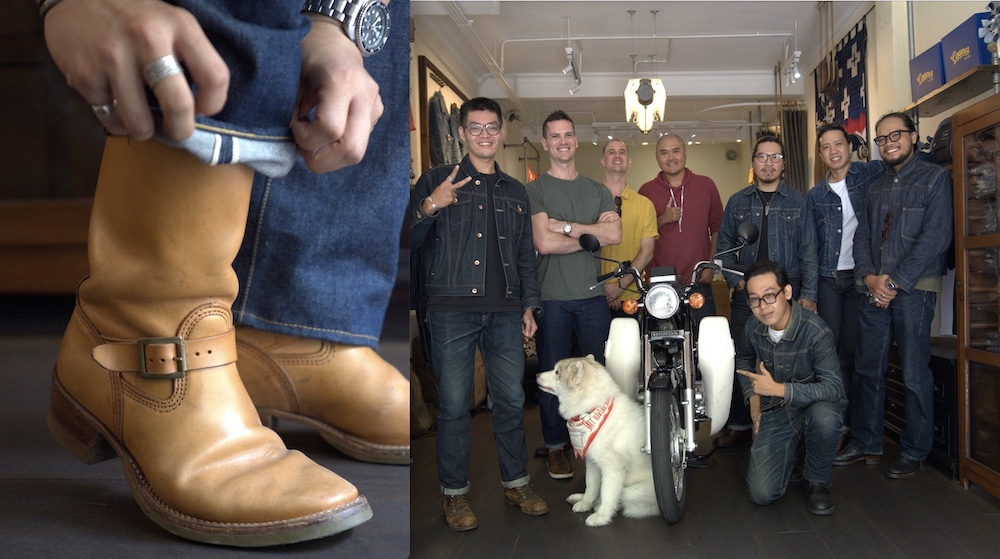
Another cool thing I saw in Asia was in Ho Chi Minh City: Vietnam’s Raw Denim Community (VNRD). If you love boots and jeans, you’re probably aware that there are (shall we say) clubs of guys that share the hobby in most major cities. You might not be aware that you’ll also find these clubs abroad: I’ve visited one in Jakarta and now in Saigon!
Despite being a very hot and sticky place, these guys are decked out in all the classic American workwear brands like Red Wing and Wesco, with plenty of Japanese selvedge denim to boot. Folks who have traveled to the region will know how common scooters and motorbikes are as modes of transport, and the VNRD guys love the way their thick denim protects them from minor crashes and from the blazing sun.
3. Elephant Leather
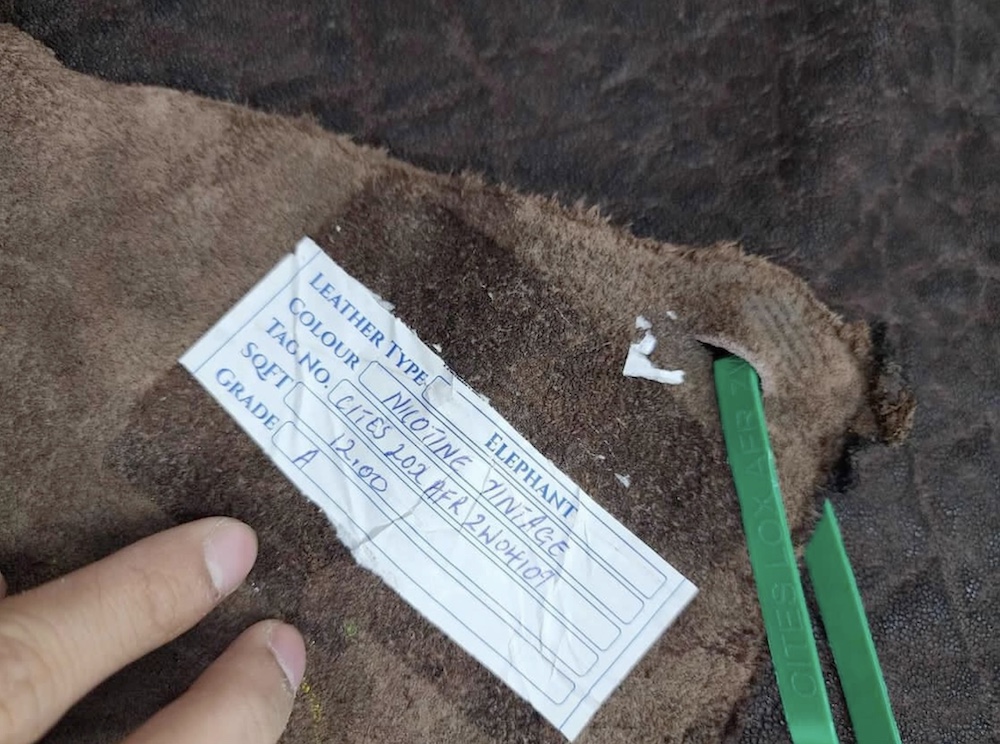
Now this may trigger mixed feelings, but I did stumble upon a store in Vietnam offering a type of leather I hadn’t encountered before: elephant. At first, I was kind of repulsed by it, as they’re pretty famously an endangered species. I did this kind of ill-advised post on Instagram where I complained about it – and was quickly silenced when viewers pointed out that the leather was certified as legal and ethical by the letters CITES: the Convention on International Trade in Endangered Species.
The word is that these guys ensure that funds earned from selling the leather goes toward conserving the elephants that remain. Sure, a lot of people think that’s all a bit bogus and it’s too easy to fake, but, uh… you can always find a critic of something, right?
Anyway, I’m not indicting CITES, just noting that this was a very surprising material to find in a shoe store!

4. Red Wing Japan’s Tiny Engineer Boots
Red Wing is probably the most influential American heritage boot brand and they have a following all over the world, but especially in Japan, where an interest in heritage workwear is called Amekaji.
As you can see, I’m just very fascinated by the ways this subculture around hard-wearing American vintage workwear has spread globally, and Japan’s interest is so strong that there are many models that are sold exclusively to this market. I listed some in this video I called Japanese Red Wings you can’t buy.

5. CNES’ Chimera Boots
Some context: in the boot space, there’s sometimes a friendly rivalry between guys who like loafers and guys who hate loafers and prefer boots. So I was delighted when IBl found this lovechild from the prominent Vietnamese brand CNES Shoemaker: loafer boots! Penny loafers with a boot shaft and a side zip for the cherry on top.
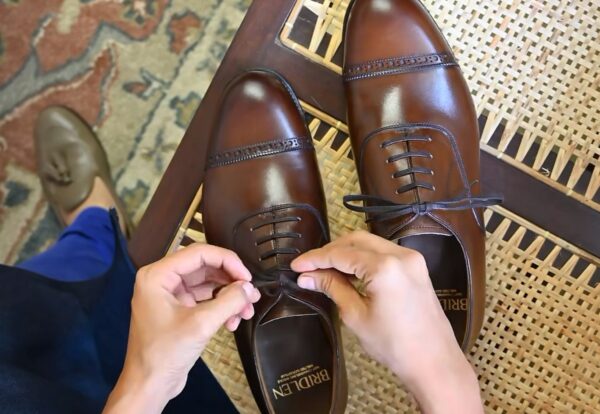
6. Bridlen’s Hybrid Shoemaking in India
Speaking of hybrid boots, I was really impressed by the innovative shoemaking at Bridlen, an influential brand in Chennai. Bridlen has pulled off a few fascinating feats in their construction that I’m compiling into this one entry:
- Channeled-insole Goodyear welts: At the time I’d never heard of this technique and if you haven’t either, this is a way of combining the speed of a Goodyear welt with the durability of a hand-channeled insole, a build that’s normally only found on handwelted shoes. They cut a channel into the insole and stitch the welt through that instead of through a canvas rib like you’ll find on Goodyear welts. The toughness of a hand welt, the speed of a Goodyear welt! And most of these shoes are under $300!
- The shanks: not leather, not steel, but leather with steel glued to it.
- The lining: it’s done without glue, which is extremely rare. Lining usually requires a ton of glue but by avoiding it, Bridlen gets the structure and comfort of lining without sacrificing the breathability.
This is a really fascinating brand and super nice guys.
7. Bootleg Red Wing and Wolverine Boots
When I heard that Ho Chi Minh City had knockoff Red Wings, I had to go and handle them myself. They were extremely lightweight and fortunately, my pal Rose Anvil agreed to cut them open on his channel. You can watch three videos he made on three boots I sent him (Classic Moc, Iron Ranger, and Wolverine’s 1000 Mile) and I’m about to mail him some White’s boots. They are not real White’s boots, but Rose Anvil’s verdict? For $40, they’re pretty decent.

8. Craft and Glory’s Not-Goodyear Welting
In a place called Gurgaon outside of Delhi in India, there is a brand called Craft and Glory that is slowly making inroads into the US market with their low prices — and their LIES.
They’re good lies though. Let me explain: to market their boots, Craft, and Glory spend a lot of time explaining to their Indian audience what a Goodyear welt is and why it’s important.
But what’s interesting about them is they don’t even do Goodyear welts, they do hand welts. Hand welted boots take way more time and skill to make and many people pay a hefty premium for them over Goodyear welted boots. But Craft and Gory sell them as Goodyear welted boots because it’s hard enough to explain what a Goodyear welt is, let alone what a hand welt is.
So, they were selling what you could pretty easily argue is a superior product to what they were advertising. It’s deceptive advertising, but the deception is in not telling how good their product is. I love it.
9. Indonesian Workshops and Horsebutt Leather
In Indonesia I visited three different workshops and one thing that honestly struck me the most about them is how much horse butt they used. Really thick, vegetable-tanned, Maryam horse butt leather. At Onderhoud and Briselblack, the owners told me that over half of all their orders are boots made with Maryam horsebutt, which was a fascinating insight into what the American boot guy is fixated on in 2024 — since it’s mostly the biggest American boot nerds who buy boots from Indonesia.
10. Blkbrd Shoemaker’s Hand-And-Foot Welting
A final memorable thing I saw was a BLKBRD Shoemaker there in Agra, home of the Taj Mahal.
I’ve seen a lot of hand welting in my time but what I hadn’t seen was how BLKBRD’s craftsmen do it: by holding them with their feet. The co-founder, Pradeep Parihar, was quick to tell me that their workers aren’t denied stools, they prefer to sit in a way that lets them hold the shoes with their feet. This gives them superior control of it as they hand welt.
And man, those guys welt fast.

Another thing at Blkbrd that I didn’t even know was possible: they do a whole-cut shoe with no seams. Usually, a whole-cut shoe is one piece of leather stretched around the last and sewn at the heel. It’s very hard to do, but it’s not uncommon to see a brand selling a whole-cut oxford, say.
But what I’ve never seen before was whole-cut without seams. Now, I’m betraying my lack of experience in the dress shoe world: I’m more of a boot guy, but if I were a classic menswear guy then I’d have encountered this before. But it was new to me and even if it’s not to you, I doubt you’ll find a shoe like this at a lower price anywhere else.

Wrapping Up
That’s just some of the most interesting shoe things I saw in Asia. A lot of those were very, very niche, and you had to know a lot about shoemaking to know just how weird and surprising they were. Fortunately, Justin FitzPatrick let me publish this article on The Shoe Snob where I can feel completely at ease geeking out this hard about shoemaking!